Skip to content
Just after the New Year’s Day, the security product production base of the new district enterprise, Aobofeng Environmental Technology (Nanjing) Co., LTD. (hereinafter referred to as “Aobofeng”), was bustling with activity. The final touches before the production starts are still in full swing, but orders from the market have already arrived ahead of schedule.
On one side, construction is in full swing; on the other, orders are arriving ahead of schedule. This somewhat “speeding” pace can’t help but make people wonder: What kind of “ace card” does this young enterprise, which has only been established for a little over a year, hold that makes the market so favored and eager to cast a vote of confidence?
The answer to the story lies in a magical material known as “solid smoke”, and it is also tied to a scientist’s dream journey that spans three decades.
01 What can aerogel do?
If the entrepreneurial journey of Oberfeng were made into a film, “aerogel” would undoubtedly be the protagonist running through it all. This material enjoys the dual glories of being the “lightest solid in the world” and the “strongest insulating material”, and has made remarkable achievements in high-end fields such as aerospace and industry.

However, the Oberfeng team assigned this “star of materials” an unprecedented role: an air scavenger. They expanded the application boundaries of aerogel from the vast starry sky to every breath in People’s Daily lives. We are the first in the world to industrialize the use of aerogel to remove gaseous pollutants. The company’s chairman, Hang Bo, said.
For instance, formaldehyde and second-hand smoke that we are familiar with in our daily life all belong to gaseous pollutants. Relying on its self-developed core technology, the team has modified aerogel materials and developed a variety of air purification products, which can firmly capture harmful gases in the environment like “smart magnets”.

You might ask, if there are already various air purification technologies on the market such as activated carbon and photocatalysis, why take a different path to develop aerogel?
Hang Bo smiled and revealed that the modified aerogel not only has a larger specific surface area but also can adsorb impurities far exceeding those of ordinary materials. Its pore size can also “freely expand and contract”, leaving no place for all kinds of pollutants, big or small.
More importantly, during the generation process of the aerogel, the team injected specific chemical components into it through core technology, transforming it from a passive “hunter” that waits for opportunities to come to it to an active and precise pursuer of pollutants. As a result, the accuracy and speed of air purification will be greatly enhanced.
Based on this cutting-edge technology, Oberfeng rapidly developed two “flagship products” within just one year. One is a high-performance protective face mask designed for emergency protection and special industrial environments. Its innovative product design has recently been evaluated by the review expert group as reaching the international leading level. Another model is an all-in-one air purifier suitable for home, office and other scenarios, aiming to eliminate indoor air pollution from the source.
02 From “Academic Holy Land” to “Entrepreneurial Hotbed”
There is no precedent to refer to, and the path of new material research and development is even more difficult. When asked why he still insists on doing real business, Hang Bo slowly told us a “scientist’s dream”.
Hang Bo is a native of Nanjing and an internationally renowned biomedical expert. In 1988, the young man left his hometown for further studies in the United States. After completing his doctoral studies, he joined the Lawrence Berkeley National Laboratory of the US Department of Energy and later served as the chief scientist of the laboratory.
It should be noted that this laboratory has over 4,000 employees and has produced 17 Nobel laureates and more than 80 members of the National Academy of Sciences of the United States. It is truly an “academic holy land”.

Here, his research group focused on a concept that was still little known at that time: third-hand smoke. This kind of “smoke” does not refer to the smoke that pervates the air, but rather to the tobacco residues that are invisible to the naked eye after smoking. They adhere to walls, carpets, clothes, and even people’s hair and skin, continuously releasing toxicity. In addition, some components will also react with other pollutants in the air to form more toxic compounds.
Even if the smoke has dissipated, the harm remains in the house for a long time, which is especially dangerous for crawling infants and toddlers. Hang Bo said. This research achievement was later listed as one of the “35 Major breakthroughs” and “90 major accomplishments” since the establishment of the laboratory.
The recognition of scientific research achievements brought academic satisfaction, but another layer of longing gradually rose in Hang Bo’s heart. As a scientist, the greatest sense of achievement should not be confined to academic papers, but rather lies in transforming knowledge into tangible social benefits. Hang Bo recalled that since 2010, he has been actively promoting “social transformation”, giving lectures on the hazards of third-hand smoke in many places in the United States and China. His work even directly contributed to the relevant legislative process in two states of the United States.

However, after the warning, where is the action? When the public began to realize the severity of the problem, Hang Bo thought further: merely informing people of the danger was not enough; we should take a step further and develop “tools” that could eliminate the harm.
In the process of seeking the “tool”, he received support from his old friend, Professor Shen Jun, a Chinese materials scientist from Tongji University. Professor Shen Jun has been deeply involved in the field of aerogel for many years. When Hang Bo proposed the bold idea of “whether this new material can be used to capture gaseous pollutants”, the two immediately agreed and started to explore the application of aerogel materials in adsorbing tobacco smoke.
The conception of science needs the soil of industry to take root and sprout
In May 2024, as one of the first “allocation and investment combination” projects jointly promoted by the new district and the Yangtze River Delta National Innovation Center/Jiangsu Institute of Industrial Technology, Aubofeng was launched in the Central Business District of the new district, embarking on a new journey of industrialization
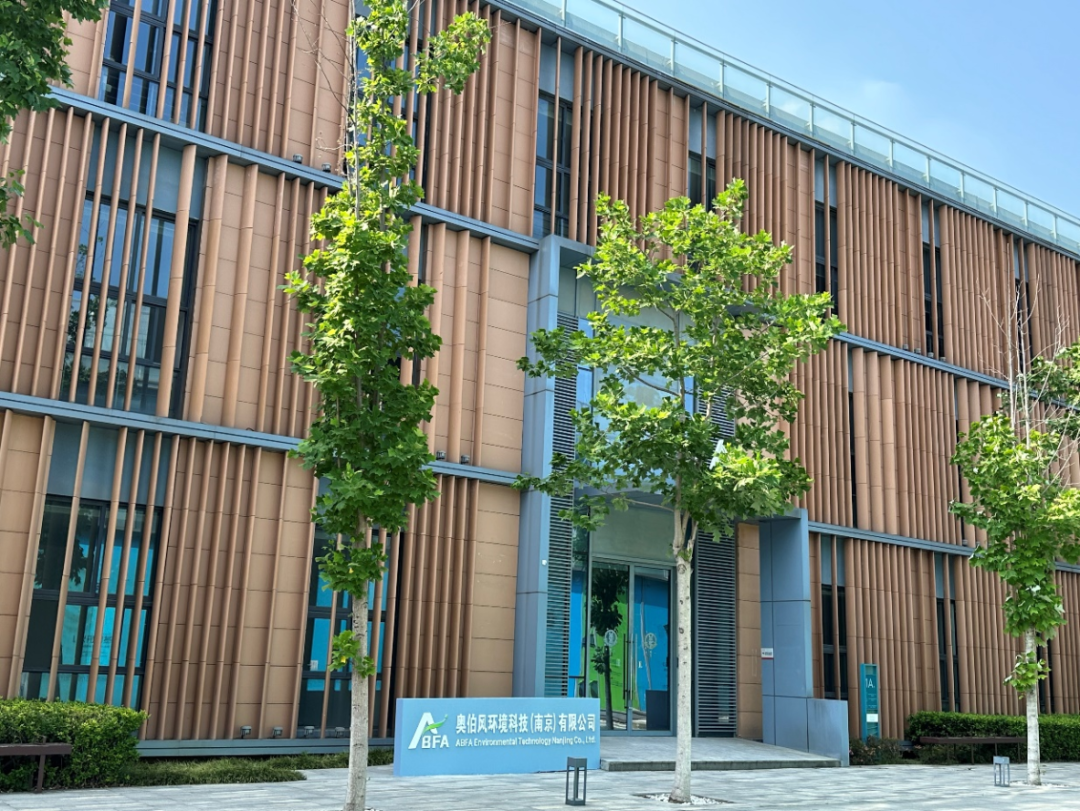
The innovative atmosphere and practical policies of the new district are the key reasons why we chose this place. Hang Bo expressed his feelings. Just a few months after its launch, the research and development process accelerated. At the same time as the prototype of the first product was launched, the first round of social capital was also smoothly injected, verifying the market’s confidence in the technology.
Nowadays, Oberfeng has grown from the collaboration of two scientists to a team of several dozen people. The construction of the production base in the new district is also in the countdown stage and is expected to be completed and put into operation in the first half of the year.
In the future, when the first batch of gaseous pollutant removal products developed based on aerogel materials go from the new district to the world, the major issues related to the environmental industry will also turn a new page in development here.