Skip to content
AI and biomedicine are regarded as the “two core engines” of the future global economy.
A 30-person biomedicine innovation group from Germany spent two days in Nanjing, experiencing the prospects of the convergence of these two core engines in this city.
At 7 p.m. on May 23rd, the lights in a meeting room in the Life Science Town of Jiangning High-tech Zone in Nanjing were still on.
Thirty experts, entrepreneurs and representatives from research institutions in the biomedicine field from Germany were having intensive exchanges with Nanjing enterprises and government departments. Many of them took out their mobile phones to take photos of the numbers and conclusions on the PPT, some pulled Chinese enterprise representatives to add WeChat, and some were typing rapidly on the computer.

“We are not looking for partners in Nanjing; we are seeking fellow innovators who can jointly change the world.”
“Previously, everyone believed that China was a manufacturing powerhouse, providing high-quality and cost-effective goods and raw materials. Now we have a completely new perception of China. China has become a major source of global clinical innovation.”
This was how the members of the German delegation described their feelings during this visit.
This was a “return visit” by the German biotech community to Nanjing after the city promotion visits by the Nanjing municipal and party leadership delegations to Germany in March last year and this March. With 30 people and over two days, from the south to the north of Nanjing, from laboratories to industrialization bases, an industrial resonance spanning 8,000 kilometers is taking place.

Pragmatic Germans have taken a liking to Nanjing.
Why Nanjing? The Germans know exactly why.
In 2025, the revenue of Nanjing’s biopharmaceutical industry will reach 225.1 billion yuan. There will be over 1,000 large-scale enterprises and more than 1,000 high-tech enterprises. There will be 23 domestic and foreign listed companies.
What is not the focus of the audience below is the numbers themselves, but the things behind the numbers – 53 universities, 17 academicians in the field of biomedicine, nearly 30 tertiary hospitals, and over 3,500 medical institutions.
What does this mean? It means a market with clinical verification capabilities, and an ecosystem with original innovation as its source.
In this ecosystem, a large number of innovative achievements have been successfully transformed into valuable results. A relevant official from the Nanjing Biomedical Industry攻坚 Office introduced that among biomedical enterprises, both the scale-up enterprises and the high-tech enterprises have exceeded 1,000 in number. Three enterprises have been included in the top 100 national pharmaceutical research and development strength list, and 145 drug varieties were approved in 2025, ranking first in Jiangsu Province. Among them, there are 3 first-class innovative drugs, ranking among the top in the country. So far this year, Nanjing has submitted registration for 6 first-class innovative drugs, and there are over 20 reserve innovative drugs that have entered the third-phase clinical trial stage.
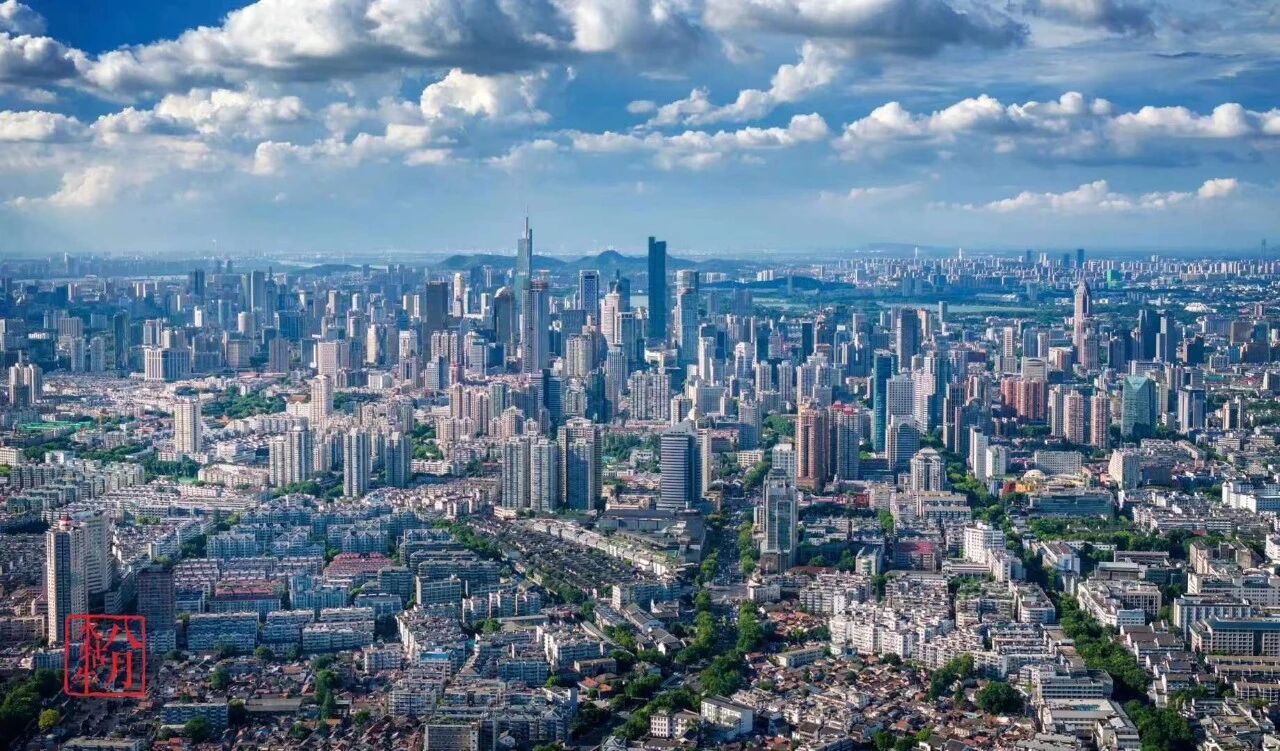
The German delegation saw not only the industrial scale of Nanjing, but also its “transformation efficiency” – from the laboratory to the hospital bed, this city is turning “research data” into “clinical data”.
After visiting Nanjing, Petra Tuzin, the hematological medical director of Fertitta Pharmaceutical Company in Germany, concluded that this city is expected to become an international biomedicine industry center.
Under the strong pull of this force, the intersections between the two sides are accelerating and intensifying. The “Nanjing Investment Promotion Service Station (Germany) (in preparation)” that was inaugurated during the “Nanjing Day” in March has now selected personnel to go to Germany and plans to carry out online and offline promotion of investment in Nanjing. From “periodic visits” to “regular presence”, cooperation between Nanjing and Germany is shifting gears and accelerating.
Going Beyond “Business” – “Co-creation”
On the mornings of May 23rd and 24th, the German delegation arrived at the park. They were concerned, “Can we use the public experimental platforms here?”
This was the most common question during the inspection. What the Germans cared about was not the policy documents, but the specific path to “enter”. German sports rehabilitation therapist Haril, after experiencing it, hoped to use the brain-computer interface treatment equipment of Nanjing Shenqiao Medical Devices Co., Ltd. in German rehabilitation centers.
In April 2025, Merck China and Nanjing Jiangbei New District signed a cooperation memorandum to promote the implementation of new drug research and investment in medical devices.
In January this year, Nanjing Xianxing Pharmaceutical and German Boehringer Ingelheim reached a global exclusive licensing cooperation agreement to jointly develop the bispecific antibody SIM0709. Xianxing Pharmaceutical can receive a maximum milestone payment of 1.058 billion euros and sales sharing. Boehringer Ingelheim has accumulated rich experience in the fields of immunology and respiratory diseases globally and possesses strong global R&D and commercialization capabilities; while Xianxing Pharmaceutical has he autoimmune disease field in China for many years and has strong innovative R&D capabilities and a profound understanding of the local market. The collaboration between the two parties is expected to accelerate the global development process of SIM0709 and bring new treatment hope to patients with inflammatory bowel disease worldwide as soon as possible. This is a typical sample of “Nanjing R&D + German Experience + Global Market”.

In May this year, the China-Germany Overseas Exchange Innovation Center was established in Qixia High-tech Zone, and the European Outbound Innovation Alliance was also set up simultaneously. The center has introduced several German AI medical projects and facilitated the connection of 12 Nanjing enterprises with the European market.
What the Germans bring is not only international markets and standards, but also their insights into “Chinese innovation”. What Nanjing offers is continuous vitality, open clinical resources, a stable policy environment, and an industrial ecosystem that is willing to accompany for 10 years.
This is not a transaction, but a two-way journey that adheres to long-termism.
From “World Pharmaceutical Factory” to “Global Pharmaceutical Hub”
In Nanjing, Germans have deeply felt the power of China’s innovation.
Dr. Yingyu Li, the managing director of the German-Chinese Economic Research Institute, has observed China’s situation based on her long-term experience and on-site research in the Chinese-German economic and trade field. She said that China is now the second-largest biopharmaceutical market in the world. By 2025, the entire medical device market will exceed 47 billion yuan. By 2035, the population aged 60 and above in China will exceed 400 million.
Another positive aspect for German enterprises is that China is continuously reducing the negative list for foreign investment. The 2015 version of the list had 93 items, and the latest version has been reduced to 29. In addition, the Ministry of Commerce has allowed 9 designated regions including Nanjing to establish wholly foreign-owned hospitals.
China is becoming a gathering place for talents, technologies, capital and data in the biopharmaceutical field. “The world’s pharmaceutical factory” is transforming into a “global pharmaceutical port”.
Yingyu Li expressed her astonishment that these biopharmaceutical companies in Nanjing have licensed their research and development results to major global pharmaceutical factories, which means that China is not only a buyer but also its research and development technologies and products have been purchased by foreign parties. Therefore, German pharmaceutical companies can not only act as sellers but also participate in the Chinese market as buyers.
This not only means a market full of competition and cooperation, but also marks a new pattern driven by innovation in the life sciences.
The ability of the AI-enabled research and development platform of China Pharmaceutical University is impressive. The university supports the integration of 19 databases, including AI platforms for building and screening large compound libraries and for molecular generation and synthesis route prediction, and has synthesized 8 compounds, with an activity increase of 78 times. The AI models developed by the university cover related data such as proteins, small molecules, diseases, and pathways.
These data will eventually point to human health.
Data is precisely the strength of Nanjing. In the cross-disciplinary field of AI and biomedicine, Chinese enterprises have moved from “following” to “leading”. Jia Xiaojia, the CEO of Yinglei Technology, has deeply integrated medical devices with AI and founded Nanjing Yinglei Technology. The FattaLab liver fat measurement instrument developed by them has received FDA registration approval in the United States. This is the world’s first lightweight liver fat quantitative detection device, allowing individuals to achieve daily monitoring of liver health. Currently, this product has launched sales in the North American market, and the next step will focus on the European market.
Whether it is Prachik’s forward-looking insight into injury prevention, or the product path of Yinglei Technology from Nanjing to Europe and America – they all point to one trend: The cooperation between China and Germany in the field of AI and biomedicine is no longer a simple technology introduction or market exchange, but collaborative innovation based on common challenges and for global markets.
From the “Nanjing Day” in Stuttgart to the “German Group” in Nanjing – from high-level visits to industrial cooperation, from laboratory collaboration to clinical transformation – the story of Nanjing and Germany is moving from “encounter” to “co-creation”.