Skip to content
The sunlight filtered through the glass curtain wall and streamed into an open office space. Su Ko was sitting at his workstation, with codes and data flashing on the computer screen.
“Now there are only two ‘people’ in the office, me and my artificial intelligence agent,” Su Ko chuckled. He was using the visual large model to develop an intelligent system for orthopedic rehabilitation training, allowing patients to complete professional rehabilitation at home without having to visit the hospital every time.
The product has not yet been put into use, but it has already gained industry recognition. At the end of last year, the “Orthopedic Adaptive Rehabilitation End Cloud Intelligent Fusion System Based on Artificial Intelligence Technology” created by Su Ko was selected as one of the 2025 Outstanding Practice Cases in Intelligent Medicine by the Jiangsu Intelligent Medical Engineering Society. It was the only case submitted by a private enterprise in the entire event.

An individual, an intelligent entity, a set of professional systems – truly achieving “a company with a single person at the helm”. In the era of artificial intelligence, the new entrepreneurial model of OPC (One Person Company) is gaining popularity: good ideas, broad vision, personal interdisciplinary capabilities, along with technological assistance, are sufficient to launch a series of interesting and useful products.
Not long ago, the new district released the “North Shore OPC U·CAN Action Plan”, launching the first phase of 9 OPC communities and 24 projects signing agreements to move in. (Click to review: North Shore, You Can!) In the vast north shore area, “a company with a single person at the helm” is moving from an ideal to reality.
01
In daily life, there will always be times when one has a headache, feels unwell, or has some physical discomfort and wants to go to the hospital for a check-up. The first hurdle is what department to visit? Which doctor to see?
Imagine this: at such a moment, you open the hospital’s official account and a “digital doctor” starts a voice conversation with you. “Where do you feel unwell?” “Do you have phlegm when you cough?” “Have you taken any medication recently?” …… After in-depth inquiries about the symptoms, medical history and medication usage, the system recommends the relevant departments and doctors, and automatically generates an electronic medical record. When we entered the examination room, this electronic medical record was already clearly displayed on the doctor’s computer.

This “digital doctor” is the “Little Doctor Assistant” large model created by Wang Gang’s team, and it is also one of the first OPC projects to be located in Jiangbei. “The doctor can have a clear understanding after just a glance, saving a lot of time for basic inquiries and allowing them to focus on examinations and diagnoses,” Wang Gang explained. “We have calculated that this product can help doctors reduce approximately 30% of their paperwork time, and the average waiting time for patients is reduced by 40 minutes.”
Integrating artificial intelligence technology into daily life to address pain points and create value. Although Wang Gang’s team consists of only five people, their products have been applied in more than ten top-level hospitals such as Southeast University Affiliated Zhongda Hospital and Suzhou University First Affiliated Hospital. They have also participated in many national and provincial research projects. And behind this, Wang Gang believes that all of this can be attributed to the “capacity amplification” brought about by artificial intelligence technology.
“Since the very first day of our startup, we have been using AI to assist in the research and development process. Take writing code as an example. Currently, I spend only one-third of my time writing code myself; the majority of the work is done with the help of AI.” He said.
In addition, the team has also developed a thought chain generation technology, training AI with AI to efficiently process massive medical data. In terms of business collaboration, each member is responsible for optimizing models for different disease types or departments, and one person can handle the workload of an entire previous team.
02
When the “minimum entrepreneurial unit” exhibits the “maximum innovative potential”, this is an era opportunity brought about by technology, and it also requires a brand new environment to allow dreams to be infinitely magnified.
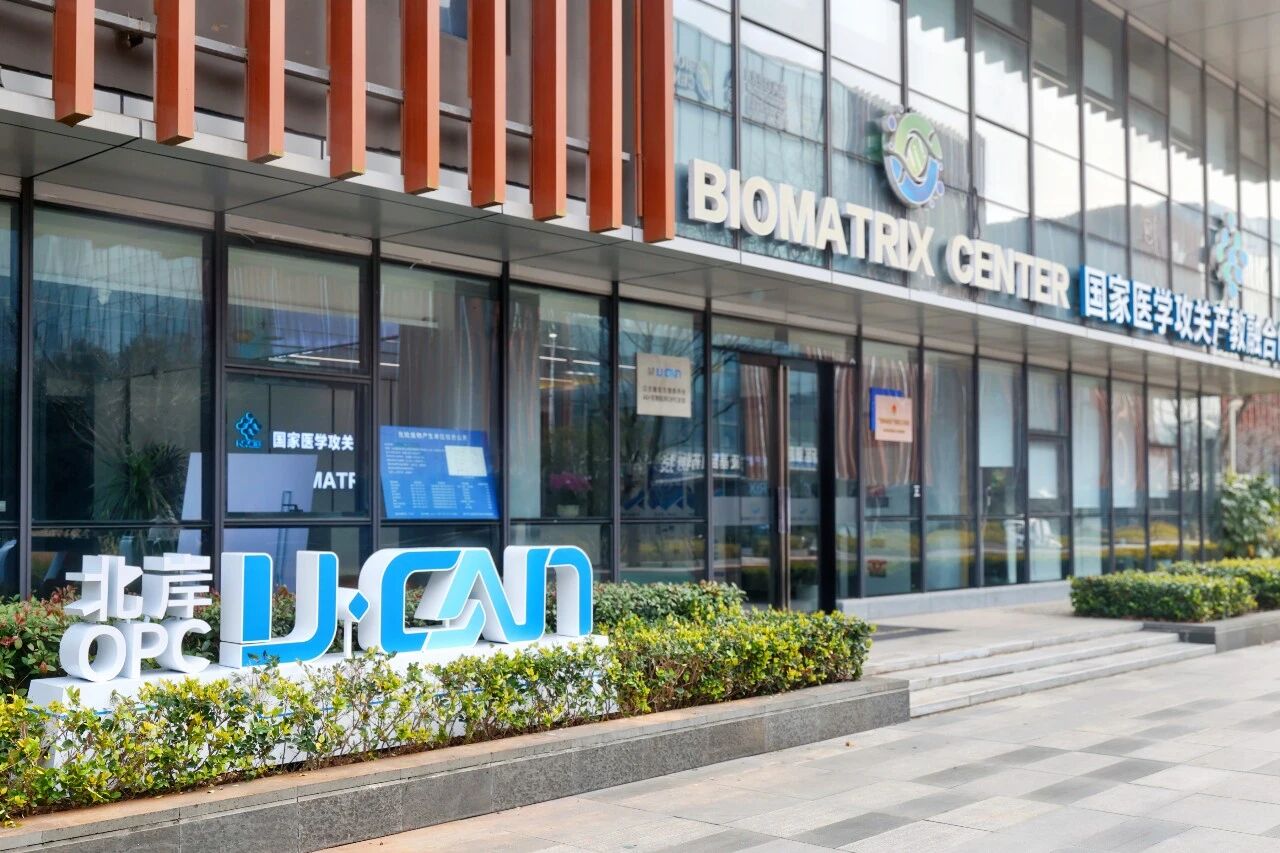
You might not expect it, but at the very beginning of our entrepreneurship, we all worked from home. Wang Gang smiled. Not long ago, the team moved into the “AI + Biomedical OPC Community” in the Biomedical Valley. But for them, the change in the office location was not so much about the physical space as it was about the resource connections brought by the community.
For instance, with the assistance of the park, the team participated in several special roadshows, continuously expanding the channels for hospital partnerships. Currently, the company’s first round of financing is also in progress, and Wang Gang explained that throughout this process, the park has been closely monitoring and following up.
“This is of vital importance for the startup team,” he said with emotion. “Although we have been working on OPC-related matters in the past, now everyone is paying attention to this issue, building communities and providing full support. We believe there will be greater development opportunities in the future.”

Just as Wang Gang said, when the “main character” is in place, a more friendly ecosystem will naturally enhance the overall quality.
In the “North Shore OPC U·CAN Action Plan” released by the new district, it is proposed to establish 30 OPC communities by 2030. Currently, 9 OPC communities have already started operations. Key park platforms such as Research and Innovation Park, Central Business District, and Nanjing National Agricultural Innovation Center respectively focus on different fields such as artificial intelligence, industrial software, and modern agriculture, providing a total of 20,000 square meters of space and 1,500 entrepreneurial positions.
Our OPC community focuses on the industrial software sector. Considering the characteristics of the industry, the community closely follows the demands of the industry and has achieved a ‘soft and hard integration’ in its spatial layout. The carrier space not only creates a full-chain AI + industrial software training environment for the occupants, but also synchronously configures high-quality computing resources, laying a solid foundation for innovation. As one of the first to launch the park, the Central Business District has distinct characteristics. Staff members explained that the community has also established a full-life cycle incubation system, extending its service scope to universities and research institutions, and can provide ‘hard support’ such as technical empowerment, capital connection, market expansion, and intellectual property protection for start-up OPCs.
With focused fields, well-equipped facilities and adequate support, each OPC community serves as an incubator for “super individuals”. When every bit of dedication can find fertile ground to grow, this fertile land on the north bank of the Yangtze River truly becomes a place where dreams and the future converge.