Skip to content

How deep is the “assets” of the industry?
The “backbone support” behind the 52.7 billion yuan output value
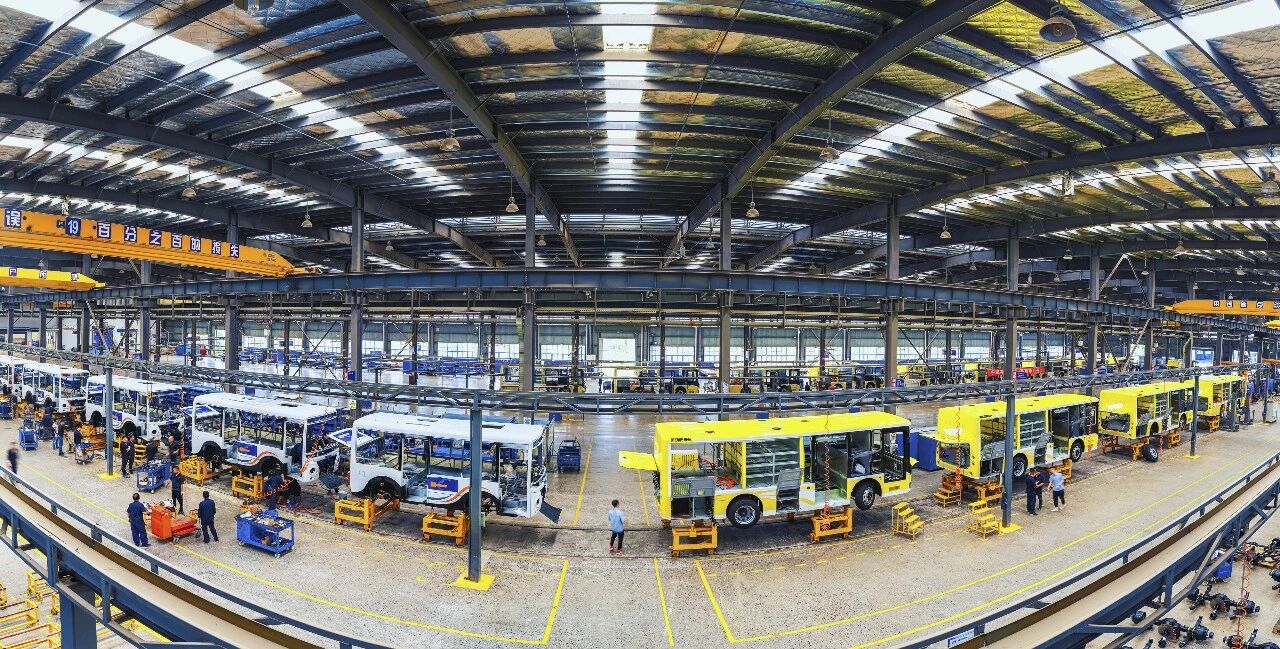
The press conference began. The development zone presented a remarkable “report card” on the new energy vehicle industry: The total annual output value of the industry in 2025 was 52.7 billion yuan, with a year-on-year growth of 8.2%, accounting for 57.2% of the regional’s industrial output value of the规模以上 enterprises and 81% of the entire district’s industrial output value… A series of data demonstrated the strong strength of Liushi’s new energy vehicle industry.
“We have established the most comprehensive new energy vehicle industrial base in the province. It has been recognized as a New Energy Vehicle Industrial Base of Jiangsu Province and a National Torch Characteristic Industrial Base,” said Zhang Qi, the director of the Economic Development Bureau of the Development Zone. Currently, Lishui has gathered 3 leading vehicle manufacturers and 84 enterprises in the industrial chain above the designated size. Among them, there are 7 national-level “Little Giant” specialized and innovative enterprises. The annual vehicle production reaches 95,000 units.

In terms of spatial layout, the development zone has established a pattern of “one core leading, three areas collaborating”: The “one core” centered around the New Energy Avenue focuses on the layout of core businesses such as complete vehicles and battery power supplies, the Tuanshan area is dedicated to scientific and technological research and development, the Xinhuai Avenue area is for advanced manufacturing, and the Liangkong area is for cross-border trade. The carrying capacity of 6,000 mu of industrial land continues to improve. The goals for the 15th Five-Year Plan have also been clearly defined: A total of 2 billion-yuan enterprises will be realized, 3 enterprises with a revenue of over 5 billion yuan will be established, the number of industrial enterprises under the industrial chain will exceed 150, and there will be more than 50 provincial-level specialized and innovative enterprises…

How Practical Is the “Judicial Gift Package”?
Eight Measures, Each Targeting Specific Problems
The larger the industry, the more complex the risks. What do businesses fear the most? They fear contract disputes, excessive preservation measures, prolonged lawsuits, and the stranglehold on their hard-earned technological innovations… Targeting these pain points, the Lishui District Court has introduced the “Eight Measures,” all of which are packed with practical benefits.
Establish a specialized trial team for new energy industry cases, handling centralized trials for cases involving areas such as vehicle manufacturing, power batteries, and intelligent connected systems.
Create a “fast track” for litigation services by giving cases involving new energy enterprises “priority identification and rapid processing” in filing, preservation, mediation, trial, and enforcement.
Promote and apply flexible preservation measures, such as dynamic supervision of equipment used for technological innovation and product development, to avoid “sealing without consideration for usage.”

“We are not merely conducting court hearings; instead, we aim to deliver judicial services right to the doorstep of enterprises.” District Court’s Civil II Division Director Gao Chuanfa explained that a judge’s workstation will be established in the new energy industry cluster area, enabling disputes to be resolved efficiently and at a low cost within the industry. At the same time, regular visits and investigations will be conducted to tailor “Legal Diagnosis Opinion Letters” for enterprises with a high volume of litigation, helping them prevent legal risks. “Such services are exactly what we need!” Entrepreneurs all praised the “Eight Measures”, from “passive judgment” to “pre-service orientation”, from “one-size-fits-all” preservation to “live sealing and unlocking”, from “conducting court hearings” to “delivering legal services to the door”, and the court’s this round of actions is “very heartfelt”.

How to proceed in the future?
Government and court work together in a “mutually reinforcing” manner.
The “eight measures” not only focus on the present but also plan for the future. Lishui Court will deepen regular communication and cooperation with the development zone management committee, the industry and information technology bureau, the science and technology bureau, and the commerce bureau, etc. They will conduct in-depth analysis of legal risks in advance regarding aspects such as industrial investment promotion, intelligent transformation and digitalization, and talent introduction, and issue judicial suggestions to achieve the early resolution of conflicts and disputes. For new energy enterprises that are temporarily in trouble but possess high-tech capabilities and have market prospects, the court will comprehensively utilize means such as reorganization and reconciliation, relying on the government-court linkage mechanism to coordinate and solve issues such as credit restoration, asset disposal, and attracting investment, helping “ailing enterprises” to rejuvenate and thrive.
“Rule of law is the best business environment.” Qin Qihui, a member of the district court’s leadership team and the deputy director, said that the Lishui court will take the “eight measures” as the starting point to continuously optimize judicial services, allowing enterprises to feel fairness and justice in every case and the judicial warmth in every step. Eight tough measures at a press conference: The new energy industry in Lishui is accelerating under the protection of the rule of law.