Skip to content
Last week, a special “international gathering” was held in Jiangbei – the second RENOFARM training course, jointly organized by the Food and Agriculture Organization of the United Nations (FAO) and Nanjing Agricultural University, was launched at the Binjiang Campus of Nanjing Agricultural University.
The five-day training course attracted senior veterinary officials from 13 developing countries including Egypt, Azerbaijan and Sri Lanka.
When these international friends gather together, what will they discuss, share and learn together? What highlights are worth paying attention to?

Universities join hands with the FAO to focus on global challenges
Before introducing this training course, I believe everyone has heard of “superbugs”. This refers to the situation where bacteria develop resistance to most commonly used antibiotics, making even common infections incurable. In recent years, it has become a serious global public health threat.
Then how exactly do bacteria “learn” to resist drugs? In addition to drug abuse in the medical field, the excessive use and misuse of antimicrobial drugs such as antibiotics and antiparasitic drugs in the agricultural and food systems are also major driving factors.

If antibacterial drugs are abused in the process of animal breeding, it may promote the production of drug-resistant bacteria in the animals and may spread to us through the food chain or the environment.
Wu Zongfu, a professor and doctoral supervisor from the College of Veterinary Medicine at Nanjing Agricultural University, introduced that this RENOFARM training course is precisely aimed at addressing this global challenge.
The Chinese meaning of RENOFARM is “Reducing the reliance on and demand for antimicrobial drugs and promoting the transformation of the agricultural food system”. We hope to promote the green and sustainable development of animal husbandry from the source and the system level.
Wu Zongfu introduced that Nanjing Agricultural University has maintained a long-term cooperative relationship with the FAO all along. This training course is also the first key project to be implemented after the FAO signed the Memorandum of cooperation with the school. Both sides will join hands to promote the governance of antimicrobial resistance and contribute to global food security.
Twenty course activities strengthened communication and cooperation
Aiming at this goal, this training course mainly focuses on the reduction of antibacterial drugs at the farm level, animal health management and the improvement of technical capabilities.
According to the schedule, over 20 specialized courses, technical discussions, practical teaching and interactive exchange activities will be held in five days. The lecturer team is composed of FAO veterinary officers, renowned scientists in the field of animal health in China and professional teachers from Nanjing Agricultural University. The course content covers key areas such as the rational use of antibacterial drugs, health management of livestock, poultry and dairy industries, and anti-bacterial techniques of Chinese herbal medicine, providing students with a systematic and highly practical learning experience.

The teachers are not simple, the courses are not simple, and the trainees participating in this training course are not “simple” either. They are all senior managers in the field of veterinary medicine in their respective countries. These international students from different cultural and professional backgrounds study and exchange here, and take back the concepts and knowledge they have learned to promote and apply them. They cooperate deeply and move forward hand in hand.
This training has effectively enhanced my systematic understanding of animal health and veterinary public health, which is also a key area of current development in our country. Nouv Sophorn is the National liaison for veterinary products in Cambodia and the deputy director of the Veterinary Inspection Office. He said that he would actively promote these concepts and practical achievements in communities at all levels and relevant institutions in Cambodia.
The International Influence UP has been held for two consecutive years
It is worth mentioning that this is not the first time that Nanjing Agricultural University has held the RENOFARM training course. Last November, the first RENOFARM training course was also held at Nanjing Agricultural University, with participants from 15 countries.
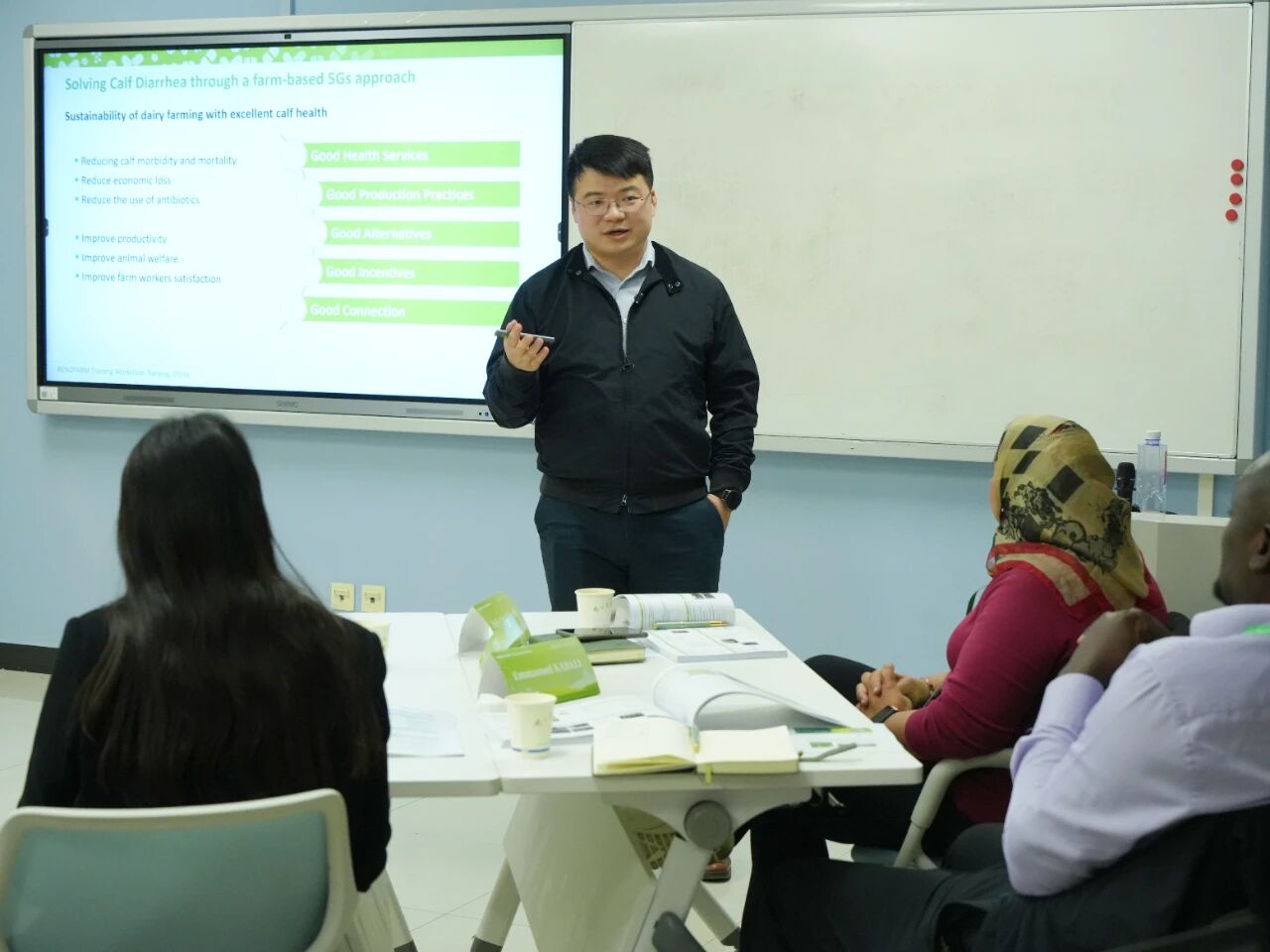
Having been held for two consecutive years, it is not only unique among universities across the country, but also the international influence of the project is continuously expanding. It is reported that in order to provide more experience for countries to promote the reduction of antibiotic use, this training course has also optimized the training content based on the feedback from the first session: it places greater emphasis on practical orientation and operability, and adds interactive sessions and case analyses. Better meet the capacity building needs of international students, enhance cross-border collaboration and experience exchange…
A vibrant and inclusive environment, where various ideas and viewpoints converge and collide, makes the significance of a training course go beyond this. Looking towards the future and moving forward hand in hand, we look forward to finding a new path for the global conundrum of antimicrobial resistance.