Skip to content
In an inconspicuous corner of Nanjing Abunai New Materials Co., Ltd., an old-fashioned automatic mixer with faded paint and blurry nameplate stands quietly. Next to it is an equally old office desk…

It’s hard to imagine that this “antiquity” with a processing capacity of only 200 kilograms is actually the “number one hero” of this national-level specialized and innovative “little giant” enterprise. “It’s a ‘old buddy’ that was hand-made in 1997,” said General Manager Wang Bo, touching the machine’s body and his eyes brimming with emotion. “Back then, it was this small machine that churned out one bucket after another…” From 200 kilograms to 500 kilograms, and now to the fully automatic mixer weighing 5 tons, this “old buddy” is like a silent medal, witnessing Abuna’s thirty-year stubborn journey of “persistently exploring new materials” and breaking the foreign monopoly.
01
“Immersion” has no end
Converting “leaking” into the “past tense” In the casting industry, micro-pores and gas pores are the most dangerous. Even a micro-pore as thin as one-tenth the diameter of a hair could cause a spacecraft to malfunction or lead to oil leakage in an automotive cylinder head.

What Abuna does is to perform meticulous work in such specialized fields, treating the parts. When you enter the proud infiltration workshop of Abuna, one after another workpiece frame carries castings sliding into the fully automated production line. Under the vacuum pressure, a special “infiltration agent” seals all the invisible micro-pores. “It’s like giving the parts a deep spa treatment with a special agent,” said Yu Jianhua, the production director of Abuna, making an analogy.

But don’t underestimate this “medicine potion”. In the past, the high-end infiltration agent market was long dominated by giants such as DuPont from the United States and Henkel from Germany. Domestic enterprises not only had to pay high prices but also often faced “blockade”. The turning point came in 2014. Abuna independently developed the 8690 organic infiltration agent, which was successfully certified by the German Volkswagen laboratory. It became the first infiltration agent brand in China to enter Volkswagen’s global supply chain system. Since then, Abuna has overcome numerous obstacles and its recyclable infiltration sealant not only broke the monopoly but also reduced the cost by more than 25%. Today, the product’s market share in China has exceeded 70%, truly achieving import substitution.
02
From “Follow-up” to “Setting the Standard”
The remarkable transformation of a Chinese enterprise cannot be overstated. The growth story of Abuna is a quintessential tale of an emerging Chinese company. When it was officially established in 2006, it was merely a small player called “Abuna Infiltration Technology Co., Ltd.” But through its “tenacity” in research and development – allocating 10% of its annual sales to the laboratory – it managed to carve out a successful path.

In 2021, Abuna successfully developed and put into operation an automatic infiltration production line, achieving a significant breakthrough in the field of high-end infiltration equipment and exporting it to overseas markets such as Germany. In 2022, the company was selected as a national specialized and innovative “small giant”, completing the leap from “following” to “leading”. The same year, Abuna presided over the formulation of the first set of industry standards for infiltration agents. From being a “good student”, it began to act as a “question setter”. “With standards in hand, one’s words carry weight.” As the person in charge of this standard formulation, the company’s R&D director Zheng Li led a research team composed of doctoral and master’s degree holders from prestigious universities to the laboratory every day, solving one problem after another. “Our research direction is very clear. We not only want to have strong adhesion, but also want it to be more environmentally friendly and more intelligent.”

Data is the most powerful evidence: The infiltration sealing material achieves fully automatic separation and recycling during the production process, reducing wastewater discharge by 90% and the consumption of sealing materials by over 25%; the environmental-friendly surface treatment technology for aluminum-magnesium alloys exceeds the industry average by 12 times; the salt spray resistance effect of the two-component body edge bonding adhesive is 15% higher than that of mainstream products in the industry, and the cost has decreased by approximately 20%… All of these are vivid illustrations of Abuna’s “infiltration” concept of endless development.
03
Never stop striving
Abunai’s strategy of transitioning from selling products to providing services has always been based on the most forward-looking perspective. This company, which started with a 200-kilogram blender, has long transcended the “product-selling mindset” of traditional manufacturing. Currently, the company is accelerating its transformation from a single-product supplier to a comprehensive service provider – customizing products based on customer needs and establishing service networks around core industries such as automobiles and new energy.

At present, Abun has established 3 processing plants and over 30 service centers across the country, and has set up several subsidiaries in cities like Shanghai and Chongqing. In the words of the company’s chairman Huang Xin, “Our laboratories and production lines are set up wherever the customers are.” With the popularization of new energy vehicles, lightweighting of vehicle bodies has become an industry necessity. Abun took the lead in seizing the opportunity and focused on the surface treatment and structural bonding technologies of aluminum/magnesium alloy die-cast components. “Currently, our technology has undergone preliminary experiments and is now in the trial production stage,” Yu Jianhua introduced. The company has built the most advanced fully automated production line in China, specifically for the production of structural adhesives for aluminum/magnesium alloy die-cast components, with an annual output of up to 4,000 tons.
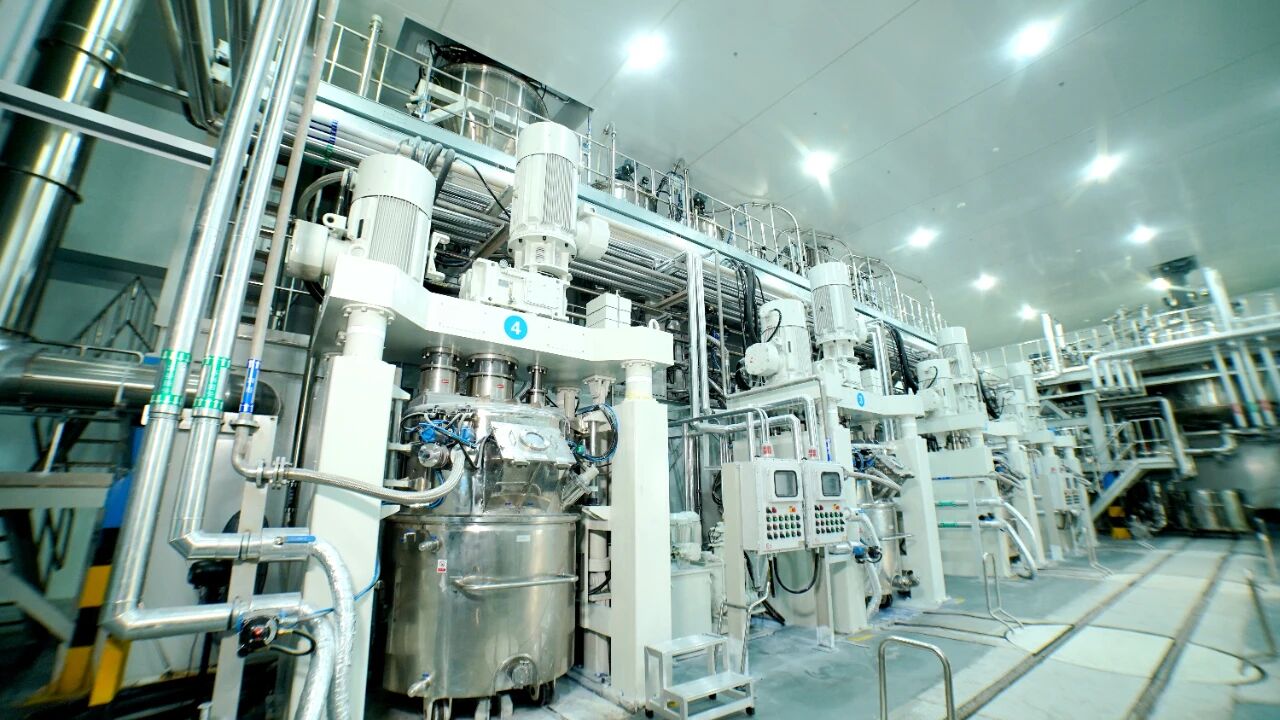
Apart from traditional strong areas such as automobiles and aerospace, Abuna’s attention has also been turned to the broader blue ocean – energy storage, new energy batteries, and electronic and electrical chips. In his latest business scope, new projects like “energy storage technology services” and “battery component production” stand out particularly. “Our goal is to push more and better domestic new materials onto the international stage,” Huang Xin said with confidence.
From automotive engines to new energy batteries, from aerospace components to future chips, Abuna is building one dream of domestic high-end new materials after another with his 30-year unwavering craftsmanship.