Skip to content
“Mr. Zhang, could you please customize another batch of this automatic line-receiving disc for us?”
The office door of Zhang Wei, the founder of Nanjing Weizhe Chuangli Electronic Technology Co., Ltd. (hereinafter referred to as “Weizhe Mooring”), was slightly ajar. Inside, there was a lively discussion. By leaning sideways and squeezing in, I found that seven or eight clients were surrounding Zhang Wei, listening to him introduce the details of a new type of mooring box.
The room, which was less than 100 square meters, was Zhang Wei’s office, also a reception room, and even a temporary product exhibition hall. After just sending off a group of guests and before having a chance to have a sip of water, another call came in asking about something. This small and beautiful team of only nine people managed to seize 90% of the industrial-grade mooring drone market through their busy work.
01 The products are sold overseas.
When it comes to drones, many people might first think of consumer-grade drones. Those used for drone performances on New Year’s Eve or for aerial photography in daily life fall into this category. However, in fact, there are numerous types of drones and they have a wide range of uses. One of them is the tethered drone.
The word “tethered” means tied down, and “remaining” implies staying in the air. As the name suggests, a tethered drone is a type of drone that is tied down by a long rope resembling a “tail”, enabling it to hover in the air for a long time.

The primary challenge faced by tethered drones is endurance. Zhang Wei explained that since the team’s establishment, they have been focusing on this area and have been continuously optimizing the tethered power supply system to alleviate the concern about endurance.
“It not only needs to transmit electrical energy, but also needs to ensure stable signals, while also taking into account weight and strength,” Zhang Wei said. “Just this cable alone, we sought out many cooperating manufacturers and spent nearly two years perfecting it before it was launched.” With this system, the hovering time of the drone has been extended from about 15 minutes to 6-8 hours, or even longer.

Nowadays, this technology has expanded into the company’s four main product lines: a tethered lighting system that can illuminate 3,000 square meters in the dark, a tethered relay system that sets up communication “lifelines” in disaster-stricken areas, a dual-tethered high-altitude cleaning system that replaces “spidermen” for cleaning facades, and a tethered hangar system that can be moved with the vehicle.
It is reported that in the industrial-grade tethered unmanned aircraft market with power above 10KW, Weize Tethering has a market share of 90%, and its products are exported to the United States, Europe, the Middle East and other places. The team has also become a stable supplier of related products of DJI Technology.
02 Make Parts Instead of Aircraft
How about the team behind achieving success in such a specialized market segment?

Founder Zhang Wei used to be deeply involved in radar power supply research in state-owned enterprises and had extensive experience in both research and marketing. However, in Zhang Wei’s opinion, what made the team most outstanding was their strong spirit of identifying and solving problems.
“I think a start-up company only needs to focus on small components. There’s no need to force itself to build an aircraft. Drones are developing rapidly with new features constantly emerging, and the demand for new components is always there,” Zhang Wei said. It was this “component thinking” that enabled them to always spot business opportunities in the seemingly insignificant aspects.
Once, a client casually complained that it was troublesome to operate the drone for mountain patrol in the dark. The team immediately took action and designed and assembled a high-intensity lighting device that could be hung on the drone. The device itself was not complex, but with the drone as the carrier, its value immediately increased. Another client did not want to manually reel in the line. They then, based on their profound understanding of the tethered product, developed an automatic reel.

“These products are small in size and seem insignificant at first glance, but one order after another accumulates to form a large market.” By relying on this flexible model of “large market + small team + high profit margin”, the team is able to accurately identify the direct demands of the market.
To sell more products, Zhang Wei even stepped in to become a “social media influencer”. The two new media accounts he operated have collectively released over 1,600 introduction videos, and just the Douyin account alone has achieved sales of over 12 million yuan.
03 “The service here is just right”
Over an eight-year period, from a newcomer in the industry to a leader in a specific field, the rapid growth of Weizhe tethering began with a single innovation and entrepreneurship competition.

In Zhang Wei’s office, there is a faded certificate of honor. “At first, we started our business by renting someone else’s meeting room. Later, we participated in the New District Young College Students’ Innovation and Entrepreneurship Competition and won 40,000 yuan in prize money. Only then did we have the start-up funds to rent the venue and set up the production line.” Zhang Wei reflected, “This certificate of honor is a witness to our beginning. Later, I also got to know a group of like-minded friends through the New District Entrepreneurs’ Club.”
As the business expanded, the drone testing required airspace, which became a new problem for this young team. “The park immediately connected with the resources of the Xijiang Test Flight Field of Nanjing Drone Base. Now, we can fly downstairs, which is very convenient,” Zhang Wei said.
Apart from the high-quality resources, what moved him even more was the efficiency and warmth of the service. Last night, late at night, in order to test the reflection effect of the product in the glass curtain wall environment, Zhang Wei sent a WeChat message to the park with a try-and-see attitude: “I urgently need a real reflection environment. Could you lend me a building?” To his surprise, the park staff coordinated overnight and found a building that met the requirements the next morning for Wei Zhe to use.
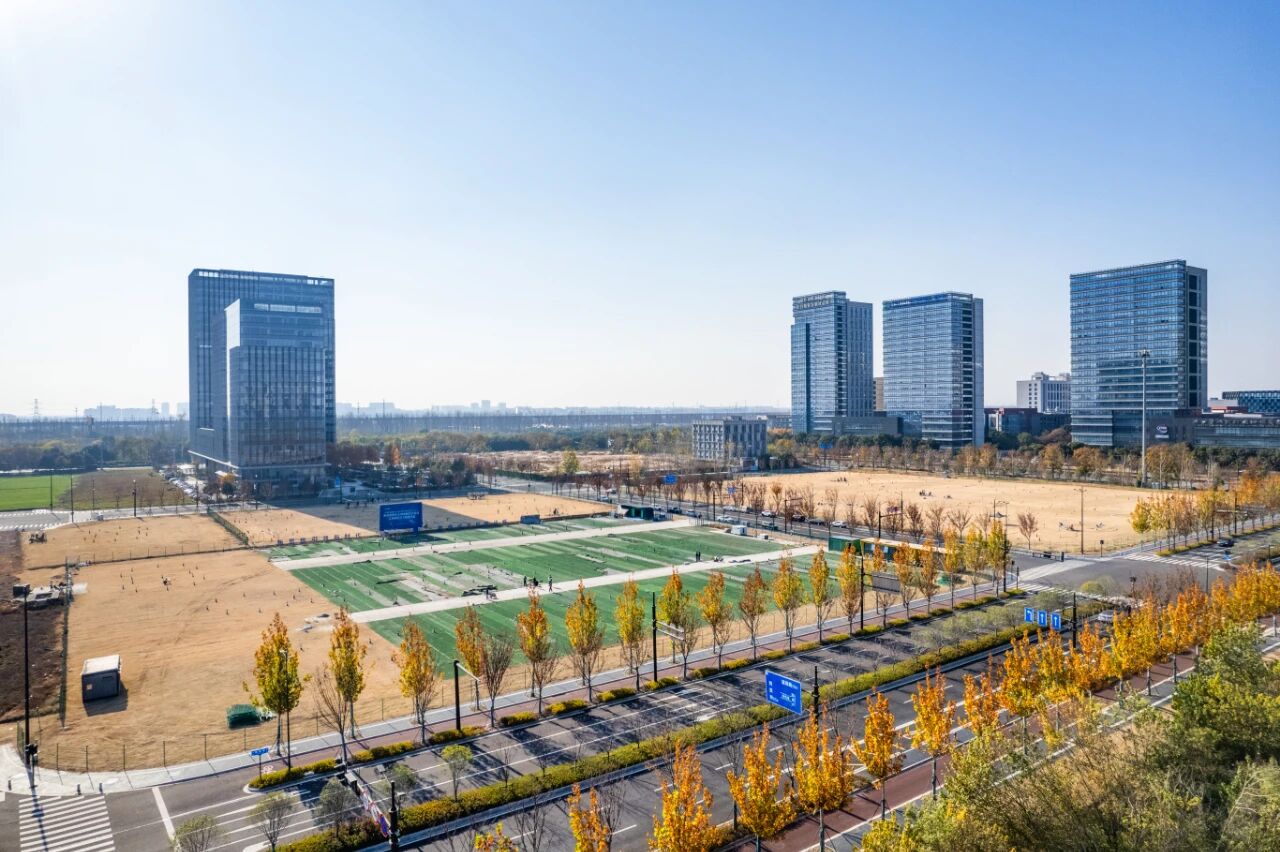
“This year, the integration of the two parks has led to the establishment of the Jiangbei Science City, providing our company with a higher platform. I believe that in the future, there will be more cooperation opportunities and development space,” said Zhang Wei.
Now, when you open the window of your office, the 50-plus drone-related enterprises gathered around form a complete low-altitude economic industrial chain. On this hot spot of low-altitude economy in Jiangbei, Zhang Wei and Wei Zhe Sailing are using one after another “charging lines” to connect to the broader sky.