Skip to content
As one of the two pilot cities for the digital transformation of small and medium-sized enterprises in the country, Nanjing is accelerating the creation of a replicable and scalable “Nanjing model”. To fully leverage its leading role as a benchmark, the Nanjing Municipal Bureau of Industry and Information Technology has launched a series of promotional activities called “Transformation ‘Nanjing’ Distance”, taking you to the transformation benchmark pilot enterprises to see how they solve problems, improve quality, and advance to higher levels.
The sixth installment focuses on Nanjing Bearing Co., Ltd.
Industry to which Nanjing Bearing Co., Ltd. belongs: Small and medium-sized enterprises that have undergone transformation in intelligent manufacturing equipment Digitalization level after transformation: Level 3
I. Basic Information of the Enterprise >>
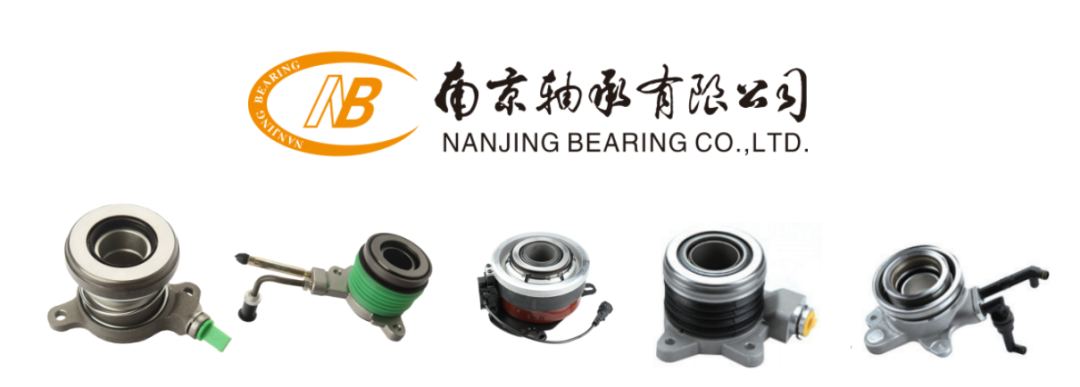
Nanjing Bearing Co., Ltd. is a specialized bearing manufacturing enterprise integrating research and development, production and sales. It has been engaged in the production of automotive clutch release bearings for 56 years. The “Jingning” brand of automotive clutch release bearings produced by the company have over 500 varieties and specifications, ranking first in domestic market share. It is the leading compiler of national automotive clutch release bearing standards. The products are supplied to well-known enterprises such as FAW, Dongfeng, and SAIC. It has established a Nanjing Engineering Technology Research Center and has obtained 40 patents. It has participated in the formulation of 2 industry standards and has been awarded the titles of High-tech Enterprise and Specialized, Skilled, Innovative Small and Medium-sized Enterprise. It has won the second and third prizes of the China Mechanical Industry Science and Technology Award.
II. Project Renovation Background >>
Before renovation, digitalization level was at level one (self-assessment)
Digital transformation requires product lifecycle digitization to address the following demands: insufficient collaboration between PLM and process management, BOM, and MES/WMS data, low customization of OA and weak decision support. It is necessary to integrate system data, ensure effective communication of process design to the production site and suppliers, synchronize drawings during changes, and strengthen version management.
Digitalization of the production process requires: reliance on manual detection and paper transmission for quality parameters, absence of online warnings, low rate of equipment networking, and fragmented inspection and maintenance. It is necessary to achieve online quality monitoring and critical value warnings, automatic data collection for analysis and optimization; through the system, formulate maintenance plans, assign inspection tasks, and achieve standardized equipment management.
Digitalization of the industrial chain and supply chain requires: incomplete procurement management functions, weak cross-system collaboration, and insufficient integration of WMS with MES/ERP. It is necessary to use information technology to assist in managing supplier materials, inventory, orders, and qualifications; deepen the integration of WMS with production, procurement, finance, etc., to achieve digital collaboration in warehousing and business.
Digitalization of intelligent management and decision-making requires: incomplete application customization platform for integrated visualization, weak process approval, task management, and data integration capabilities. It is necessary to deploy a more functional collaborative office platform to achieve comprehensive digitalization of daily business processes such as leave application, reimbursement, approval, and notification.
III. Project Transformation Plan >>
This enterprise’s current digital transformation involves building an integrated operation management platform centered on enterprise resource systems and business and finance. It connects all business processes such as sales, planning, production, procurement, quality, inventory, and finance, achieving data integration, process automation, and intelligent decision-making.
At the technical level, the deployment and launch of the core modules “ERP + PLM + MES + WMS + OA” are completed, achieving seamless integration with existing information system platforms and connecting key data flows such as sales, procurement, production, production execution, inventory, and finance.
At the business level, the entire process from sales orders to production plans, production control, procurement plans, procurement execution, material in and out of stock, sales delivery, and after-sales service is achieved. A digital quality management system for the entire process of products from raw material acceptance, production process control to finished goods storage is established. Incoming materials are inspected and stored through the WMS system, batch data is collected, and raw material batch traceability management is achieved; financial management is connected with business data.
At the management level, standardized operating procedures adapted to the ERP system are established, key user training is completed, internal digital management capabilities are cultivated, and a data-driven decision-making awareness is formed.

IV. Project Transformation Outcomes >>
Through this renovation, the company achieved data connectivity sharing and visualization of the R&D process. The new product development cycle was shortened from 55 days to 45 days. With the support of the PLM system, the completion rate of tasks on time increased to over 80%. The market performance was strong, with a 10.22% year-on-year increase in sales volume and a 15.01% year-on-year increase in sales revenue in 2025. Quality control achieved full-process traceability and real-time monitoring. The internal non-conformance rate of products was optimized from 3280PPM (with a qualified rate of 99.6720%) to 99.7594%. The customer order delivery rate increased from 95% to 100%, and the workflow was smooth with significant improvement in work efficiency. At the same time, key energy-consuming equipment data collection was completed, and the self-made monitoring system recorded energy consumption in real time and achieved network connection with the government platform. Energy management was standardized.