Skip to content
During the “14th Five-Year Plan” period, the scale of the smart grid industry in Nanjing has grown by more than 20% annually; last year, the scale of the smart grid industry in the city exceeded 500 billion yuan.
Under the clear trend, an answer is on the verge of emerging – following the software and information service industries, Nanjing’s next trillion-yuan industry is already in the making.
Recently, Nanjing held a special symposium on the smart grid industry, stating that for the period of “15th Five-Year Plan”, as the construction of the new national power system enters a deeper and more advanced stage, the investment scale of the power grid will achieve a leapfrog growth, and the smart grid industry is facing a broader development space. Nanjing has set the goal of making the smart grid a “trillion-dollar industry”.
01
The chain is complete and has covered all the key links of the industry.
With the explosive development of artificial intelligence, the required computing power has increased exponentially, resulting in a huge gap in power demand. Coupled with the global energy transition, the construction of the new power system is accelerating continuously. As a result, the intelligent grid industry has reaped “unprecedented” development benefits.
The “Blue Book on the Development of New Power Systems” compiled by the National Energy Administration clearly stipulates that by 2030, a new power system should be basically established, which directly drives the proportion of intelligent investment in the power system to rise rapidly.
The entire industry is in a rapid growth phase, which is the reason why Nanjing has designated it as the next trillion-dollar industry “candidate”. At the same time, in the smart grid industry sector, Nanjing has established an industry system centered on the “network end”, achieving full coverage of the “source, network, load, and storage” chain, and is one of the regions with the most complete related industrial systems in the country.
From research and development design to production manufacturing, from core components to end products, leading enterprises have strongly driven the process, while upstream and downstream enterprises have closely collaborated. The entire industrial chain has demonstrated resilience and vitality, firmly establishing the core competitiveness of the Nanjing Smart Grid Industry.
Last July, at a regular industrial cooperation meeting held in Jiangning Development Zone, the China Electric Transformer Co., Ltd. just expressed its demand for raw materials such as oriented silicon steel sheets. The production-oriented service enterprise in the park, Nanjing Yiyuan Supply Chain Management Co., Ltd., responded immediately on the spot. The two parties quickly reached a cooperation agreement. In the second half of last year, nearly 30 million yuan worth of raw materials were directly supplied. This year, the scale of their cooperation is expected to exceed 100 million yuan.
The completeness of the industrial chain has made it common for upstream and downstream enterprises to be located in the same park or even right next door. In the face of global supply chain fluctuations, Nanjing, which has the ability to “fully control the entire chain”, can remain stable as a rock and gain the upper hand in competition. And this ability cannot be achieved without the leadership and driving force of leading enterprises.
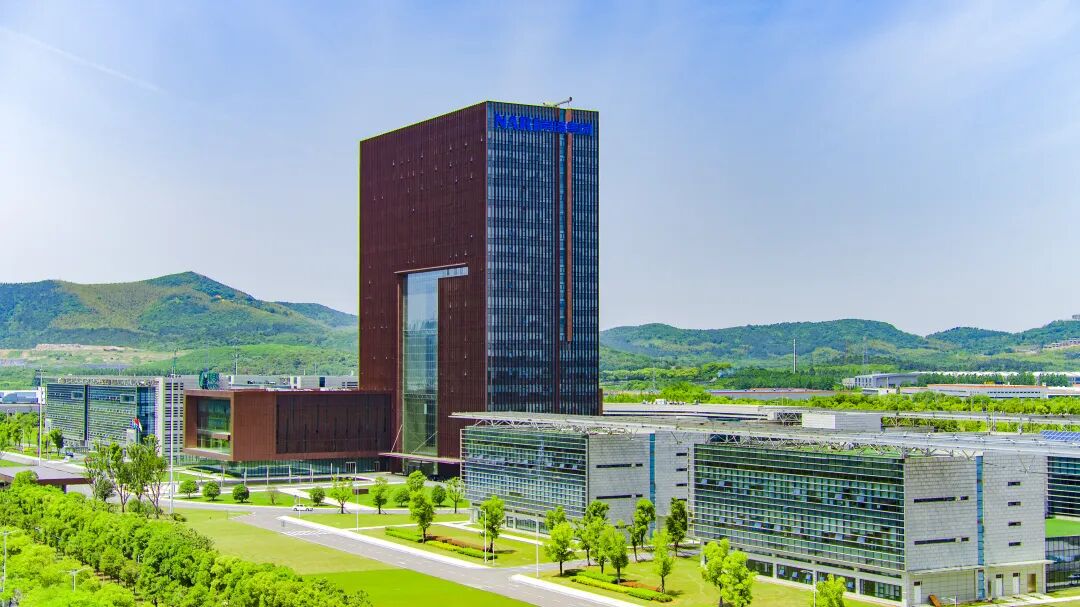
As one of the “chain leaders” in the industry, NARI Group has strong internal capabilities. Its smart grid business covers all aspects of the power sector and its core technologies are internationally leading. At the same time, NARI Group acts like a “magnet”, continuously attracting upstream and downstream enterprises to cluster and develop.
Centered around Nanrui, especially in core product areas such as ultra-high voltage converter valves, DC control and protection systems, and power information and communication, Nanjing has gathered a number of supporting enterprises engaged in power equipment, software development, and system integration. This has formed an industrial ecosystem characterized by “leadership by the leading company, divisional collaboration, and coordinated development”. The localization rate of related components and integrated software products of Nanrui Group exceeds 85%, which has also significantly shortened the delivery cycle of customized products by over 30%.
At present, the intelligent power grid industry in Nanjing has formed a cluster of leading enterprises represented by NARI Group and Guodian Nanjing Automation. It has one of the top 500 manufacturing enterprises in China, over 10 single-champion enterprises, and more than 900 state-owned large-scale enterprises. The advantages of the entire industrial chain are increasingly prominent, and the scale effect has laid a solid foundation for the industry to reach a trillion-dollar scale.
02
Highly advanced technology, with the core product having the highest market share in the industry.
Recently, China’s first marine hydrogen-ammonia alcohol integrated project, “Research and Demonstration Verification Project on Key Technologies for the Full Chain of Marine Hydrogen Energy Production, Storage, Transmission and Utilization”, has been completed. Located in Nanjing, KEOY Wisdom, leveraging its profound accumulation in the field of microgrids, provided the project with the source-grid-load-storage dispatch control protection system and hydrogen-ammonia-alcohol control system.
Industrial competition, in the end, is a competition of technologies. In the development map of the intelligent power grid industry in Nanjing, “strong core technologies” is the most distinctive label.
The independently controlled generator-set protection device developed by Guodian Nanzhi was put into operation at the Qinshan Nuclear Power Base. This is the first application of domestically produced and independently controlled generator-set protection devices in the nuclear power field in China, and it has for the first time achieved component-level independent control for nuclear power plant protection.
The proposal “Grid-forming Energy Storage System in High-Voltage AC Systems” led by Nanrui was approved by the International Electrotechnical Commission (IEC). A formal working group has been established, and the internationalization process is accelerating…
From breaking the foreign technological monopoly to achieving self-reliance and controllability, from leading the formulation of industry standards to promoting technological iteration and upgrading, the intelligent power grid enterprises in Nanjing, with their outstanding core technologies, have been continuously expanding their territory in the national and even global markets and have taken the dominant position.
The data shows that the main products of the intelligent power grid industry in Nanjing have a significant competitive advantage. Among them, the domestic market share of the provincial power grid dispatching automation system and equipment is over 90%, and the domestic market share of high-voltage relay protection equipment is over 80%.
Behind the continuous emergence of cutting-edge technologies lies the contribution of the deep integration of industry, academia and research. During the interviews, every enterprise without exception jointly carried out technological research and development with universities, fully leveraging the abundant scientific and educational resources in Nanjing. Here, 25 universities and research institutions offer power-related majors, providing a rich talent guarantee for industrial development.
At present, the smart grid industry in the city has a talent team led by Chinese Academy of Engineering, supported by renowned universities, and composed of tens of thousands of researchers. Nanjing has also established an intelligent grid industry alliance involving leading enterprises, research institutions, and financial institutions, to jointly promote technological research and development.
03
A wide range of scenarios, breaking away from the traditional power sector to empower various industries
The Ministry of Industry and Information Technology has released “Typical Cases of Power Demand Side Management in the National Industrial Sector”, and Jiangning Development Zone’s “Energy-Carbon Virtual Power Plant” was listed among them.
Entering this “power plant”, there are no cooling towers, no combustion equipment, and no rumbling sounds. It feels like stepping into a high-tech laboratory. On the huge green low-carbon smart energy cloud platform display screen, a series of numbers are like a beating green pulse, constantly updating information such as the power generation capacity, adjustable capacity, green electricity usage ratio, and carbon emissions of the development zone.
Behind the screen, the “brain” of the virtual power plant is conducting real-time monitoring and scheduling. It is stated that the local consumption rate of distributed power sources within the park has reached 100%, and every degree of the green electricity produced is efficiently utilized.
The implementation of the smart grid industry, virtual power plants are a very typical scenario. The smart grid integrates modern information technology, communication technology, control technology and power system technology. It possesses the capabilities of perception, prediction and flexible regulation, and can reshape the flow of energy, achieving real-time balance and optimization of power generation, transmission and consumption.
Chinese Academy of Engineering member Guo Jianbo said that with the rapid development of artificial intelligence technologies such as deep learning, enabling digitalization in the power sector and achieving the informatization, digitalization and intelligence of the power grid has become an inevitable trend for the development of the future new power system.
Under the trend of the times, the smart grid industry is gradually moving beyond the traditional power sector and deeply integrating into various scenarios such as artificial intelligence, smart cities, and rural revitalization, thus generating boundless vitality.
As the “appetite” of AI for electricity continues to grow, the concept of “computing-electricity collaboration” is being increasingly mentioned. The State Grid Electric Power Research Institute has developed a mature technology layout and system solution to meet the requirements of computing-electricity collaboration. It has intervened in all aspects such as power supply, cooling, and dispatching, enabling the computing power center to have the capabilities of active collaboration and flexible adjustment.
In the charging station near Nanhu Metro Station, the owners charging their electric vehicles might not be aware that 80% of the electricity they store in their vehicles comes from the sun above them. This is precisely the result of the smart grid technology. As the first smart charging station in Nanjing that integrates photovoltaic, energy storage, charging, battery testing, and V2G (vehicle-to-grid) technologies, the station has installed a total of 219 efficient photovoltaic panels, generating approximately 120,000 kilowatt-hours of electricity per year, which can meet 80% of the station’s annual electricity demand.
Here, car owners not only can charge their vehicles, but also can utilize the V2G technology to transform their electric cars into mobile energy storage units when parked. This enables two-way energy interaction between the vehicles and the power grid, providing additional income for the owners while also offering flexible regulation resources for the power grid.
Rich and diverse application scenarios have opened up a vast space for imagination in the future of the smart grid industry. On April 7th, the “15th Five-Year Plan Outline for National Economic and Social Development of Nanjing City” was officially released, clearly stating that by the end of the “15th Five-Year Plan” period, the scale of the city’s smart grid industry will exceed 1 trillion yuan.
At the special symposium on the smart grid industry across the city, a clear development strategy was also conveyed – Nanjing will simultaneously focus on the enterprise end, supply end, application end and ecosystem end, vigorously promote the cluster development of the smart grid industry, build a more resilient industrial system, strengthen the research and development of key core technologies, expand more diverse application scenarios, and at the same time, strive to strengthen talent attraction and cultivation, establish special funds, and vigorously support enterprises to go global, creating a more dynamic development environment.
Looking to the future, with its comprehensive industrial chain advantages, cutting-edge technological capabilities, rich application scenarios and solid policy support, this city that is most “familiar with electricity” is bound to continue leading the way in the smart grid industry. The electric current of “Nanjing Manufacturing” is lighting up the next trillion-dollar market.