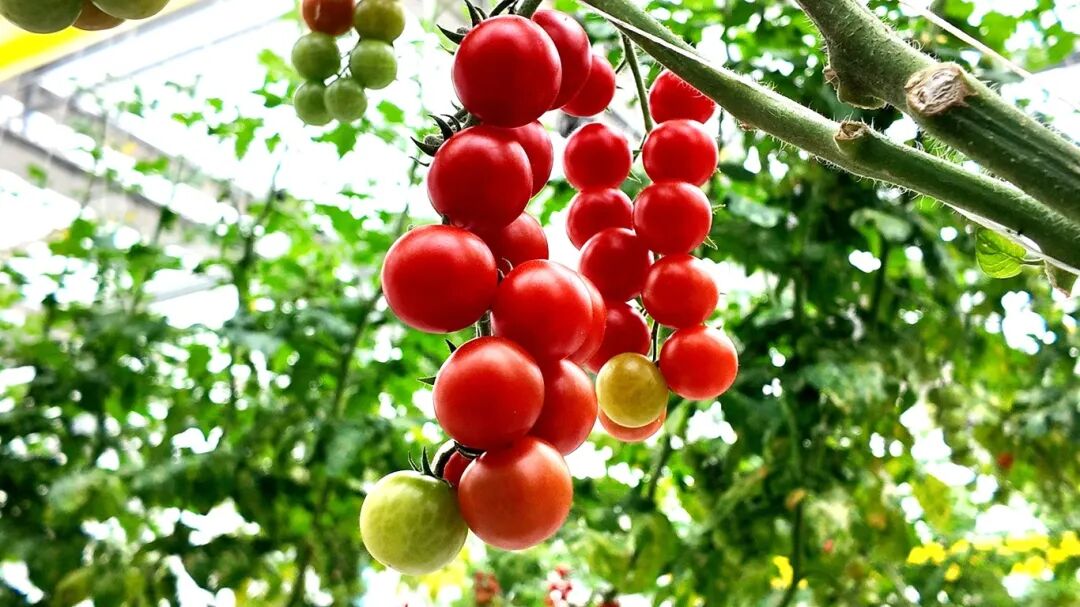
🍅🍅 The tomatoes here are bright red and golden yellow… They look like various kinds of precious stones, bending the vines. If you pick one and put it in your mouth, the sweet and juicy taste will make you fall in love with it in one bite!
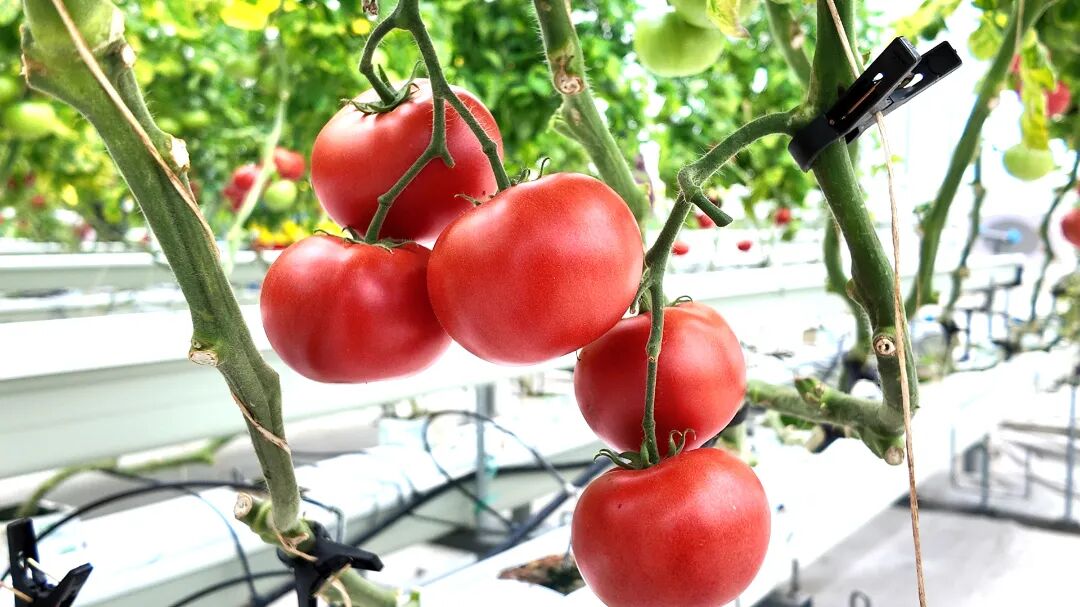
This is the Smart Tomato Laboratory of the Provincial Agricultural Research Institute’s Baima Base located in the Nanjing National Agricultural High-tech Zone. In the greenhouse, the tomato plants are neatly arranged with well-developed root systems. The vines grow upwards infinitely like grapevines, and the fruits are hung in clusters like grapes, exuding a pleasant aroma and being extremely attractive.
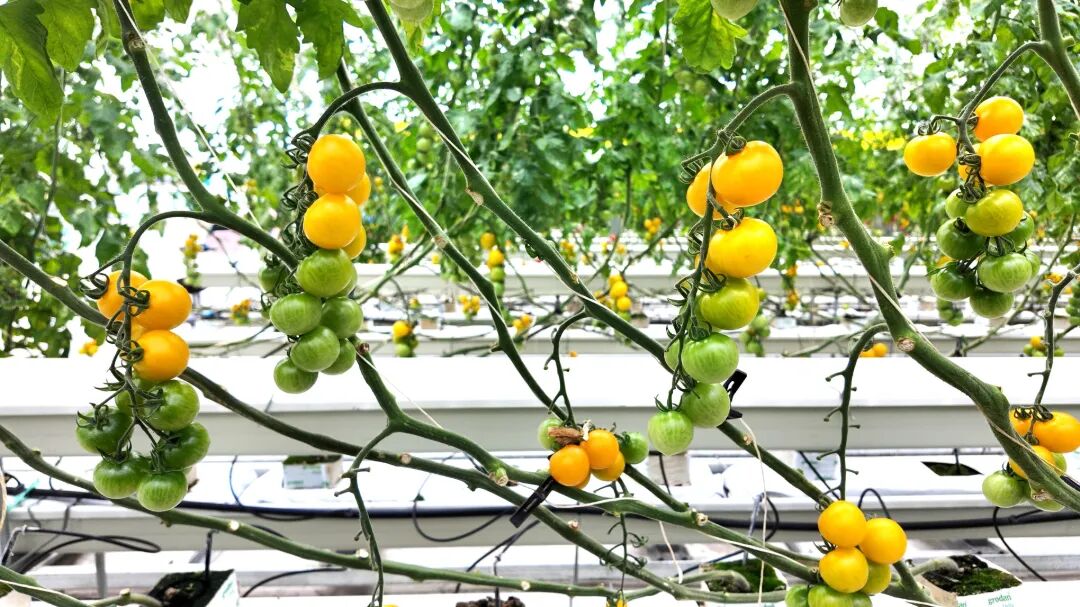
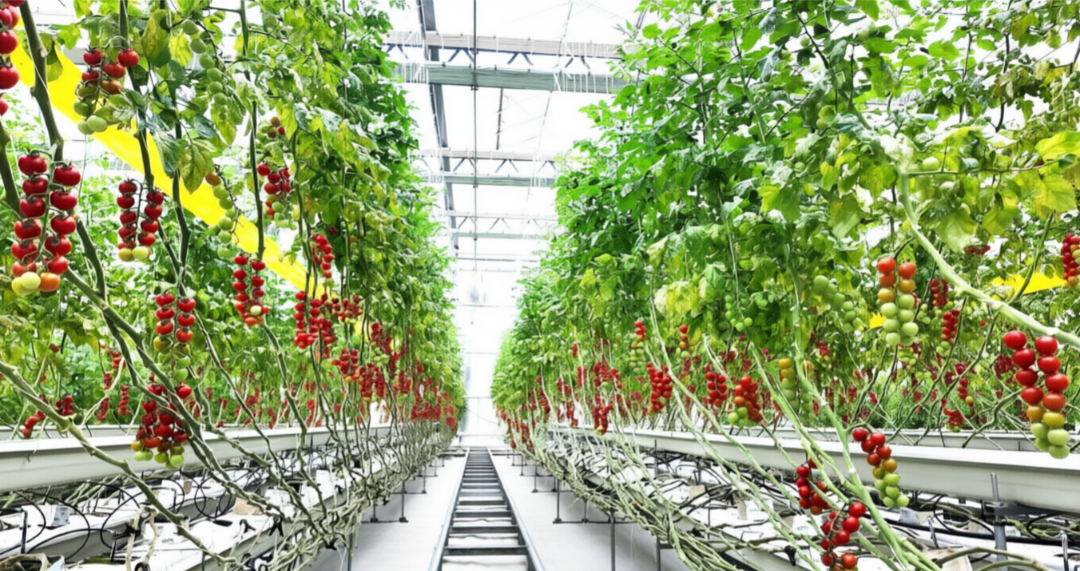
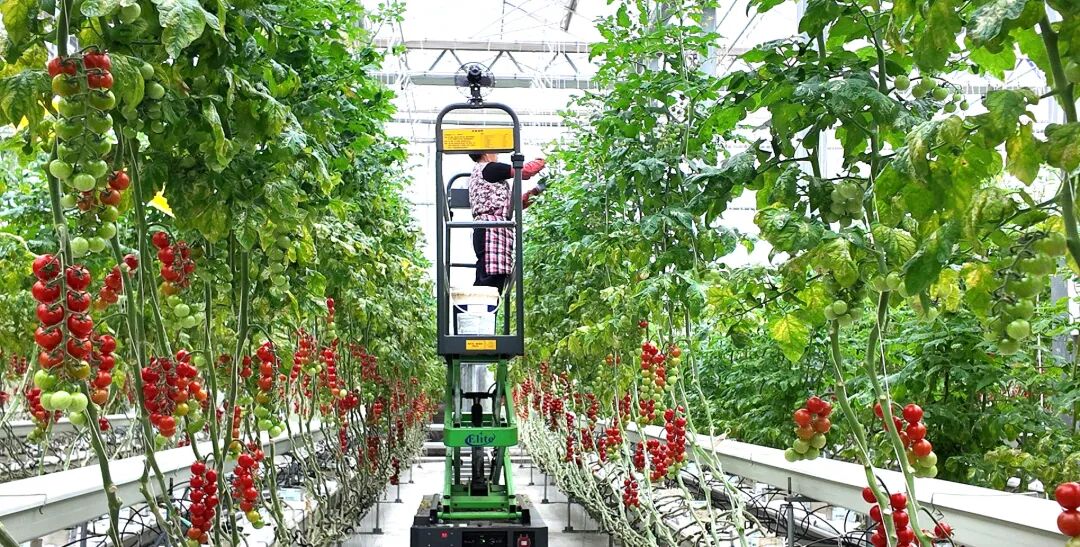
The tomatoes before us are not only of high quality in appearance, but also full of “intelligence”. Unlike the common open-air tomatoes, the tomatoes grown here do not use soil at all. Instead, they are “fed” with nutrient solutions precisely by a water and fertilizer integrated irrigation system. The staff operate the picking vehicles, moving back and forth and performing lifting and lowering operations in the greenhouse.
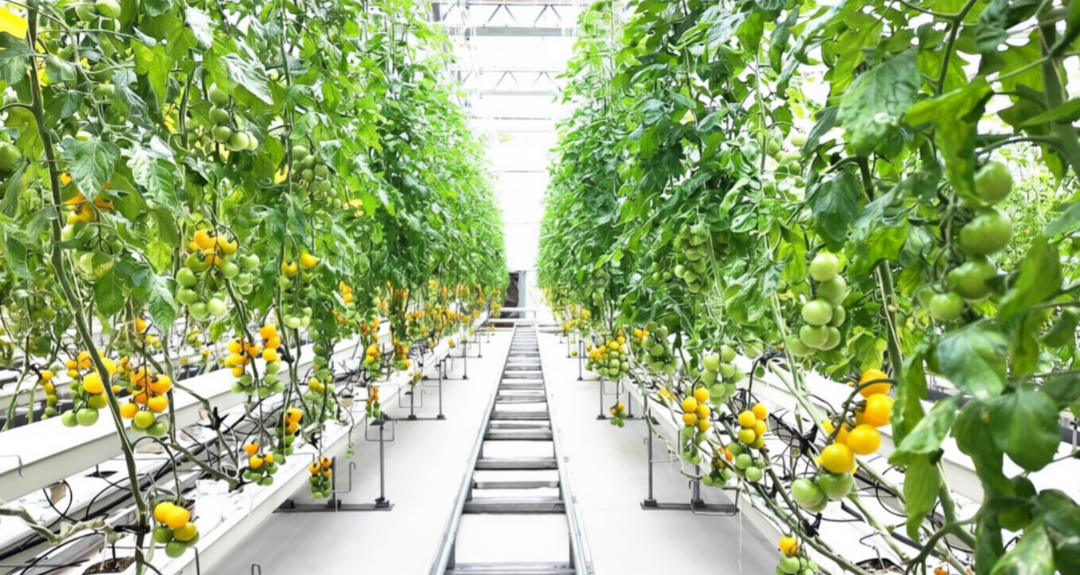
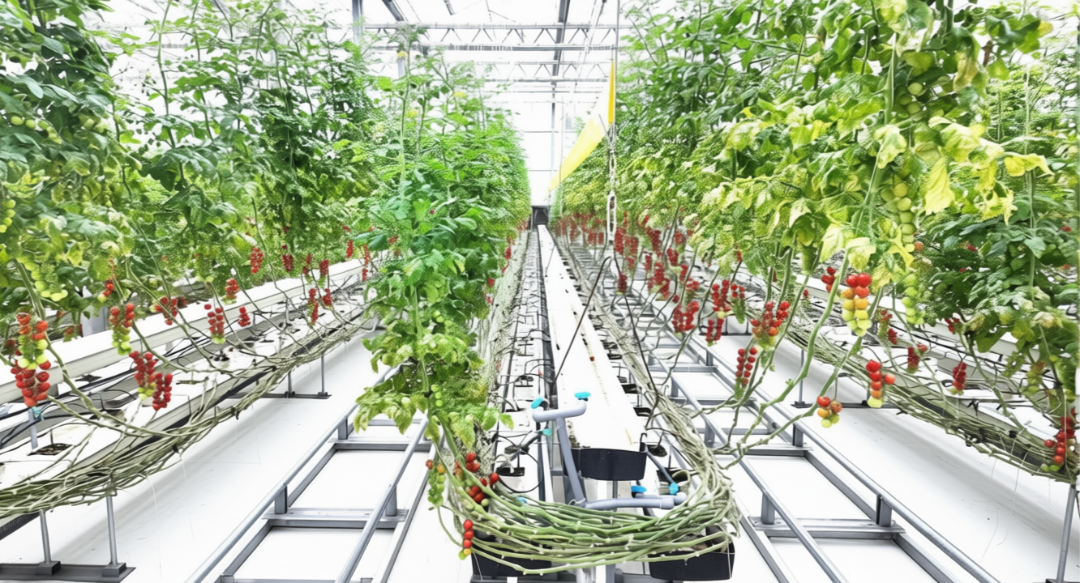
The base adopts an information-based planting method, where various IoT sensors monitor the temperature, light, humidity, pH and other environmental factors in the greenhouse in real time, ensuring that each tomato plant can grow in the most suitable environment. Based on the collected data and the growth status of the tomatoes, the system can be remotely controlled via mobile phones, achieving full digital management throughout the process.
It is known that the tomato planting area of the Baima base of the Provincial Agricultural Science and Technology Research Institute is approximately 10,000 square meters. One season can produce about 10,000 tomato plants. “We started planting from July or August last year. The plants start to bear fruit in one month and reach maturity in another month. They can be harvested in September. The growth cycle lasts for 10 months and the harvest period lasts for 7 to 8 months. During the peak fruiting period, the two greenhouses can harvest 4,000 to 6,000 kilograms of tomatoes per week,” said Lu Zongchao, an agronomist from the Information Department of the Jiangsu Academy of Agricultural Sciences. Currently, the base has eight or nine tomato varieties, including the large tomato Fatoumao, the medium tomato Florence, the small tomato Yanyu, Jinpi, Qingxia 66, Baijingjing 1, Foutes, etc. Among them, “Yanyu” is a small tomato variety independently developed by the Jiangsu Academy of Agricultural Sciences. “Yanyu has high yield, a slightly sour taste, rich sweetness, bright color, and a sugar content of over 10. It has high economic value,” said Lu Zongchao.
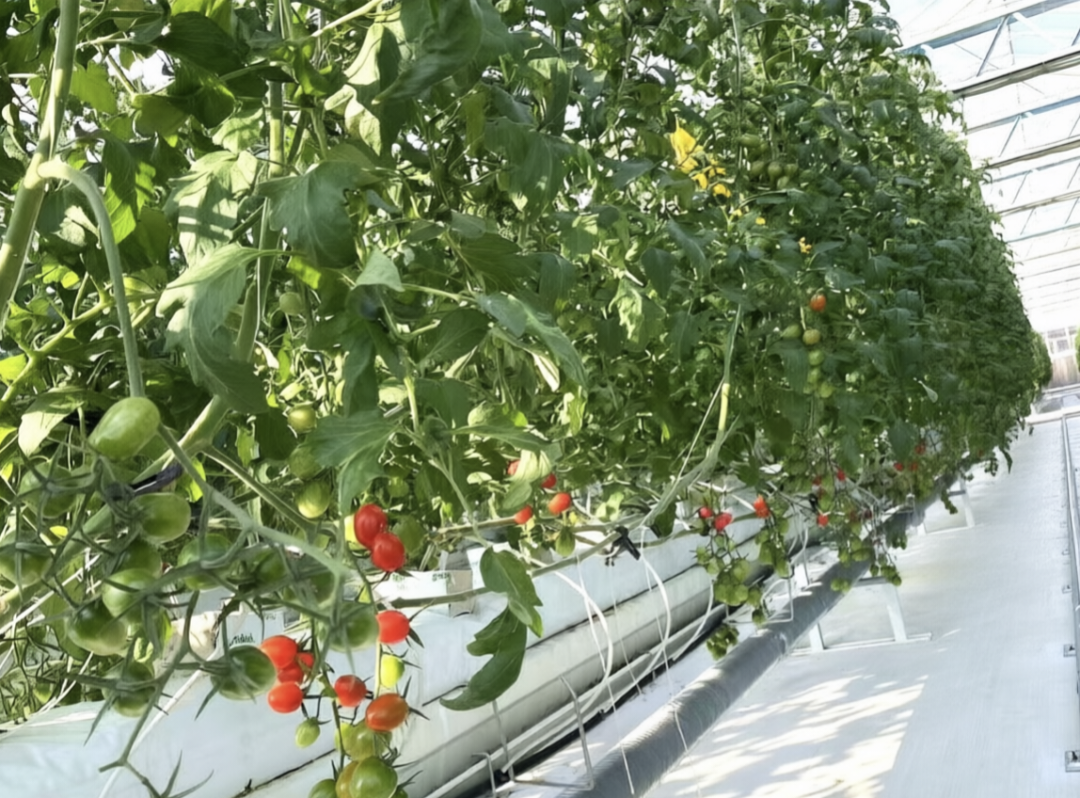
The growth cycle is long, the yield of tomatoes is high, there are fewer pests and diseases, and less labor… With the empowerment of digital agriculture technology, these “smart tomatoes” have advantages that traditional tomatoes simply cannot match.
“Our tomatoes are green, pollution-free and have a distinct taste. The consumer feedback is particularly good. According to the size of the fruit, the current price is approximately 15 to 30 yuan per pound.” Lu Zongchao said. Currently, these brightly-colored, extremely delicious and eco-friendly tomatoes are in the harvest period. Every day, they are successively sent from the Agricultural High-tech Zone to major supermarkets and member units in the urban area, bringing high-quality fresh fruits from the smart greenhouses to thousands of households.