Skip to content
According to the software industry operation report released by the Ministry of Industry and Information Technology, the software business revenue scale in Nanjing is approximately 1.02 trillion yuan in 2025, with a year-on-year growth of 16.7%. This achievement marks the successful realization of the first trillion-yuan-level industrial cluster. Currently, Nanjing has gathered over 3,600 key software-related enterprises, forming a complete industrial chain. The competitiveness of application software in industries such as communication and energy ranks among the top in the country.
As a typical case of high-quality development, China (Nanjing) Software Valley has recently been selected as a typical case of high-quality development in modern service industries and has been commended by the National Development and Reform Commission. “Nanjing, the future has arrived” has already been transformed into a vivid practice of the vigorous development of future industries.

Ancient Capital Embarks on a “Young Evolution” Toward Innovation and Excellence
In the public imagination, Nanjing, a capital of six dynasties and ten regimes, is a city of profound strength and inherent inclusiveness. Yet another facet of the city is rapidly emerging: four future industries—artificial intelligence (software), robotics, biomedicine, and new-generation information and communications—have become Nanjing’s new calling cards.
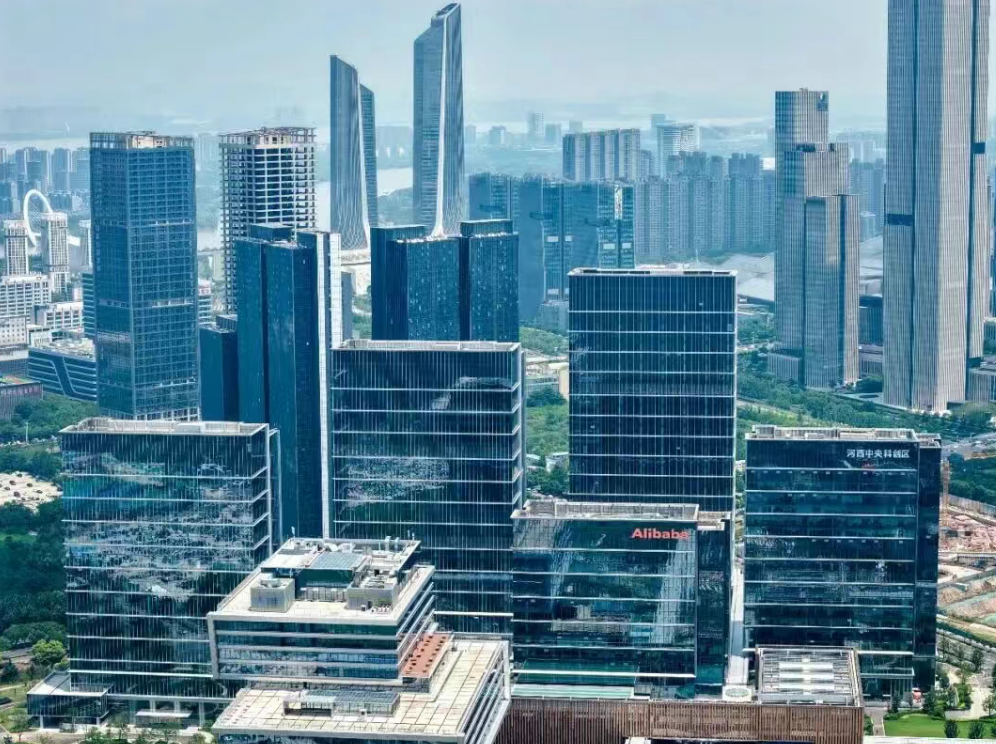
As the province’s first AI ecological district, “AI·Mirror World”—the Nanjing Artificial Intelligence Ecological District—officially opened in the Software Valley on November 23, 2025. On the same day, the 1,800-square-meter “AI·Model Hub,” a center for intelligent agents, began operations. Additionally, the city’s first AI OPC (Open Platform Community), named “Quality-Energy Workshop,” was inaugurated. By establishing a computing power center, data innovation center, Huawei Artificial Intelligence Industrial Innovation Center, and a university technology transfer center, it aims to empower OPC entrepreneurs. Currently, the first batch of 14 enterprises has settled in the community, and the second phase of OPC construction has already commenced.
Yuhuatai District has set forth a vision to build an “All in AI” urban model during the 15th Five-Year Plan period. “AI·Mirror World” will focus on cutting-edge fields such as AI + intelligent connected vehicles and industrial software, striving to attract 1,000 upstream and downstream enterprises, 100,000 professionals, and achieve a core industry output value targeting 100 billion yuan. In the future, this “software plateau” will transform into a “testing ground” for AI technology and a “model space” for AI-enabled production and daily life.

Symbiosis in the “Rainforest” Embodies a Tenacious and Striving Value of Progress
In 2006, as one of the early pioneers, HopeRun Software took root in Nanjing’s Yuhuatai District, growing alongside the Software Valley ever since. What was once a frontier for industrial development has now risen into the “Software Avenue,” a shining landmark that runs through China’s digital economy. From its initial seed, HopeRun Software has flourished into an industry giant with a team of over 17,000 employees. Its journey “from Yuhua to the world” stands as a powerful testament to the resilient and enterprising spirit of this land.
The evolution from “a single tree” to “a thriving forest” reflects the comprehensive leap in Nanjing’s industrial landscape: from a breakthrough as the “City of Software in China” to the establishment of a trillion-yuan industrial cluster; from fertile ground nurturing “hidden champions” to a “rainforest” cultivating future industries like AI… This rejuvenation of industry is fundamentally about structural optimization, ecological prosperity, and a transformation in ethos.
The ecological resilience of “rainforest symbiosis” stems first from biodiversity. In the “digital rainforest” of the Software Valley, there are deeply rooted, flourishing leading enterprises like HopeRun Software, Huawei, and ZTE, akin to giant sequoias that form the backbone and height of the industrial canopy. There are also “hidden champions” and specialized, innovative “Little Giant” enterprises that excel in niche fields, resembling diverse arboreal species that enrich the forest layers. Furthermore, countless dynamic startups thrive like rapidly growing shrubs and ferns in the understory, serving as incubators for new technologies and models. This complete spectrum, ranging from giants to micro-enterprises, hardware to software, and applications to foundational technologies, ensures that fluctuations in any single sector can be buffered and absorbed by the vitality of others within the ecosystem.
Deeper resilience arises from the complex and efficient symbiotic relationships among these “species.” The rainforest ecosystem is a “living community” where knowledge, talent, capital, and data continuously circulate. Academic roots from institutions like Southeast University and Nanjing University nourish the industry, fostering industry-academia-research symbiosis. Large, medium, and small enterprises collaborate through precise division of labor and harmonious coexistence, expanding market boundaries and amplifying ecological value. Cross-boundary integration is key: AI algorithms empower robotics, industrial software drives smart factories, and the convergence of information technology with biotechnology spurs breakthroughs in digital healthcare—all creating synergistic resilience where the whole is greater than the sum of its parts.
If past industrial development was often driven by “chain dynamics,” focusing on building, complementing, and strengthening chains around leading enterprises, then Nanjing’s future industrial landscape is already demonstrating the more vibrant, inclusive, and resilient ecology of “rainforest symbiosis.”
Pooling resources for mutual benefit and shining the “future has arrived” “Nanjing model”
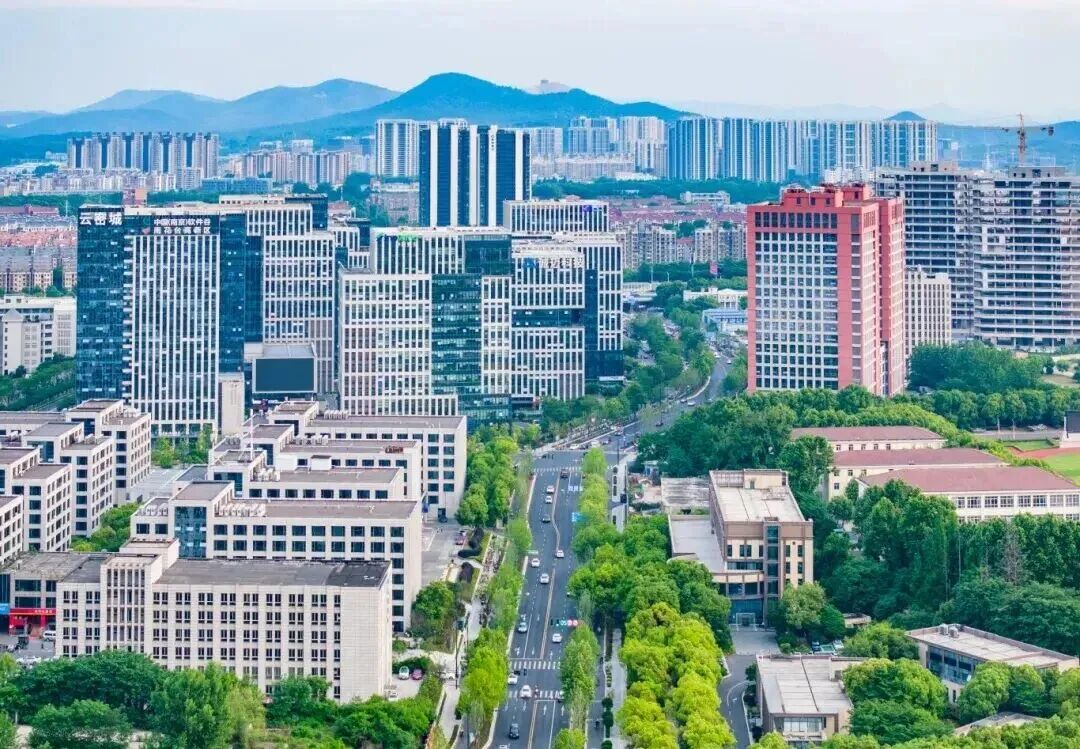
The Software Valley follows the operational strategy of “one leading enterprise, one industry, one park, one characteristic”, forming a “sub-park within a park” construction model under the guidance of the government, with participation from state-owned enterprises and investment from private capital. 59 “sub-parks” have been built, with a total construction area of 8.75 million square meters. Among them, private enterprises have invested 7.9 million square meters, accounting for 90.2%. Relying on the park, a cluster pattern of a 100-billion-yuan (Internet +), 3 50-billion-yuan (communication, cloud computing big data, information innovation), and 2 10-billion-yuan (information security, artificial intelligence) industries has been formed. This presents a shining and positive appearance and also continuously empowers the more resilient development core.
As the only national artificial intelligence innovation application pilot zone in the province, Nanjing has long been laying out and exerting efforts in the field of artificial intelligence. Last year, Nanjing established the Artificial Intelligence (Software) Industry Promotion Office, implementing precise policies around key elements such as algorithms, computing power, and data. At the same time, it released the first national photonic-specific large model, with a computing scale of over 21,000 P.
In addition to Yuhuatai District vigorously promoting the upgrading of the Software Valley, all districts have also been laying out the industries of “future industries”: Xuanwu District has comprehensively advanced the construction of intelligent agent innovation communities and artificial intelligence OPC communities, introducing a number of industry domain large model projects, innovatively creating benchmark scenarios in vertical fields such as “AI + culture tourism”, “AI + medical care”, and “AI + education”, releasing over 100 industry large models, and striving to secure the implementation of an artificial intelligence application pilot base; Gulou District has jointly built the Baidu Paddle (Nanjing) Artificial Intelligence Industry Empowerment Center with Baidu, introducing Baidu AI technical services, solutions, and ecosystem resources, and creating a provincial-level artificial intelligence public technology service platform; Jianye District has released the “AI Space · Nanjing Artificial Intelligence International Community Construction Three-Year Action Plan (2026 – 2028)”, aiming to cultivate 2 – 3 artificial intelligence “landmark” enterprises and over 10 outstanding industry large models by 2028, helping the region form a 100-billion-yuan “artificial intelligence +” industrial cluster.
The “platform + ecosystem + operation” model has become the methodology for industrial innovation in Nanjing, writing a significant chapter in the future development of the industry in China. Looking to the future, it is still necessary for the government, enterprises, and research institutions to hold hands and work together, building a complete, circulating, and dynamic innovation ecosystem, and promoting the industry to move from “single breakthrough” to “system empowerment”. We firmly believe that in the long run, the wind is still strong.