Skip to content
It is planned to establish a systematic support system of “one-man company”, support the pilot of commercial operation of autonomous driving, and gradually improve the role of innovative artificial intelligence products in the management and operation of government investment projects. At the 27th meeting of the Standing Committee of the Nanjing Municipal People’s Congress held from June 29 to 30, the “Nanjing Artificial Intelligence Industry Development and Innovation Application Promotion Regulations (Draft)” was reviewed for the first time.

As the first “Software City of China” and the only national artificial intelligence innovation and application pilot area in Jiangsu Province, Nanjing’s artificial intelligence industry has the first advantage and development foundation. Nanjing has established building a city of AI as one of the development goals during the “15th Five-Year Plan” period. At present, the scale of artificial intelligence-related industries in the city exceeds 300 billion yuan. The construction and operation of a number of benchmark carriers, such as AI· Mirror World — Nanjing Artificial Intelligence Ecological Block and Xuanwu large model Factory, are accelerating Nanjing’s leap from “software city” to “AI+ pilot city”, and an industrial ecology connected with the whole chain of “data, algorithm and scene” is accelerating the formation of. “The solid foundation of industrial development does not mean that there are no bottlenecks. At present, the development of artificial intelligence industry is still facing problems such as insufficient integration with traditional industries, insufficient scene development and application, and imperfect infrastructure guarantee and overall coordination mechanism for industrial development.” Nanjing industry information Bureau relevant person in charge said. For example, although there are relevant specialized agencies promoting scene development and application, there are still many new technologies and new products that cannot find suitable application scenarios to land, and the conversion efficiency to real productivity is not high and the results are not many. It is necessary to pass timely and high-quality legislation to provide legal guidance and rigid support on key elements such as computing power, algorithm, data, model, scene and talent, so as to upgrade the development expectations of technical research and achievement transformation, clarify the boundaries of power and responsibility of prudential supervision and safety governance, and provide help for breaking the bottleneck of industrial development. Further stimulate the vitality of innovation, lead the direction of the industry, and ensure the realization of the “Nanjing upgrade” of the national artificial intelligence innovation and application pilot zone.

The formulation of the regulations on the development and innovation application of artificial intelligence industry was included in the formal legislative project of Nanjing at the beginning of the year. Through the study and investigation of relevant legislative experience in Shanghai, Hangzhou and other advanced areas, as well as extensive research in Nanjing, I have gained many valuable suggestions. For example, Tang Weihua, a deputy to the Nanjing Municipal People’s Congress and vice president of Kangni Electromechanical Co., LTD., hoped that the regulations would make provisions on “establishing a municipal artificial intelligence ethics review committee and conducting pre-ethical review of major public projects.” “It is suggested that the regulations take ‘trusted data construction’ as a basic institutional arrangement to solve practical problems such as enterprises’ not knowing what data can be used and how to use it in compliance ‘.” Ministry of Industry and Information Technology traffic information fusion and system control key laboratory, deputy director, Jiangsu Yunbo information Technology Co., LTD. Cao Jun said. Beijing Dachen (Nanjing) Law Firm is a grassroots legislative contact point established by the Standing Committee of the Nanjing Municipal People’s Congress. Lawyer Zhang Xin also puts forward institutional expectations from the perspective of serving the investment and financing of artificial intelligence enterprises. Nanjing Hexi Central Science and Technology Innovation Zone comprehensively puts forward suggestions from four aspects: scene opening and integrated application, effective supply of high-quality data elements, acquisition and use of computing power resources, and deep integration of scientific and technological innovation and industrial development. It is hoped that after the introduction of the regulations, it can better escort the development of the industry and provide new impetus for the construction of science and technology innovation zone.
The draft regulation, which gathers the wisdom of all parties, has distinctive characteristics of local legislation, and intends to elevate Nanjing’s work experience and policies and measures to promote industrial development into regulations and norms. For example, it will guide the deep integration of artificial intelligence with software and information services, and comprehensively promote the transformation of software enterprises into intelligent native enterprises such as artificial intelligence service providers and intelligent agent developers.
The draft regulation intends to encourage government departments and institutions to order, purchase and purchase artificial intelligence innovative products from a single source according to law through cooperative innovative procurement methods. It stipulates that relevant departments should explore the establishment of a mechanism for the application of artificial intelligence innovative products in government investment projects, and gradually improve the role of artificial intelligence innovative products in the management and operation of government investment projects. In terms of usage scenarios, it is planned to explicitly build a “vehicle-road-cloud integration” collaborative scenario, regulate the operation and supervision of intelligent connected vehicles in the transportation industry, and support the pilot of commercial operation of autonomous driving.
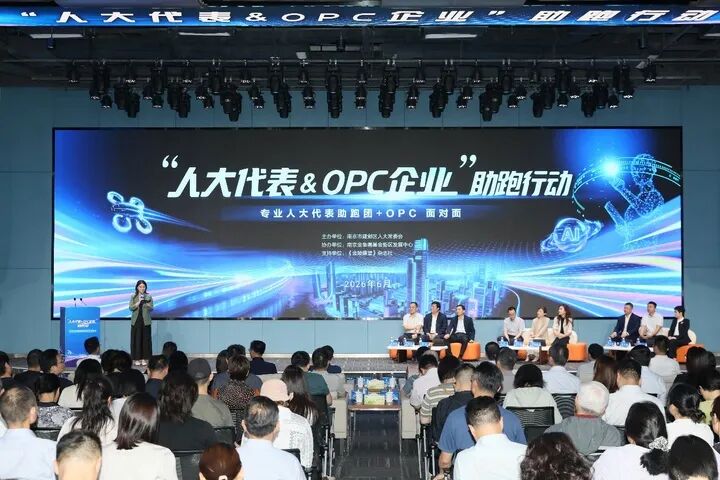
The legislation has carried out institutional exploration in many aspects such as the data value accounting mechanism of word unit accounting and the improvement of the assistance mechanism for entrepreneurial failure. Among them, the institutional innovation around promoting the development of “one-man company” OPC is attracting attention. The draft plans to encourage all districts to build OPC communities according to regional resource endowments and industrial development needs, and provide one-stop integrated services such as finance, law, intellectual property, technology transfer and transformation, operation and promotion for OPC. At the same time, relevant departments should optimize the process of OPC registration, cancellation, social security and tax payment, and support the development of new entrepreneurial models such as “one-man army”.
Guo Zhetao, an selected member of the National High-level Talent Program, an expert of the National Science and Technology expert database, and deputy director of the Science and Technology Innovation Committee of the Nanjing Knowledge Union, believes that the draft regulations establish the legislative positioning of the whole chain of the artificial intelligence industry, systematically introduce the OPC (OTC) enterprise support framework, especially the deployment of the “one-man company” innovation and entrepreneurship mode. It has a strong local legislative exploration significance.