Skip to content
It took only over two years to develop a complete humanoid robot product. It was one of only two in China to pass the German TUV functional safety certification for collaborative robots and became the first direct investment project of the first batch of industrial special funds of the strategic emerging Industry mother Fund of Jiangsu Province… In the robot industry cluster of Jiangsu Province, a “new star” has drawn attention from the industry and society.
On October 31st, the reporter visited Nanjing Estun Kuzhuo Technology Co., LTD. (referred to as “Estun Kuzhuo”), and had an in-depth conversation with the company’s CEO, Dr. Li Yuanping, and CTO, Dr. Zang Jiawei, to explore the secrets behind this emerging enterprise in the field of body-intelligent robots finding its right direction and growing rapidly in the new track.

Seize the “trend” of embodied intelligence with industrial advantages
In the Estun Robot Industrial Park on Jiyin Avenue, Jiangning District, Nanjing City, Estun Coolzhuo and Nanjing Estun Automation Co., LTD. (referred to as: Estun) are located next to each other.
In 2022, Estun, a leading enterprise in the industrial robot field, seized the “new trend” of human-machine collaboration and embodied intelligence, incubated Estun Kuzhuo, and entrusted it with the mission of focusing on the research and development of embodied intelligent robots.
Zang Jiawei recalled that at first, they investigated many directions. Someone suggested making a home service robot, after all, the topic of humanoid robots entering homes was very hot at that time. However, the demands in home scenarios are too scattered. One has to sweep the floor today and cook tomorrow, making it difficult to implement the technology. The team is still most proficient in the industrial field, and traditional industrial robots have already encountered industrial pain points.
It turns out that when Zang Jiawei was the director of Estun Future Technology Research Institute in 2021, he had already heard some voices from the front line of industry. At that time, some shipbuilding enterprises said that when they were welding medium and thick plates on the hull, the workstations were scattered and the space was narrow. Traditional industrial robots were large in size and heavy in weight, and could not “move around for work” like workers. They could only rely on manual labor holding welding torches to weld bit by bit.
The customer resources and channel network accumulated by Estun over the years, as well as its profound understanding of industrial processes such as welding and assembly, are the most core advantages of the emerging start-up team.
The team pondered: What kind of robot can truly adapt to the dynamic and changing industrial scenarios? Opportunities are emerging before our eyes. For instance, in the automotive manufacturing industry, the assembly of engine screws requires extremely high precision. Even the slightest deviation can affect performance. Traditional robots lack force perception and feedback, making them prone to problems. This is the opportunity for entrepreneurs.
More importantly, the market size of industrial robots is large enough to support the growth of enterprises. Zang Jiawei said, “In 2022, we received our first order through channels – to provide collaborative robots for a new energy vehicle manufacturer to handle battery pack components.”
Nowadays, the company’s products have entered multiple industries such as automotive manufacturing, 3C, new energy, photovoltaic, and lithium batteries. Last year, its revenue was 10 million yuan. This year, it is expected to reach the target of 50 million yuan, and it is projected to exceed 100 million yuan next year.
Accelerate R&D with the capability of “technology reuse”
Entering the Estun Coolzhuo production workshop, the reporter saw an S-Eco series collaborative robot first flexibly grasping auto parts and then precisely placing them at the designated workstations. Not far away, the S-Pro series collaborative robots are precisely assembling screws. Torque sensors provide real-time feedback on the force to ensure that the tightening degree of each screw meets the standard.

These two collaborative robots are single-arm robots with high arm strength and dexterity, and possess intelligent decision-making capabilities. They are currently the company’s most shipped products. Zang Jiawei introduced that collaborative robots and humanoid robots are similar in hardware and cerebellar control technology, such as motor control and motion planning algorithms.
The technological accumulation in the research and development of collaborative robots has laid a foundation for the company to enter the field of humanoid robots, but difficulties are inevitable. Starting from single-arm collaborative robots, the company has gone through a very difficult technological journey to develop a mobile compound robot with integrated hand, foot, eye and brain sensing and control functions. Zang Jiawei said that the full-scale design of humanoid robots, from the head to the hands, arms, legs, waist and ankles, all need to be restarted. There should be significant optimizations in both hardware structure and software architecture, while also achieving weight reduction and cost reduction. Embodied intelligence will be the core battlefield of the next generation of robots, and humanoid robots are the ideal carriers for it. Zang Jiawei spoke frankly.

On the new track, the company is charging ahead at full speed. It has completed the research and development of a complete humanoid robot in just over two years since its establishment, which is significantly faster than the industry’s 3 to 5 years of research and development time. After that, the company spent another nine months completing the technological iteration – releasing two generations of humanoid robot products in September 2024 and June 2025 respectively.
In terms of technical routes, the company leverages the generalization capabilities of third-party large models to focus on the development of small models for vertical scenarios. For instance, in the welding scenario, we collect welding data of workpieces of different materials and thicknesses, train specialized models, and let the robot adjust the welding parameters according to the actual situation to improve the welding quality. There is a steel structure enterprise. The thickness of their workpieces varies and there is no standard. Traditional robots need to frequently adjust their programs. However, our robots, through small model training, can automatically identify the thickness of the workpieces and match the welding parameters, with efficiency increased by more than 30%.”
Functional safety certification is another core barrier that this emerging enterprise is striving to build. Collaborative robots need to interact closely with humans, and safety is of Paramount importance. Once, when we were conducting on-site tests at an auto parts enterprise, a worker accidentally touched the arm of a robot. The robot stopped instantly without causing any harm to the worker. This is where the emergency stop collision detection function is at work. In addition, our products also have functions such as end force output limit, speed and separation monitoring, all of which are core requirements for functional safety certification.” Zang Jiawei said proudly, “At present, only two domestic enterprises have obtained the German TUV functional safety certification for collaborative robots.” It is not easy to obtain this certification. From hardware design to software algorithms, every detail must comply with international standards. This certification has also become an important asset for us to win the trust of our customers.
Promote the “double expansion” of team productivity through special funds
In November 2024, the company was presented with a significant development opportunity – it received an investment of 100 million yuan from the National Advanced Manufacturing Industry Fund Phase II and 30 million yuan from the Jiangsu Provincial Strategic Fund. This is attributed to the comprehensive recognition of our company’s R&D strength and development strategy by the relevant departments, who are optimistic about our future development. Li Yuanping, the CEO of the company, sighed.
After the funds were received, the first thing they did was to expand the team, increasing it from over 80 to 160 people. Among them, the R&D team grew from over 30 to over 60 people, including a group of talents with rich experience in AI algorithms and robot control.
Investment has supported the growth of R&D input. This year, our R&D investment budget has reached 30 to 40 million yuan, an increase of 50% compared to last year. It is mainly used for new technology research and development and product iteration. For instance, a 20-kilogram humanoid robot with a single arm is expected to be launched by the end of the year. There is also the iteration of the control system. An important update was completed in the third quarter of this year. Now, the response speed of the robot is 15% faster than before. Li Yuanping said, “The funds are also used for capacity expansion.” We have built a new production line. Now our production capacity has significantly increased and the delivery speed is faster.
He also particularly mentioned that Jiangsu’s favorable industrial ecosystem offers significant support to start-ups. For instance, the industry exchanges organized by the Nanjing Robot Industry Breakthrough Office have created opportunities for partners along the entire industrial chain to connect.
The rapid growth of Estun Coolzhuo is a microcosm of the development of the humanoid robot industry in Jiangsu. In recent years, Jiangsu has focused on this future industry, strengthened policy support, and promoted the improvement of the industrial chain and industrial agglomeration. In terms of the whole machine, key components, brain, cerebellum and other aspects, Jiangsu has already had leading enterprises in the industry, forming a relatively complete industrial chain of humanoid robots.
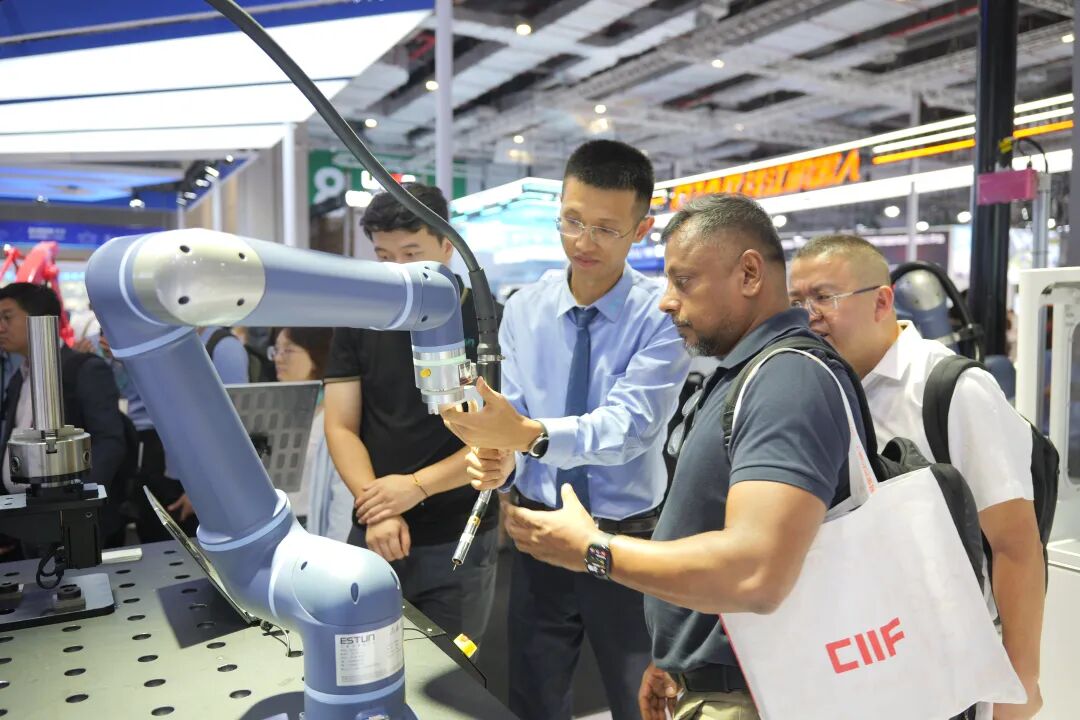
The recently released “Proposal of the Central Committee of the Communist Party of China on Formulating the 15th Five-Year Plan for National Economic and Social Development” suggests making forward-looking plans for future industries and promoting fields including embodied intelligence to become new growth points for the economy. This not only points out the direction for one “Estun Coolzhuo” after another, but also brings them new benefits and opportunities.
Zang Jiawei said, “We will continue to focus on industrial scenarios, solidify our technology and make our products reliable, contributing to the development of the robot industry in Jiangsu.” The company’s goal is to become a single champion in embodied intelligence in the industrial field.
For innovators and entrepreneurs, he offers advice based on his personal insights: “First of all, you must identify the right track. Don’t blindly chase hotspots. You should be rooted in the field you are familiar with and solve the real pain points of the industry.” Secondly, it is important to attach great importance to technological accumulation. Core technologies must be in our own hands. Finally, one must learn to leverage the power of the ecosystem. Capital, supply chains, and channels are all important, but one should not overly rely on them. It is also necessary to cultivate independent capabilities.”