Skip to content
The spring tide surges forward, bringing boundless vitality. In the agricultural high-tech zone during spring, innovative entrepreneurs are constantly emerging. A group of scientific and technological talents, carrying projects and technologies, have gathered in this fertile land. With wisdom and hard work, they inject powerful momentum into the development of modern agriculture.
Among them, there are research experts returning from abroad, entrepreneurs who have moved from cities to rural areas, and technical experts who have grown up on the front lines… Despite varying starting points and different paths, they all find the convergence point of technology and industry in the agricultural high-tech zone, becoming the most active “innovation factors” in the talent matrix of the agricultural high-tech zone.
01 “The Dream of Fiber-based Agriculture”
In the laboratory of Nanjing Waima Agricultural Co., Ltd. in the morning, high-speed chromatographs, atomic absorption spectrometers and other equipment were running at full speed, analyzing various fiber components. General Manager Xu Yang was concentratingly staring at the data on the screen. What he was working on was a technology that had the potential to change the domestic livestock industry landscape – using modified lignocellulose to precisely address the breeding problems of high-yield sows.

In 2019, Xu Yang, who specialized in agricultural science and technology, registered Nanjing Weima Agricultural Co., Ltd. in the Agricultural High-tech Zone. “The reason for choosing this place is that it is the only national-level Agricultural High-tech Zone in East China, and its positioning is highly compatible with the agricultural science and technology industry. Secondly, universities such as Nanjing Agricultural University and Nanjing Forestry University are very close by, making it very convenient for us to carry out research, education and industry collaboration. Moreover, the talent policies and services of the Agricultural High-tech Zone are comprehensive and meticulous. From funds to housing arrangements, they have solved our worries and enabled us to focus on our careers with peace of mind.”

Through domestic and international research and study, Xu Yang was keenly aware that with the intensification of pig farming, the health of sows has become the core pain point in the industry, and the scientific application of dietary fiber, especially lignocellulose, is the key. Therefore, he hired an Austrian expert as a technical advisor and deepened cooperation with several universities and research institutions including Jiangsu Academy of Agricultural Sciences and Nanjing Agricultural University in the park, aiming to enter the field of functional high-end products.
“Similar imported products cost about 15,000 yuan per ton. Our goal is to control the cost through independent research and development within 8,000 yuan, reducing industry costs and promoting industrial development,” Xu Yang explained. His team’s innovative “directional modification of lignocellulose” technology can significantly improve the water retention of the products, specifically addressing problems such as constipation and insufficient lactation in sows, and the related technology has been patented.


In 2024, Weima Agriculture was recognized as a national high-tech enterprise, with an annual production capacity of 20,000 tons. In the next three years, Xu Yang plans to establish a stronger R&D team, promote the full industrialization of technology, aiming to increase the output value by 120 million yuan and enable China’s independently developed high-end dietary fiber feed to enter the overseas market.

“This is not just a technological innovation, but also a strategic supplement to the traditional protein production methods,” Ding Shijie said. As the first doctoral graduate in the global field of cell-cultured meat, he and his team developed China’s first piece of cell-cultured pork in 2019. Choosing this technical path with the highest barriers and the greatest challenges was due to his sense of mission as a scientist. “We need to master our own core technologies in the fields that represent the future.”
Starting a business is extremely challenging. The industry is facing three major global problems: costs, regulatory approval, and consumer perception. In the face of these challenges, Ding Shijie set up his company in the Agricultural High-tech Zone. “This area focuses on ‘smart agriculture’ and ‘future food’, with highly concentrated industrial clusters, abundant scientific and educational resources, and a perfect alignment with our research direction and vision,” he said. The talent policies in the park are precise, scientific, heartwarming, and long-lasting. They not only provide the necessary land, infrastructure, and other hardware support for research and pilot production, but also offer personalized services in talent policies and resource coordination. “Being able to endure loneliness” is Ding Shijie’s profound understanding of entrepreneurship. In the early stage when the industry received little attention, the team persisted in fundamental research for over ten years. On December 12, 2025, the research achieved a major breakthrough. Zhou Zi’s future established the largest cell-cultured meat pilot factory in China in the Agricultural High-tech Zone and completed the world’s first production of 2,000-liter-scale cell-cultured pork.

Looking to the future, Ding Shijie hopes to continue promoting cost reduction in technology and actively participate in the establishment of China’s regulatory and standard system for cell-cultured meat. “Our main goal is to improve the entire chain of this technology, from research and development, to regulation and market entry, ultimately providing consumers with a new and sustainable meat option.”

“The startup cycle of agriculture and food technology is long, but the social value is huge. Using professional knowledge to apply research results to the land of our motherland, this sense of achievement is irreplaceable,” said Ding Shijie. With the commissioning of the pilot factory, he has taken another step closer to the vision of “being able to eat pork without raising pigs”.
03 Enabling traditional agriculture to fly on “technology wings”
Technology also empowers traditional agriculture. Entering the production workshop of Nanjing Tianguo Agricultural Technology Co., Ltd., a fully automatic integrated machine is sorting and grading the fresh blueberries, preparing to be sent to various supermarkets and sales markets.

“Traditional agriculture must be given wings by technology,” said Tian Jintu, the chairman of Tian Guo Agriculture. In 2008, taking advantage of the rich blueberry industry foundation in the region and policy support, at the age of 22, he came to Baima to engage in blueberry planting and purchasing business. Over the past decade, he has successively studied at universities such as Northeast Agricultural University and has brought the spirit of research into the fields.
He led his team to develop the grafting technology for blueberry variety improvement, and his company became the only enterprise in Nanjing to successfully domesticate red raspberries. He was the leader or participant in several provincial-level science and technology planning projects, from the extraction and production of blueberry functional components to the research and development of anthocyanins and ellagic acid, continuously enhancing the technological value-added of this small berry. In 2025, Tianguo Agriculture was successively awarded the titles of a national technology-based small and medium-sized enterprise and a high-tech enterprise.
Technology empowerment ultimately aims to benefit the people. Tian Guo Agriculture annually purchases over 1,800 tons of blueberries and other berries, driving 1,500 farmers and increasing their income by an average of 6,000 yuan per household. The Nanjing Jinrui Blueberry Professional Cooperative he led was awarded as a municipal-level demonstration cooperative, and the company was also recognized as a municipal-level agricultural industrialization key enterprise. Currently, the company has 160 employees, with the majority being local staff. This truly achieves the driving effect of “one person’s employment leads to the income increase of the entire family”.

The growth of talents cannot be separated from the nourishment of local policies. In recent years, he has been successively selected into the “Zi Dashan Talents” program of Nanjing City, the municipal-level young and middle-aged outstanding talents program, and the “Three Promotions” talents program for local talents in Jiangsu Province. The platform, policies and support provided by the Agricultural High-tech Zone have offered a sufficient stage for talents to display and grow.

“Next, we will establish a pigment production line and an internationally leading 5G smart factory for blueberry and raspberry fruits.” On the vast rural fertile land, Tian Jinshu is leading the team and farmers towards the goal of creating a technology-enabled berry value chain, making this “berry” business even more prosperous.
A fertile land, with lush green trees.
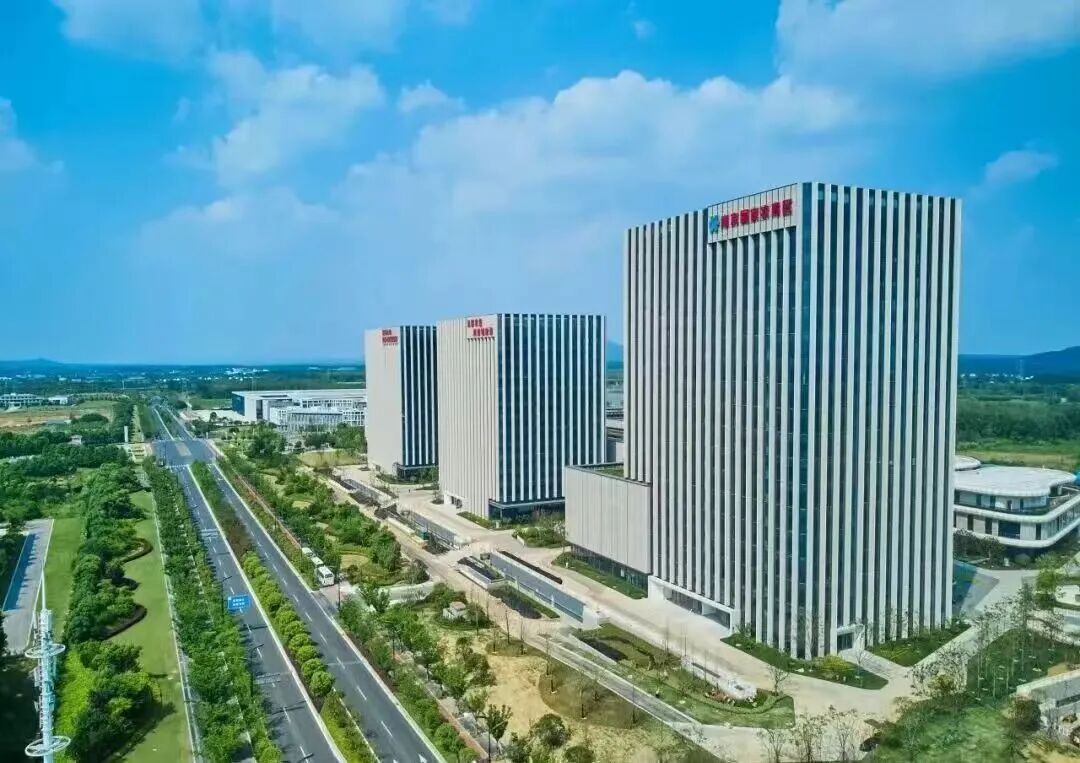
Plant the sycamore tree, and the phoenix will come. It is reported that in recent years, the Agricultural High-tech Zone has been actively promoting innovative projects for scientific and technological talents. As of now, a total of 144 high-level talents at various levels have been selected, including 5 national-level talents, 56 provincial-level talents, 49 municipal-level talents, and 34 district-level talents. “We will further optimize the service ecosystem and fully focus on the ‘attracting, cultivating, retaining and utilizing’ of talents,” said a relevant official from the Agricultural High-tech Zone Management Committee. In the next step, the Agricultural High-tech Zone will focus on key fields such as agricultural science and technology and biological agriculture, and accelerate the gathering of high-level innovative talents, so that more talents can be attracted, retained and utilized well, injecting lasting talent momentum into the high-quality development of the region.