Skip to content
At the beginning of the new year, the “brainpower” in Jiangbei is fully activated.
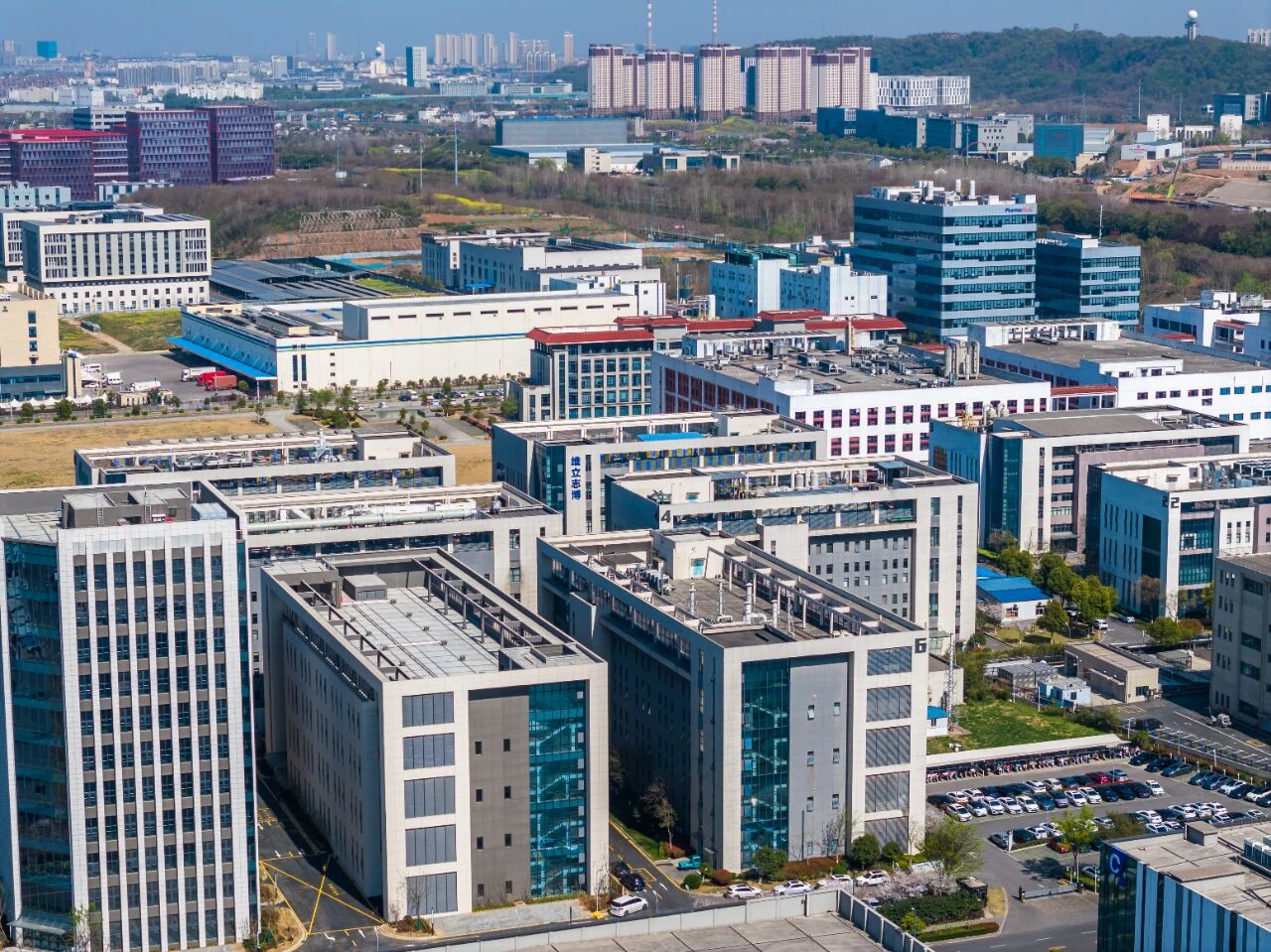
Recently, the Digital Life and Brain-Computer Intelligence Innovation Exchange Conference was held in the Biomedical Valley of the New District. Nearly 150 academicians and experts in brain science, as well as industry pioneers, gathered at Longwang Mountain to jointly kick off a professional dialogue about the brain and the future.
At the conference site, the focus was on cutting-edge topics such as brain-computer interfaces and digital life. The discussion was intense throughout the venue. The Joint Laboratory for Brain-like Intelligence and the Brain-Computer Interface Public Service Platform were successively established, and the first入驻 projects were on stage for signing. On this future track of brain science, the New District is making strategic deployments and moving forward.

Advanced platforms have been successfully launched one after another.
When it comes to the most challenging fields of modern scientific research, brain science is undoubtedly one of them. As the focus of global scientific research, many scenarios that were once only found in science fiction movies have now become a reality: through brain-computer interface technology, people can play chess with their “thoughts”, and patients with high-level paralysis can also control computers and smart homes with their minds…
Making the impossible possible is precisely the charm of brain science. However, this cutting-edge exploration towards the “brain world” is extremely complex; every step is like “opening up new paths” – observing the brain, decoding the brain. Basic research is the core engine driving industrial development.

The key highlight of this conference is closely related to this. On the spot, the “Multimodal Cross-Scale Biomedical Imaging Facility – Nanjing Brain Intelligence Joint Laboratory” was inaugurated.
It is introduced that this joint laboratory is jointly established by the Nanjing Translational Institute of Molecular Medicine of Peking University, the National Biomedical Imaging Science Center of Peking University, and the Biomedical Valley of the New District. It will rely on the large-scale scientific facilities and advanced imaging technologies built by the team of Professor Cheng Heping to collect and integrate massive multimodal cross-scale brain function data, promoting the evolution of brain observation towards brain-like intelligence. In short, this laboratory will focus on revealing the underlying secrets of brain operation and provide valuable “metadata” for the transformation of brain-like intelligence.

In the field of basic research, there are significant laboratories that have been established. Now, when it comes to industrial transformation, how should we proceed? At the meeting, the “Brain-Computer Interface Public Service Platform” was launched, and the first batch of projects were signed and settled in.
This platform is jointly built by the National University Biomedical Regional Technology Transfer and Transformation Center (Nanjing, Jiangsu) and the Nanjing Translational Research Institute of Molecular Medicine of Peking University. It will gather the top scientific research resources and professional service advantages of both parties, and is dedicated to solving the problems of the transformation of brain-computer interface technology.
The Digital Life and Brain-Computer Intelligence Fund of the New District was also launched simultaneously. It will focus on supporting early-stage research and transformation of achievements in cutting-edge fields such as brain-inspired intelligence, digital life, and brain-computer interfaces, helping innovation teams overcome the crucial stage from the laboratory to industrialization.
Advanced platforms have been successively showcased, and industrial funds have been rapidly established. From basic research, technology development to transformation of achievements, there is complete support. The vast territory for the industrialization of brain science is gradually unfolding in Jiangbei.
“The industrial forest is lush and flourishing.”
A major conference has brought the brain science industry in Jiangbei to the center of attention in the industry. The concentrated establishment of these cutting-edge platforms and high-quality projects would not have been possible without the systematic cultivation of the brain science field by Jiangbei New District over the past several years. On this fertile ground, a number of top-notch “brain” resources have already taken root and thrived here.

The organizer of this conference – the Nanjing Translational Institute of Molecular Medicine of Peking University – is an important force in the field of brain research in this new district. Under the leadership of Professor Cheng Heping, the institute focuses on in-depth exploration and original innovation in the unknown field of the brain, establishing the Nanjing Brain Observatory. It has independently developed new miniaturized two-photon and three-photon microscopes and multi-color miniaturized two-photon microscopes, and has taken the lead in building an innovative foundation for brain research in Jiangbei.
Looking along this industrial chain, there are also a number of outstanding enterprises moving forward: Bo Ya, which specializes in brain-computer interfaces and cognitive training; Han Xiang Technology and Xing Kang Medicine, which focus on brain function rehabilitation and digital therapy; Yi Ai Medical, which independently researches brain vascular risk real-time monitoring products; Jing Rui Kang, which provides high-end brain imaging technology and services; and Xian Sheng Pharmaceutical, which continuously achieves significant results in the new drug research for central nervous system diseases…
Previously, the new district was also approved to establish the “Jiangsu Province Brain Intelligence Innovation Center”, which is the only provincial-level industrial innovation center in this field. It is actively making plans in industrial fields such as brain-computer interfaces and brain health.
This time, through cooperation with the national biomedical imaging large facility to jointly build a joint laboratory, it is precisely establishing an important research and development platform to introduce the original achievements of Chinese scientists as innovative resources to the new district. Some brain-computer interface applications developed for stroke and amyotrophic lateral sclerosis patients, as well as the implementation and transformation of cutting-edge technologies such as “flexible electronic skin” for robot tactile perception, are all being fully promoted in the new district.
The brain is the most complex and exquisite “cosmos” in nature and is the key to understanding life sciences. Guided by top-notch innovative resources and supported by key scientific and technological innovation platforms, we will actively lay out new zones for brain-related research and industrialization, and more scientific and technological innovation and industrial innovation achievements will emerge.
On the northern bank of the Yangtze River, the story of brain science is unfolding splendidly.