Skip to content
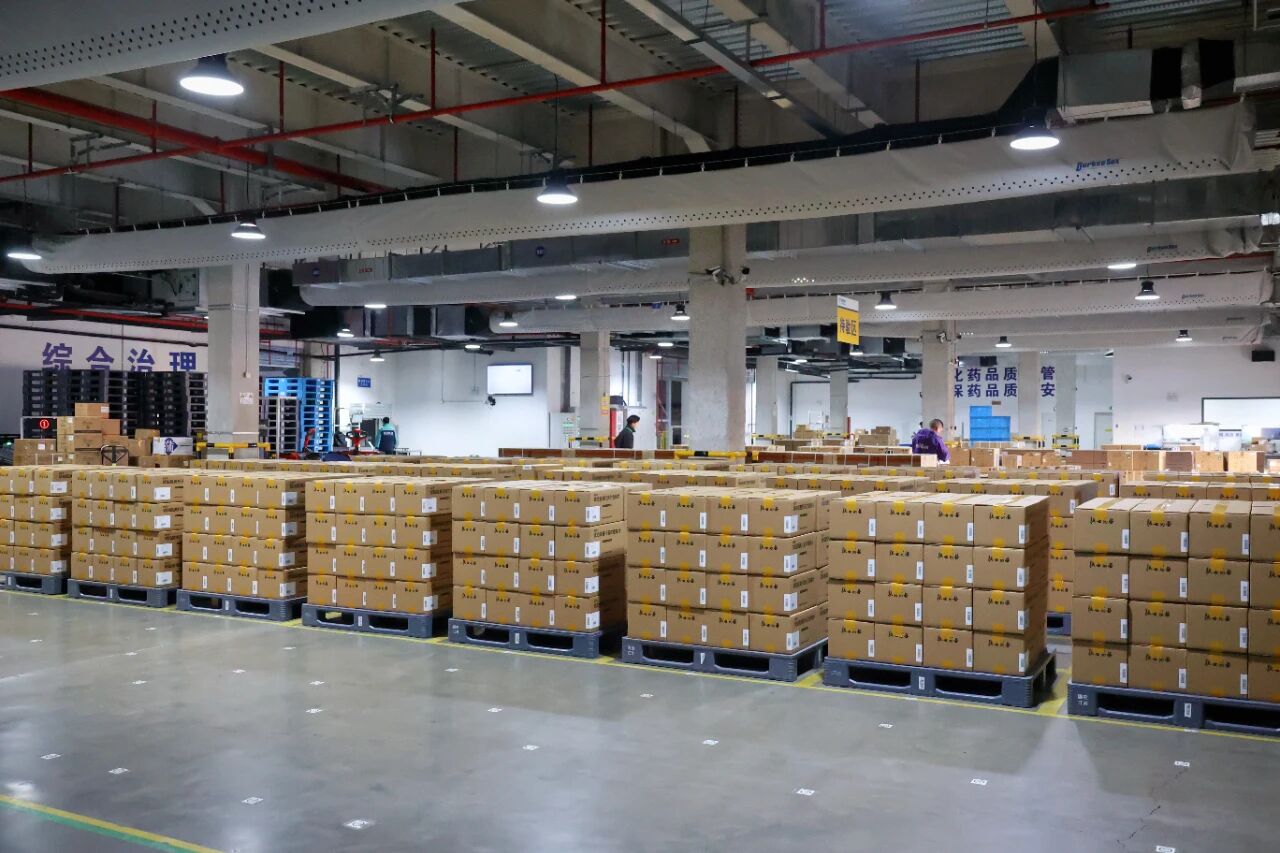
At 9 a.m., the warehouse of Sinopharm Jiangsu Co., LTD. (referred to as “Sinopharm Jiangsu”) was already bustling with activity: cold chain trucks smoothly drove into the dedicated barrier gate, and operators held terminals to quickly verify orders. Between the 24-meter-high three-dimensional shelves, multi-level shuttle vehicles glide smoothly along the tracks, precisely delivering box after box of medicines to the sorting line.
Recently, there has been a high incidence of influenza, and the demand for related medicines is relatively large. As long as we receive an order, we will ship and deliver it quickly. Staff introduction.

This huge “medicine warehouse” is also the provincial logistics center of state-controlled Jiangsu. Every year, over five million cases of medicine are sent to secondary and tertiary hospitals throughout the province, chain pharmacies and even the whole country. The medicine we buy in hospitals, pharmacies and online platforms might come from here.
01
After a pill is “born” in a pharmaceutical factory, what kind of “journey” does it have to go through before it can safely and promptly reach a hospital or retail pharmacy and eventually reach the patient’s hands?
Behind this, the support of a modern pharmaceutical logistics system is indispensable. Guokong Jiangsu is a key player among them. As a wholly-owned provincial company of Sinopharm Group, the enterprise has built a logistics network covering the entire province, enabling “half-day delivery” within the province and providing stable and efficient supplies for medical institutions and pharmacies at all levels.
The core engine of this logistics network is the logistics center located in the new district’s Medicine Valley.
This logistics center, which was put into use in 2022, is also the hub logistics warehouse of Sinopharm Group in Jiangsu Province. With a total construction area of over 20,000 square meters, it includes high-rise warehouses, multi-pass warehouses, cold storage warehouses, etc. It can store 350,000 cases of drugs and has an annual throughput of 5 million cases.
02
Such a huge “medicine warehouse”, once you step into it, you rarely see people moving around. Stacker cranes, mechanical arms and long conveyor lines, as well as various intelligent devices, smoothly transport box after box of medicines.
From warehousing to outbound, we can achieve full-process automation. The person in charge of the logistics center introduced.

Take a batch of drugs just delivered from a pharmaceutical factory as an example. From the moment they are put into storage, the system will intelligently allocate the optimal storage location based on the attributes of the drugs. Those that need cold chain preservation will be directly transferred to the cold storage.
There is no need for manual handling of medicines during storage. Previously, the transportation of medicines relied on manual operation of forklifts, which was not very efficient and there would also be problems with human resource allocation during peak hours. Now, several submerged automatic guided robots (AMR forklifts) are nimbly moving around the warehouse. They can intelligently plan routes and autonomously pick up goods, quickly and smoothly delivering medicines to the corresponding storage locations.
Once a drug order is received, whether it is a full case or retail, the system will automatically plan the picking path, label and distribute. The fastest time to complete the outbound preparation is just a few minutes.

With intelligent technology, ensuring the safe circulation of every pill is precisely the “hard power” of Guokong Jiangsu. It is reported that the logistics center is a benchmark warehouse for modern pharmaceutical logistics in the province. The vast majority of drug categories, from traditional Chinese patent medicines and chemical drugs to insulin and biological products that require strict temperature control, are within the transportation range of the state-controlled Jiangsu.
For instance, the anti-flu medicine Sufuda that people have purchased on Internet platforms like JD.com recently has almost all been dispatched from our warehouse. The person in charge of the logistics center gave an example.
03
Then, is the significance of this “medicine warehouse” merely about storage and distribution?
Of course, it’s not just about “delivering medicine”. If we look further ahead, behind the logistics center lies an even broader network: Guokong Jiangsu’s business integrates direct sales to medical institutions, retail direct sales, and intra-provincial distribution, etc. The pure sales network of drugs serves secondary and tertiary hospitals and other medical institutions throughout the province, while the terminal market basically covers all chain pharmacies and social retail pharmacies in the province. This also means that they can provide diversified business services for pharmaceutical enterprises across the country.
The life and health industry is inherently high-investment and long-cycle. If every pharmaceutical company builds its own logistics and warehousing system that meets national standards, it will be a heavy operational burden, not to mention building a distribution network. A relevant person in charge of Guokong Jiangsu said, “By having us provide services, we can reduce the circulation costs for small and medium-sized pharmaceutical companies, enable innovative products to reach the market efficiently, and allow innovative pharmaceutical companies to focus more on research and development itself.”
As this person in charge said, professionals do professional things. A professional logistics hub is also an indispensable part of the industrial chain. At present, Guokong Jiangsu has accumulated nearly 3,000 clients, and many pharmaceutical companies in the new district have also entrusted the transportation of their drugs and raw materials here.
This logistics center not only ensures the daily medication supply for thousands of households but also makes the path of industrial innovation smoother and more stable.