Skip to content
The Chinese robotics industry is experiencing a moment of explosive growth, with a group of “players” from Nanjing taking the lead with their solid capabilities
In the first three quarters of 2025, the revenue of the national robot industry increased by 29.5% year-on-year. The output of industrial robots reached 595,000 units, and the output of service robots reached 13.5 million sets, both exceeding the total output of 2024 and setting new records.
Nanjing Estun Automation Co., LTD. (hereinafter referred to as “Estun Automation”) has ranked first among domestic brands in terms of industrial robot shipments for seven consecutive years. Since 2021, Nanjing Tianchuang Intelligent Technology Co., LTD. (hereinafter referred to as “Tianchuang Robot”) has cumulatively shipped over 5,000 units, and its inspection robot shipments have consistently ranked first globally. The robot products of Jiangsu Jicui Intelligent Manufacturing Technology Research Institute Co., LTD. (hereinafter referred to as “Jicui Intelligent Manufacturing”) are selling well in countries such as Singapore, France and Russia. Orders are “urging” the construction of the new industrialization base…
A group of outstanding enterprises that have taken the leading position in their respective fields have endowed Nanjing, the “City of Robots”, with its own unique tone: relying on independent technology, deeply exploring scene demands, being pragmatic and having strategic patience.
Lead the “crucial leap”

According to industry data statistics, in the first half of 2025, Estun’s industrial robot shipment volume surpassed that of foreign brands for the first time, topping the Chinese market share and increasing the domestic production rate to 55.3%.
This “crucial leap” marks that after more than a decade of hard work, China’s robot industry has truly achieved a leap from catching up, running side by side to taking the lead, proving that domestic brands are fully capable of breaking the foreign monopoly in high-end manufacturing and leading the industry’s independent development.
Last year, Estun launched a new product, ER1200-3300, which became the first domestically produced six-joint robot to be mass-applied with a load capacity of up to 1,200 kilograms. It has broken through key technologies such as dual-motor synchronous control, hard synchronization of dual reducers, and lightweight of the entire machine, achieving 100% domestic production of core components. By now, Estun has built a product matrix of over 90 robot models covering loads ranging from 3kg to 1200kg.
Estun adheres to a full industrial chain strategy, and the self-sufficiency rate of core components for robots exceeds 95%. This is a path that requires a large investment, has a long cycle and is complex to manage, but we must choose this way. Zhou Ailin, the executive president of Estun Automation, stated that robots are a technology-intensive industry, and the independent control of core components is of vital importance. By laying out the entire chain from core components, robot bodies to system integration, Estun can more effectively integrate resources, ensure supply chain security and accelerate technological iteration.
Nowadays, we are capable of proving to the world that Chinese robot enterprises can not only provide economical products, but also have the ability to overcome the application challenges of heavy, high-precision and high-complexity. Zhou Ailin said that the full range of load coverage, especially the innovative research and development of the 1200kg heavy-duty robot, indicates that the enterprise has made substantial breakthroughs in core technologies such as the structural design, motion control, and precision maintenance of robots, and has the ability to participate in global high-end industrial application competition.
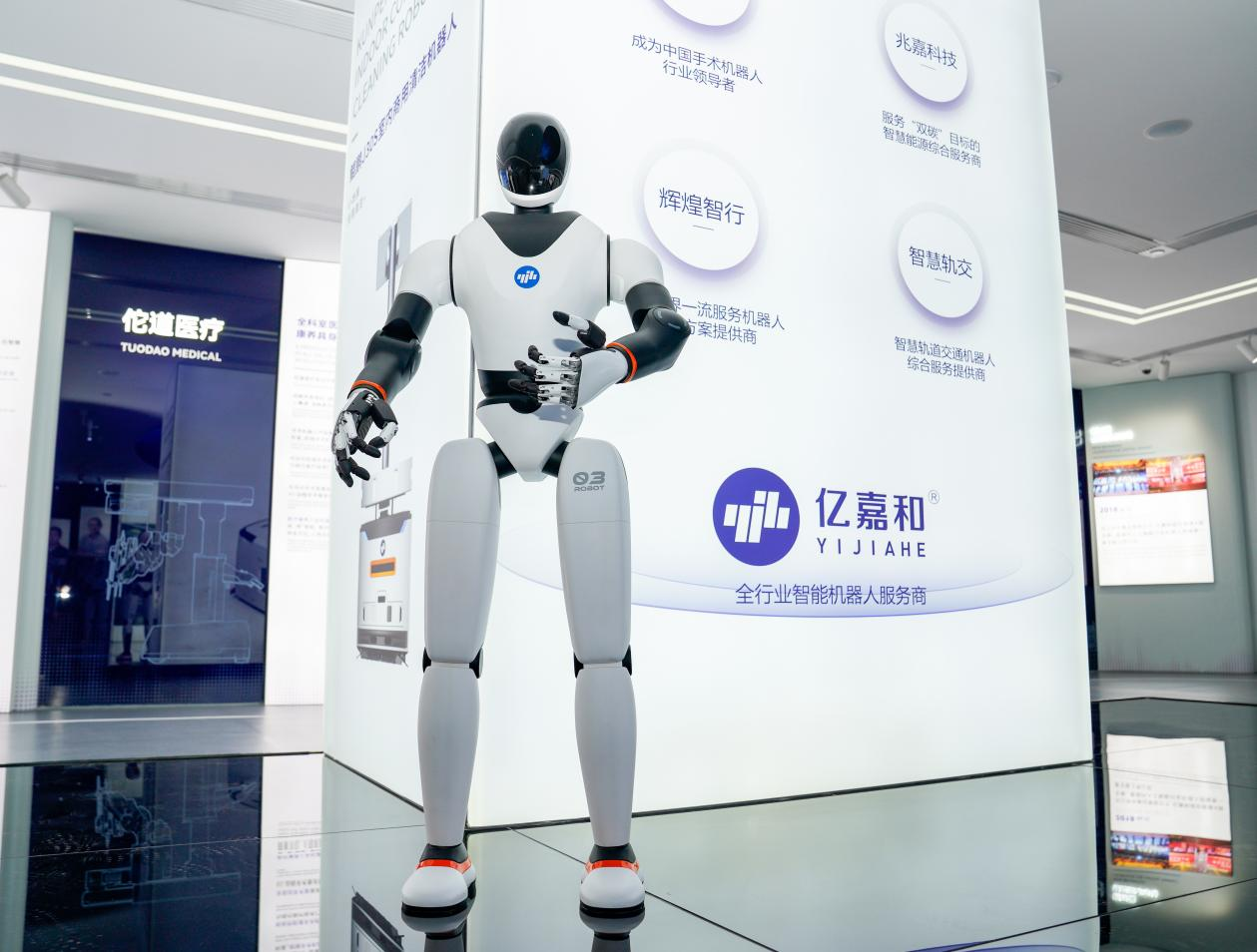
Every morning, after the busy Nanjing Metro trains finish their operations, a group of “safety officers” take up their posts – the metro vehicle inspection robots jointly developed by Yijiahe and Nanjing Metro.
The subway inspection work needs to be completed between 0:00 and 4:00. If it is done manually, it will be a great test for both manpower and efficiency. Zhang Jinbo, the deputy general manager and secretary of the board of directors of Yijiahe, introduced that Yijiahe has been deeply cooperating with Nanjing Metro, continuously increasing investment in research and development, and constantly optimizing the large model intelligent algorithm in the inspection scenario of metro vehicles in rail transit. The robots have now been able to efficiently achieve functions such as autonomous recognition and discrimination of image targets, as well as output of early warning information. This algorithm model can accurately identify 30 defect categories of metro vehicles, covering nearly 200 business scenarios. Whether it is loose screws or foreign objects attached, it can accurately identify them, with an overall recognition rate exceeding 96%.
Yijiahe is a leading enterprise in special and service robots. Its intelligent robots can achieve full coverage of intelligent operation and maintenance in the entire process of power transmission, transformation and distribution, as well as in the “sky, ground and underground” of the power grid.
A business owner expressed his amazement, saying that a city like Nanjing is rare across the country to have nurtured listed robot companies such as Estun and Yijiahe, attracted giants like Inovance Technology to settle down, and nurtured emerging enterprises like Blue Intelligent and Jicui Intelligent Manufacturing, each of which has taken its own place in their respective fields.
In the past two years, Nanjing has proposed to build itself into a “City of Robots” and has successively issued the “Action Plan for Promoting High-Quality Development of the Robot Industry in Nanjing (2024-2026)” and the “Action Plan for the Development of the Body-Type Intelligent Robot Industry in Nanjing (2025-2027)”, planning an industrial development layout of “one core and multiple wings”. In March 2025, four “Industrial Breakthrough Promotion Offices” were established, and the Robot Industry Breakthrough Office was one of them.
The fertile industrial soil has given rise to a “robot rainforest”
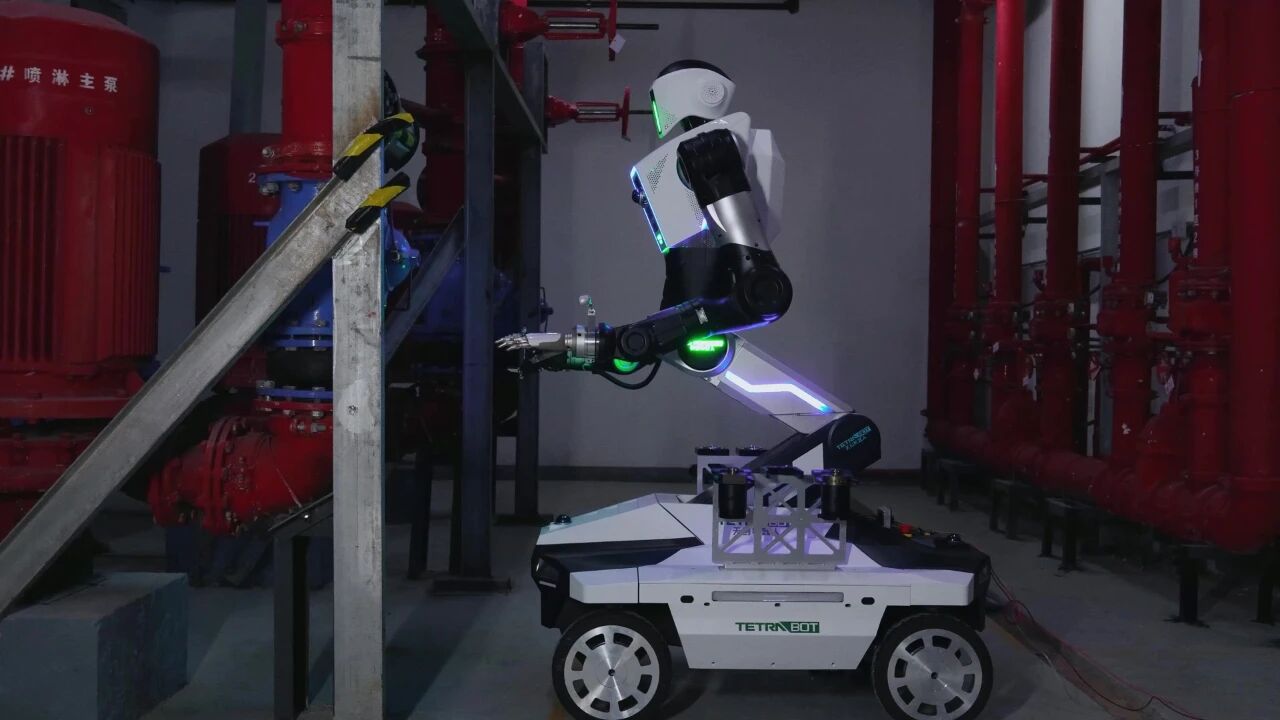
In a certain chemical enterprise in Jiangsu Province, the latest product of Tianchuang Robot, the explosion-proof robot “Tiankui 1”, has been put into use. It can not only complete autonomous inspection but also quickly close the valve with its “strong and dexterous hands” in critical moments of sudden dangerous situations, minimizing losses in a short time.
“Once upon a time, many heroes who ‘went against the flow’ and sacrificed their lives in critical moments emerged in this kind of industry. Today, we can use technology to prevent such tragedies from happening again.” ” Min Jihai, the general manager of Tianchuang Robotics, said.
The muscular “Tiankui” with wheels as its feet shows people that humanoid robots have stepped out of the laboratory and become reliable “co-workers” capable of playing a key role in dangerous environments.
Tianchuang Robotics focuses on the “4D scenarios” (remote, dangerous, dirty, and repetitive) and develops industrial intelligent operation and maintenance robots. Since 2021, Tianchuang Robotics has rapidly captured the market and entered a period of rapid development. Currently, its over 5,000 inspection robots applied in various scenarios have managed more than 400,000 equipment points.
This direction is determined by the market. Min Jihai frankly admitted that looking back at the development over the past decade or so, China’s robot enterprises have been very fortunate. Driven by strategies such as new industrialization and “robot +”, a number of enterprises, especially central and state-owned enterprises, have taken the lead in embracing robots, providing a broad range of application scenarios for robot enterprises to refine their technologies.
The first breakthrough of Tianchuang was to undertake a scientific and technological project of China General Nuclear Power Corporation, thereby launching the first nuclear level three pipeline inspection robot. Today, Tianchuang’s products have covered the entire field of industrial intelligent operation and maintenance. Robots are engaged in inspection, analysis, maintenance and other operations in the most dangerous and least suitable places for humans to stay for a long time in industrial scenarios.
Nanjing, an industrial powerhouse, is a fertile ground destined to give birth to a “robot rainforest”.
Estun and Yijiahe were both founded in the 1990s, and Tianchuang Robotics has also gone through 15 years. Nanjing’s solid industrial landmarks formed in fields such as power, chemical engineering, steel, and automobiles have provided the most original market demand and engineering culture for the robot industry. Nanjing’s robot enterprises have been struggling through the successive waves of vigorous development and upgrading of the manufacturing industry, and have developed a set of “real skills” to solve practical problems.
In recent years, the robot industry in Nanjing has formed a full-chain system covering complete machines, key components and integrated applications. It has gathered over 200 robot-related enterprises and has shown characteristics such as leading industrial robots, multi-point explosion of characteristic robots, full-chain layout of humanoid robots, and the emergence of a number of landmark enterprises in the field of key components.
In the lush ecological rainforest, it is easiest to find opportunities for growth.
“We focus on the field of motion control. Among our clients are many industrial robot enterprises. Our technology can help them make robot movements more precise and flexible.” ” Liu Long, the person in charge of Nabot Nanjing Technology Co., LTD., introduced. Nabtesco independently researches and develops professional motion controllers and an open software platform. The control devices it independently researches and develops for fields such as wafer handling robots and collaborative robots have all shipped tens of thousands of units.
Nabtesco keenly observed that in manufacturing fields such as metal processing, the penetration rate of multi-joint robots is growing rapidly and shows a sustained upward trend. We should seize the development opportunities well. Nanjing has a solid foundation in the robot industry and many opportunities for industrial chain cooperation, which is very conducive to the technological iteration and market expansion of enterprises. Liu Long said that the company is planning to build a production base in order to seize the market growth opportunities.
With “hardcore” skills in hand, venture out into the world
At present, Luo Minzhou, the chairman and general manager of Jicui Intelligent Manufacturing, is leading the sales team to work non-stop to expand the overseas market. Meanwhile, the construction site of the industrialization base of Jicui Intelligent Manufacturing is bustling with activity. It is expected that the main structure of the project will be capped before May Day this year.
The orders in hand are fully booked. We just received orders from Singapore, France, Russia and other countries before the Spring Festival, all of which are waiting for delivery. Gao Wenmei, the deputy general manager of Jicui Intelligent Manufacturing, introduced that after the project is put into use, it can produce nearly 10,000 collaborative robots and intelligent robots annually. The construction of the project cannot be slackened in the slightest. We must accelerate the increase of production capacity.
Having been established for nearly a decade, Jicui Intelligent Manufacturing has entered a “boom period”.
Jicui Intelligent Manufacturing is developing a body-mounted intelligent welding robot that does not require teaching. By leveraging cutting-edge multi-sensor fusion technology and AI vision algorithms, the robot is endowed with smarter “eyes” and “brains”. In the future, perhaps with just one command, robots can independently plan their paths and achieve full-process autonomous welding, which is an innovative product that will disrupt the industry.
Jicui Intelligent Manufacturing has also independently developed coffee robots. After the product was launched, it successively won orders from Bolivia, Argentina, Singapore, Spain, Chile and other countries. The previously developed intelligent portable welding robots have long been applied to over ten manufacturing fields, including port machinery, ships, automobiles, and metal processing.
Last year, we established an overseas technical service and after-sales base in Spain. This year, we also plan to set up at least two overseas bases. Gao Wenmei told the reporter that as the overseas market advanced, Jicui realized that it must keep up with the service in order to maximize the advantages of Chinese brands.
The products of Jicui Intelligent Manufacturing are highly representative, featuring high technological levels, excellent service standards and high cost performance, which have enabled Chinese robots to gain a say in the global market.
With our technology and the experience accumulated in the domestic market, the expansion into overseas markets has been smoother than expected. Min Jihai said.
Industry is a vast and complex system. The application of robots in it often requires a relatively long period of adaptation and adjustment.
Just last year, a South Korean client completed the process from testing and verification to large-scale ordering in less than a year, significantly shortening this cycle. According to customer feedback, after the enterprise put Tianchuang robots into use, it also attracted nearby enterprises to observe and learn.
Nanjing is also continuously opening the “door” for the application of its own robots. Last year, Nanjing released two lists on the “capacity supply” and “opportunity release” of robots, and built a platform to directly connect the supply and demand sides. So far, 60 capability lists and 600 opportunity lists have been released. The so-called “capability list” refers to the display of the product capabilities of robot enterprises. The “opportunity list” encourages enterprises to open up scenarios and take the lead in using robots. Through connection, Nanjing robots have already achieved many excellent practical cases in scenarios such as conferences, culture and tourism, and retail.
The “Ning Gong Pin Tui” supply and demand matching event held in Nanjing also featured several sessions with robots as the theme. Based on the demands of leading enterprises and small and medium-sized enterprises, it helped enterprises expand their markets, find orders and boost production.
New Opportunities for the “City of Robots”
The robotics industry is entering a new stage where the penetration rate is accelerating and profound changes in the competitive landscape coexist. Multiple changes such as competition methods, market demands, and technological integration are interwoven and emerging, and the future development trend is becoming increasingly clear.
Zhou Ailin analyzed that the future trend is manifested as follows: Intelligence and flexibility will become the core directions of the industry. Robots will become more “smart” and be able to adapt to complex and changeable task scenarios. The in-depth development of scenarios and the emergence of niche markets are entering a period of explosive growth. A vast amount of customized demands will emerge in fields such as new energy, semiconductors, and warehousing and logistics. Human-machine collaboration and integration have become the norm in the industry, and the application boundaries of safe and easy-to-use collaborative robots will continue to expand. The market potential of service robots is also accelerating its release.
Based on its forward-looking judgment of the future, Estun continues to “heavily invest” in Nanjing: incubating Nanjing Estun Coolzhuo Technology Co., Ltd. and entering the humanoid robot field. Estun Intelligent Technology (Jiangsu) Co., Ltd. was established in Gaochun, focusing on the manufacturing of high-end intelligent equipment in the new energy field. Jiangsu Hangding Intelligent Equipment Co., LTD., jointly established with Nanjing University of Aeronautics and Astronautics, mainly deals in core products such as robot automatic drilling and riveting systems. Estun (Nanjing) Medical Technology Co., Ltd. is promoting the extension of advanced robot technology into the fields of medical care and elderly care.
A consensus among robot enterprises is to embrace AI and enable robots to serve thousands of industries and all aspects of life more intelligently.
The inspection robots we apply in various scenarios generate tens of terabytes of data resources every day. These millions of industrial site data have become scarce resources for training AI. Min Jihai introduced.
Last year, the “Tiansuan Embodied Intelligent Operation and Maintenance Large Model” independently developed by Tianchuang Robotics was registered for the launch of generative artificial intelligence services by the Cyberspace Administration of China. This large model is designed for industrial scenarios and is a multimodal large model, which can significantly enhance the intelligent operation and maintenance level of robots in high-risk and complex environments.
Yijiahe has proposed the “Robot + Industry” strategy, accelerating the integration of embodied intelligent technology with industrial demands. Besides the energy sector, it has also achieved a series of new breakthrough applications in health care, cleaning, and medical scenarios. For instance, its incubated surgical robot company, Tuodao Medical, has several products certified, including endoscopic surgical robots, orthopedic surgical robots, two C-arm X-ray machines, puncture surgical robots, and carbon fiber operating tables dedicated to orthopedic robots.
At the source of innovation, Nanjing also boasts abundant university resources and research and development advantages. Universities such as Nanjing University, Southeast University, Nanjing University of Science and Technology, and Nanjing University of Aeronautics and Astronautics all offer key majors related to robotics, demonstrating great potential for the efficient transformation of scientific and technological achievements.
A responsible person from a relevant department of the Nanjing Municipal Bureau of Industry and Information Technology introduced that Nanjing has been in regular contact with 13 universities, connecting their achievements to important scientific and technological innovation platforms, enabling the achievements of universities to smoothly enter parks and enterprises and accelerate their transformation towards the industrial end. Since last year, 261 contract transactions related to technological achievements in the field of robotics have been realized in Nanjing.
The Jiangsu Intelligent Robot Innovation Center, led by Estun and jointly built with Jiangning Development Zone and nine other key enterprises in the industry, is under steady construction. Currently, it has initially completed the construction of the intelligent robot data collection center and training ground. According to the plan, the construction of core carriers such as the pilot-scale verification platform and the inspection and testing platform is scheduled to be completed. Ultimately, the center will focus on breakthroughs in key and common technologies in key areas of body-intelligent robots, and build four core functions: an innovation resource integration hub, a common technology research and development base, a public innovation service platform, and a leading talent cultivation highland.
Nanjing Robot Acceleration Run faces the future and defines it