Skip to content
The new-generation information and communication industry is a competitive high ground for global technological innovation. Since the establishment of the Nanjing New Generation Information and Communication Industry Breakthrough Office (hereinafter referred to as the “Breakthrough Office”), Nanjing has been making concerted efforts to win the key battle of industrial science and technology innovation. Relying on innovative forces such as the Zijinshan Laboratory, it has made advanced layouts in the 6G field and achieved a series of leading results in systematically promoting vision research, technological breakthroughs and application integration.
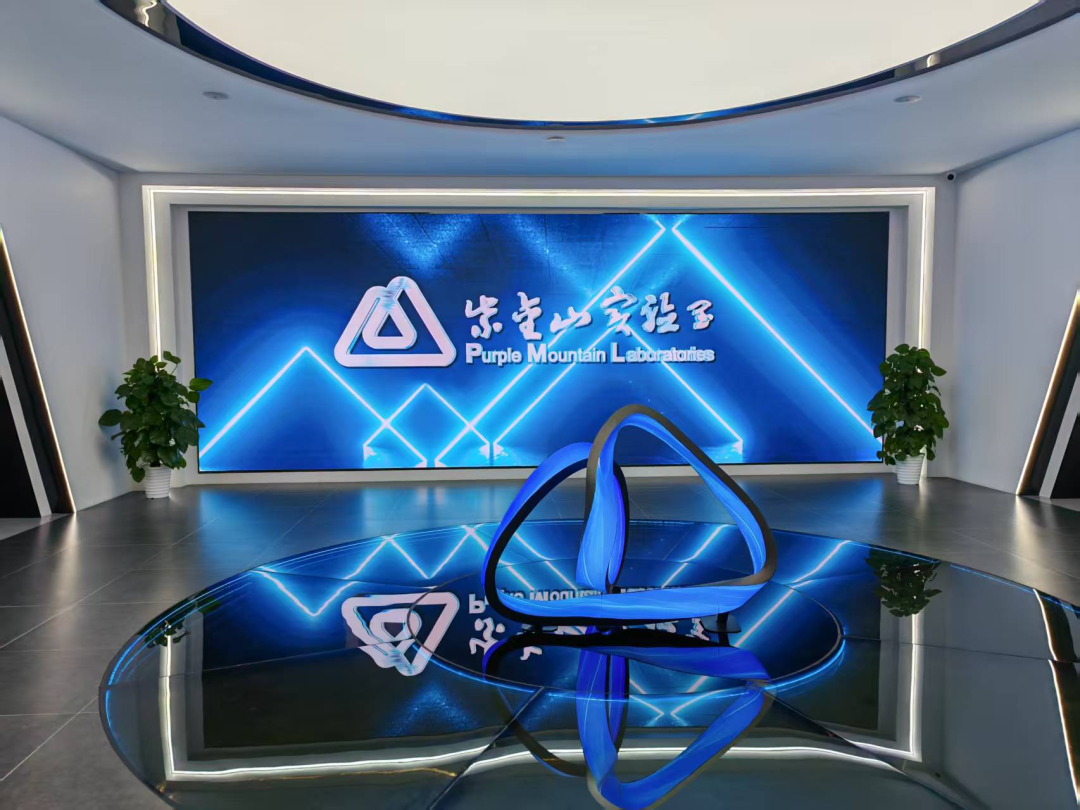
On December 22nd, reporters successively visited the Zijinshan Laboratory, Nanjing Xinhe Sensing Technology Co., LTD., Nanjing Zimitek Technology Co., LTD., and Nanjing Low-altitude Economic Industrial Park to explore how Nanjing is accelerating the creation of a cutting-edge highland for technological innovation, cultivating fertile ground for the application and innovation of achievements, and building an ecological co-construction “tropical rainforest”. We will spare no effort to build a “6G City” and a leading demonstration zone for the development of the 6G industry.
Technical origin: The laboratory continuously sets new Records for 6G “World’s First”
“An intrusion target has been detected. A quadcopter drone is 315 meters away…” ” Hardly had the words been spoken when a non-cooperative drone suddenly intruded into the airspace. At this moment, the “Air Sentinel Smart Brain” is quickly activated. By analyzing the electromagnetic echo signals received by the communication base station, the perception data processing unit instantly calculates key information such as the distance, altitude, orientation, speed, and heading of the invading unmanned aerial vehicle.
Immediately after, the “Air Sentinel Smart Brain”, based on the perceived information, promptly mobilizes the photoelectric system to carry out visual capture and tracking, assess the threat level of the invading drones in real time, and simultaneously command the on-duty drones to take off, precisely performing tasks such as interception, escort flight, evidence collection, and drive away.
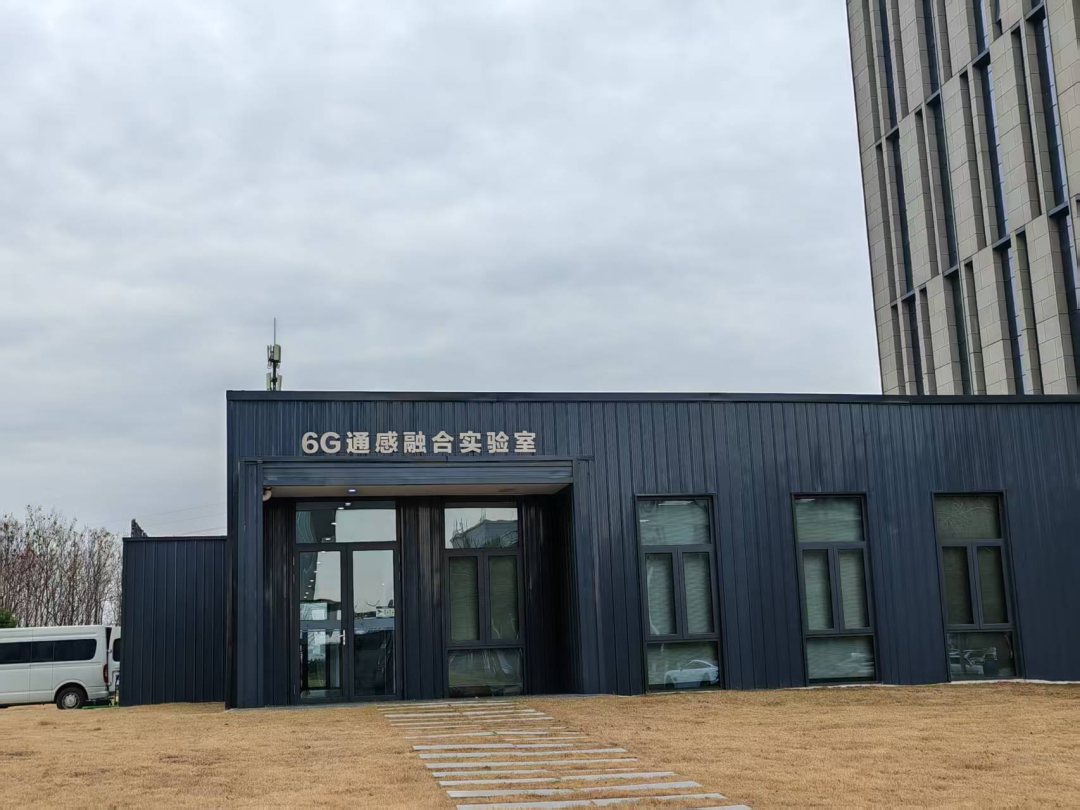
This year, Zijinshan Laboratory has taken the lead in building a fully domestic 6G communication and sensing integration test field and established the world’s first 6G communication, intelligence and sensing integration field test network. At the test site, the reporter saw the staff simulating low-altitude security scenarios to conduct a concept verification of the “integrated technology of communication, sensing and intelligent computing”.
The real-time flight paths of the invading drones, the electro-optical tracking perspective videos, and the perspective videos of the on-duty drones are all real data collected during the experiment. Zhong Ziguo, a researcher at Zijinshan Laboratory, introduced that after the on-duty unmanned aerial vehicle completes its mission, it will automatically return to the hangar along the original route.
As an “industry giant” in the 6G field, Zijinshan Laboratory has taken the lead in the national 6G overall technology research, successfully established the industry’s first 6G comprehensive laboratory, inaugurated the 6G concept verification center, and initially built a 6G end-to-end experimental platform. In recent years, it has achieved more than ten “world firsts” in the 6G technology field.
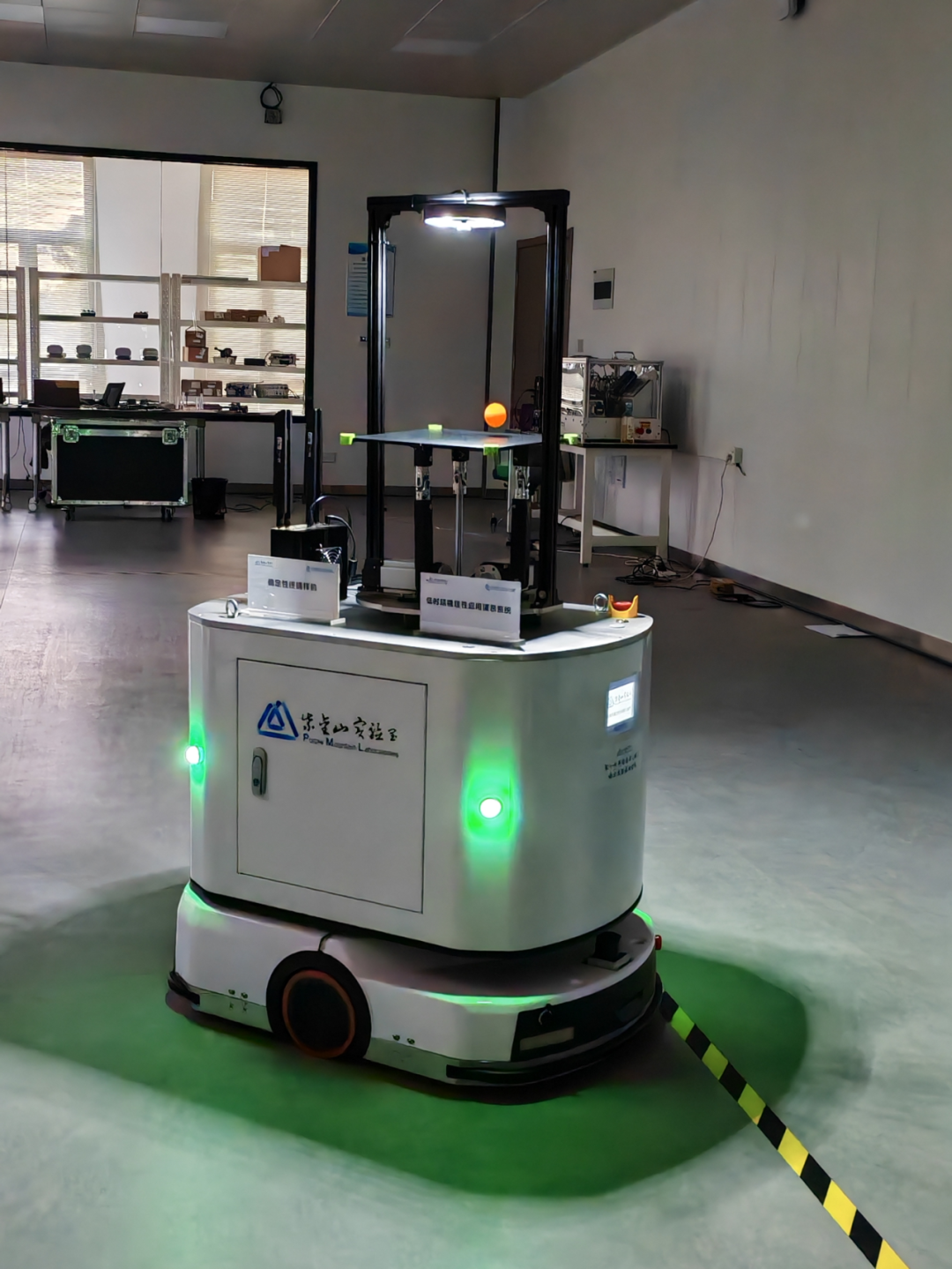
Compared with 5G, 6G has achieved significant improvements in communication performance indicators such as data rate, spectral efficiency, air interface delay and coverage distance. Zhong Ziguo further explained that from 1G to 5G, they are essentially “pipelines” for data transmission, while 6G has added two core capabilities: the integration of communication and intelligence and the integration of communication and sensing. The former can integrate and provide functions related to artificial intelligence, while the latter has a perception function similar to that of radar.
Zhong Ziguo gave an example, saying that when drones are flying, they need to “interact” with the ground in real time. To avoid signal interference, millimeter-wave technology can be adopted for drone communication over cities in the future. It’s like a flashlight, capable of reaching a considerable distance, but it must be precisely aimed at the target to achieve effective communication. The relevant team in our laboratory is currently researching the use of AI technology to achieve efficient and precise alignment of millimeter-wave signals, which is of great help for the long-term stable flight of unmanned aerial vehicles.
Journalists’ interviews have revealed that the Zijinshan Laboratory, in collaboration with China Railway Signal & Communication Corporation, has successfully completed the field test of the “One Tower, One City” low-altitude communication private network solution, being the first to apply 6G cellular technology in the low-altitude domain.
This test took a sunny slope high ground as the “tower”, deployed local communication command vehicles equipped with cellular base stations, and the communication network constructed covered a distance of over 40 kilometers. Zhong Ziguo introduced that in a nearby small town, drones equipped with 6G communication technology and flight control modules, supported by a low-altitude communication network, can capture the ground in real time through high-definition cameras, meeting the monitoring needs of scenes such as forests, rivers, and the ground.
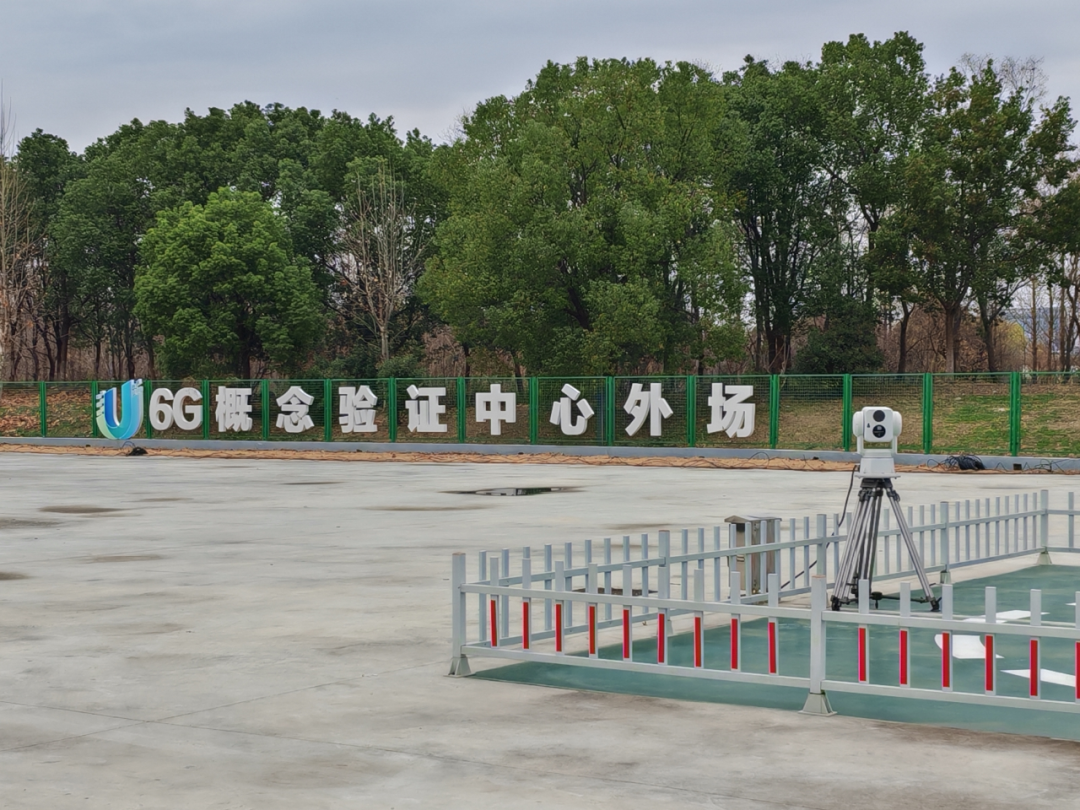
Outside the 6G proof-of-concept center of Zijinshan Laboratory, the reporter noticed that there was a “restricted area” in each of the four corners of the open space, inside which four devices equipped with experimental RF transmitting units were installed.
These unit devices are responsible for transmitting and receiving electromagnetic waves, and their safety is the same as that of the mobile phones we use daily. Zhong Ziguo introduced that the system supports both millimeter-wave and low-frequency bands commonly used in mobile phones, and can simulate future cell-free distributed collaboration scenarios. Meanwhile, the site is also equipped with two air-to-air devices and a set of optical equipment, which can be used for unmanned aerial vehicle experiments and multimodal detection.
In addition, multiple sets of radio frequency transceiver units have been deployed on the rooftop of the Zijinshan Laboratory. Together, they form a wireless communication network to achieve communication, perception and intelligent operation. All network data will be aggregated in the nearby small data center, where communication, perception, computing and AI functions are all centrally implemented.
Technology Transfer: The “Accelerated Run” from Laboratory to Industrialization
Yang Long was originally a researcher at Zijinshan Laboratory. In 2020, he and five other colleagues “banded together” to carry out special technical research and development. After about five years of technological accumulation and team integration, the team, relying on the millimeter-wave phased array antenna technology developed by the Purple Mountain Laboratory, embarked on the path of technology transfer.
Thanks to the laboratory’s favorable policy of integrating industry, academia and research, this six-person team resolutely chose to leave their posts to start a business and established Nanjing Zimitaike Technology Co., Ltd. in January 2024. Five months later, the company’s first government-funded fund for the integration of industry, academia and research was successfully in place, and all the matching funds were also fully implemented in October of the same year.
“We are a manufacturer of phased array module terminals. Our core application directions focus on two major sectors: satellite communication and millimeter-wave point-to-point communication. These two fields have huge market potential and a very broad future development space.” ” The words of Yang Long, a researcher from the technology department of Zimi Taike, are filled with anticipation for the future.
Backed by the “technical expert” Zijinshan Laboratory, Zimi Taike enjoys an “inherent advantage” in the transformation of scientific and technological achievements. At present, the company’s core product, the millimeter-wave phased array antenna terminal, can not only serve as a 5G-A base station but also be used for high-speed point-to-point millimeter-wave signal transmission. It can achieve ultra-high-speed wireless transmission at a distance of over 2,000 meters and a speed of 2.6Gbps.
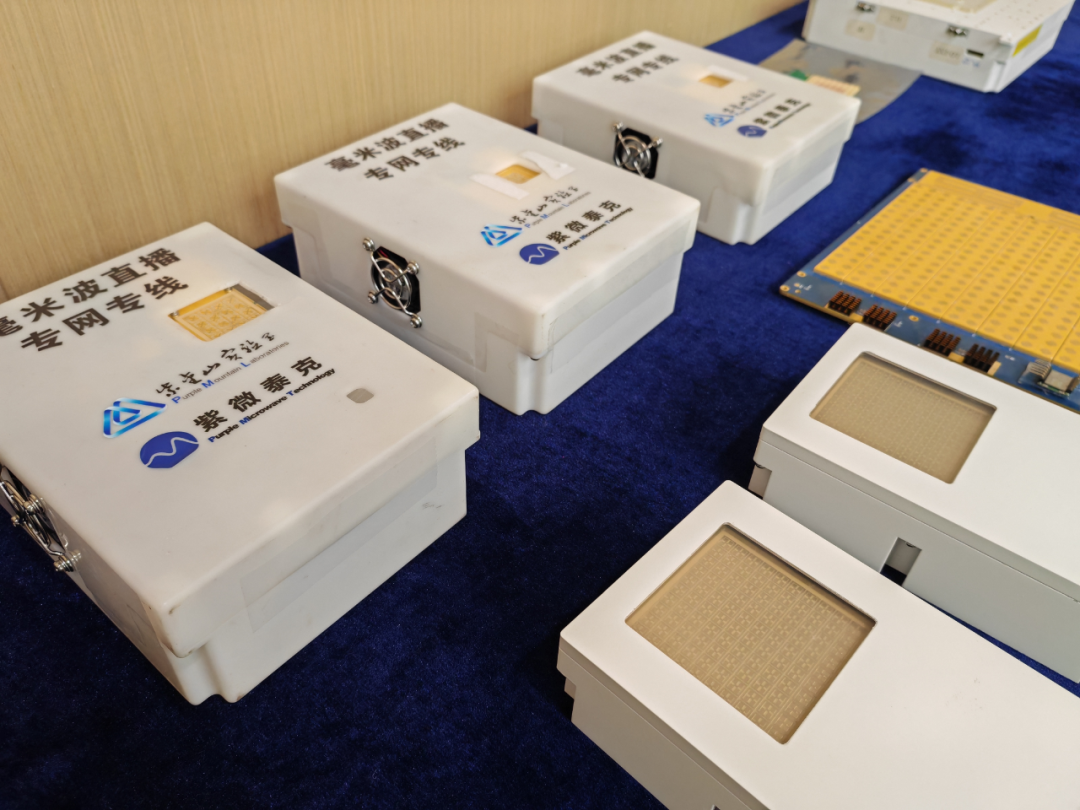
Today, the company’s products have been successfully applied in multiple industries, covering intelligent transportation networking, satellite communication terminals, and unmanned aerial vehicle (UAV) on-board communication.
The integration of communication and sensing is an important feature of the evolution from 5G to 6G. 6G will no longer merely be a communication network but will also become an infrastructure for universal high-precision positioning and perception both indoors and outdoors. In the era of intelligent Internet of Things, the demand for high-precision location services has expanded from people and mobile phones to a vast number of intelligent connected terminals. The digital transformation of industries such as unmanned driving, intelligent logistics, and low-altitude economy all rely on the support of this technology.
After five years of research and development, Zijinshan Laboratory has successfully broken through multiple 6G high-precision positioning technologies and is backward compatible with existing 5G-A base stations. It has deployed China’s first 5G-A indoor large-scale real-time positioning system in a real underground parking lot environment, achieving sub-meter positioning accuracy. At the 7th Future Network Development Conference, this significant achievement was released and immediately drew widespread attention from the industry.
Accelerate the transformation of achievements and seize the “blue ocean” of the market. In September 2024, Zijinshan Laboratory incubated the first industrialized enterprise that combines investment and allocation – Nanjing Xinhe Sensing Technology Co., LTD. The company quickly formed product R&D and marketing teams and successfully completed the R&D and testing of the first generation of commercial 5G-A high-precision positioning system products.
“Our core products are 5G-A and 6G high-precision positioning engines, dedicated to transforming 5G and 6G networks into integrated communication and positioning infrastructure.” ” Liu Peng, the chief technology officer of the company, introduced that currently, the products have been applied in multiple industries such as shopping malls, factories, energy, and healthcare.
Relying on 5G-A indoor base stations, we can stably achieve a positioning accuracy of 0.5 meters in complex indoor working conditions, with the highest reaching centimeter-level accuracy. This level is leading in the industry. Liu Peng proudly said that the company has completed the full commercial deployment and delivery of the first 5G-A positioning system for trade and commerce in China. Even in underground garages, it can achieve precise pedestrian flow positioning and real-time store-level navigation.
It is reported that in its first year of establishment, Xinhe Tonggan’s output value exceeded 10 million yuan. Moreover, it has formed an industrial innovation alliance with the three major operators, China Mobile, China Telecom and China Unicom, to jointly promote the industrialization of 5G-A positioning technology, making indoor high-precision location services as convenient as Beidou outdoor positioning services and empowering thousands of industries.
Innovative application: The first scene verification in the country empowers low-altitude upgrades
A multi-rotor drone took off smoothly and carried out daily inspections along the section of the expressway from Nanzhuang to Yinxiang. The real-time images along the way were clearly transmitted back to the back-end platform. Entering the Nanjing Low-altitude Economy Industrial Park, the “6G+ Low-altitude inspection” scene that is being fully developed fills people with imagination about the future of smart transportation.
As the low-altitude economy continues to heat up and its application scenarios keep expanding, the supporting role of cutting-edge communication technologies is becoming increasingly prominent. Since the beginning of this year, under the leadership of the Breakthrough Office, the Air-Ground Digital Intelligence Group Company under Nanjing Transportation Group has joined hands with the Ubiquitous Communication Research Center of Zijinshan Laboratory and the local unmanned aerial vehicle enterprise Tuoheng Technology Company to jointly promote the 6G-enabled low-altitude inspection project. In early July, it successfully completed the first scene verification in the country.
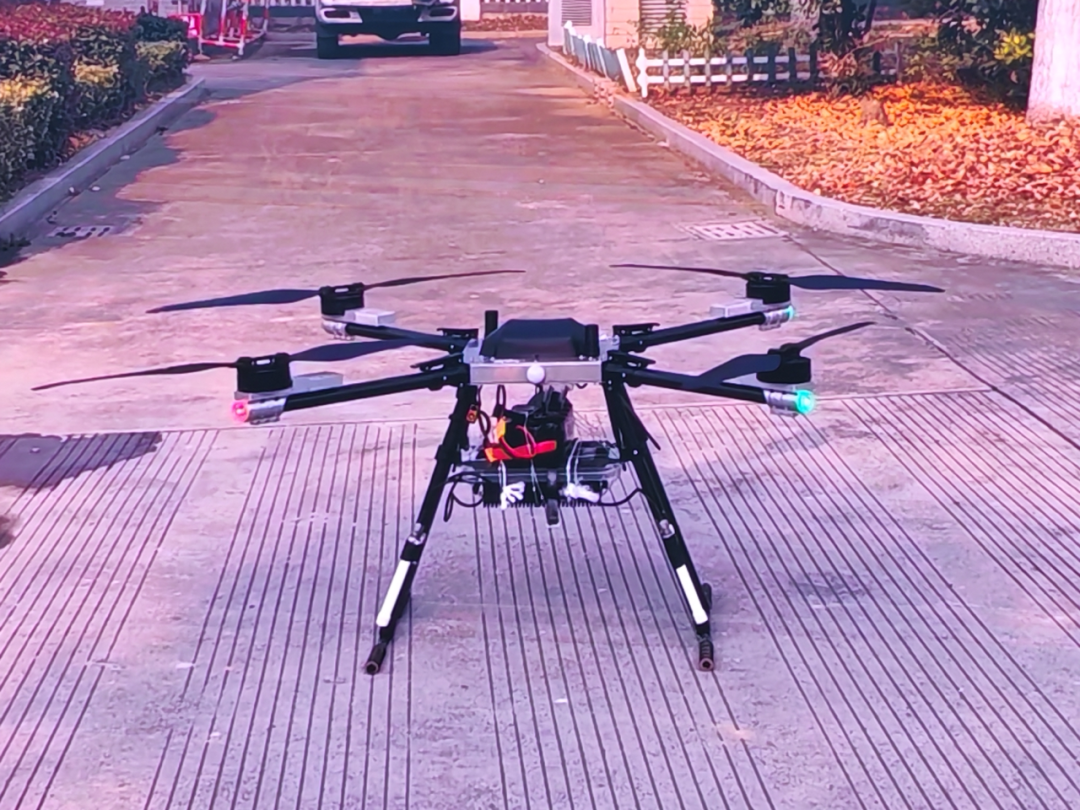
Compared with traditional manual inspection and conventional drone inspection, the 6G low-altitude inspection system has broken through the limitations of complex terrain and signal blind spots. With the stable transmission of high-definition video and precise control capabilities, it can support drones to capture in real time abnormal situations such as highway congestion, emergencies, and facilities along the route. It provides decision support for traffic management departments and operation units to “discover, analyze and handle in the first instance”, effectively enhancing the efficiency of emergency response and daily maintenance on expressways. Ji Meng, deputy general manager of the Smart Flight Company of Nanjing Transportation Group, introduced.
The implementation of new scenarios and applications cannot be achieved without meticulous refinement and refinement. Since mid-June this year, the breakthrough office has efficiently coordinated all participants, intensively organized technical connections and on-site investigations, and successively completed tasks such as scene demand matching, solution verification, equipment selection, and communication link construction and debugging.
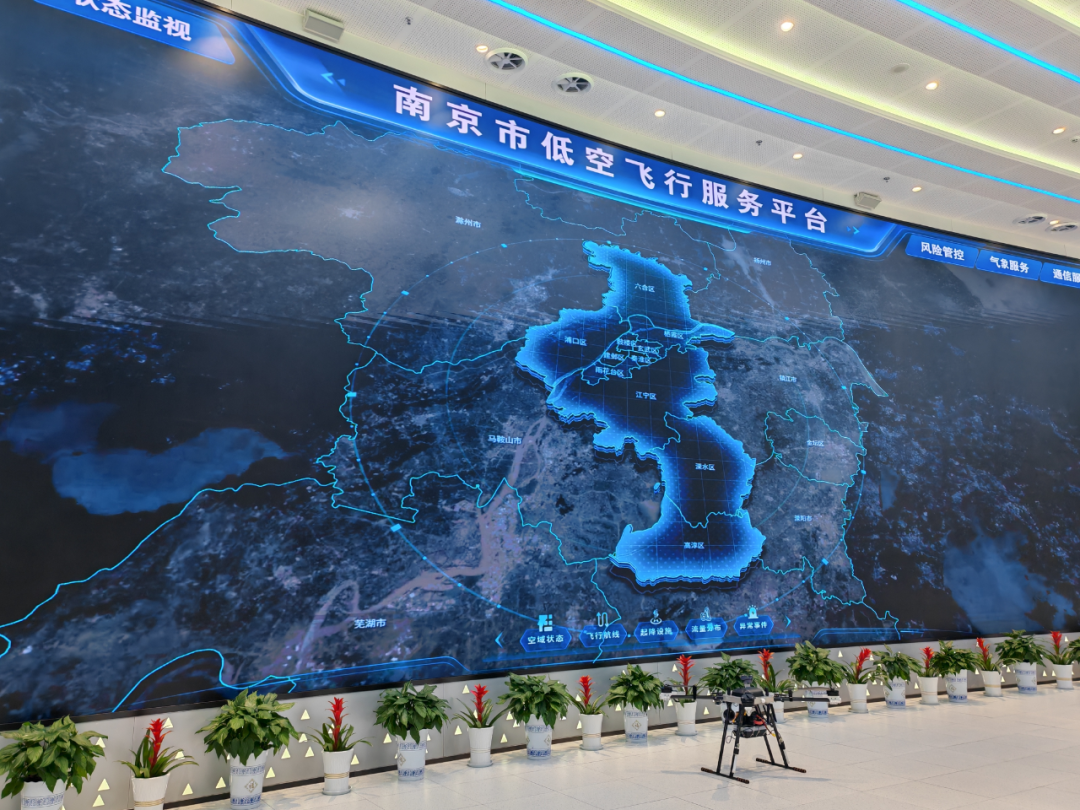
The Nanjing Low-altitude Flight Service Platform has an average daily flight service guarantee capacity of 50,000 sorties, covering 10 core functions such as public management and planning management. Through this platform, flight service guarantees are provided for 6G low-altitude inspection scenarios. During the verification process, we will fully retain the original data and provide it to the Purple Mountain Laboratory for technical optimization, including subsequent data improvement, technical iteration, and equipment miniaturization, to further explore the technical potential and application scenarios.” Ji Meng said.
After nearly half a year of all-out efforts, the technical verification goal of this scenario has been successfully achieved. The technical path and collaborative mechanism of the project have become mature, fully verifying the technical feasibility.
As the core cornerstone for fostering new quality productivity, 6G is leading the development of new fields, opening up new tracks, and shaping new driving forces and new advantages. At present, in addition to jointly creating the “6G+ low-altitude inspection” scenario, Nanjing Transportation Group is also promoting the construction of an innovative “air-ground integration” application scenario in the Nanjing South Railway Station area.
Taking the Nanjing South Railway Station area as a pilot, by comprehensively applying cutting-edge technologies such as Beidou, 5G-A/6G, RID, and spectrum detection, the “four networks” including communication network, perception network, navigation network, and meteorological network will be built and improved. The first “air-ground integrated” innovative application scenario in the country will be constructed. Through the creation of this scenario, Provide capabilities such as safe real-time communication, precise and agile navigation, all-element multi-modal integrated monitoring, and multi-scale meteorological support for low-altitude flights.” Ji Meng disclosed that currently, they are collaborating with leading enterprises in the fields of communication, navigation, and surveillance, such as Zijinshan Laboratory and Guorui Technology, to conduct technical verification in the South Station area. They are jointly promoting the implementation of the low-altitude intelligent Internet demonstration zone and multiple scenarios including smart governance and unmanned logistics, to form the “Nanjing Solution” of “air-ground integrated innovative applications”.
Ji Meng stated that in the future, they will continue to track the progress of the transformation of cutting-edge communication technologies at the Purple Mountain Laboratory, deepen cooperation with all parties involved in industry, academia, research and application, focus on the research and development of low-altitude communication solutions for 5G/6G technologies, and promote the in-depth integration of new-generation information and communication technologies with low-altitude economy and smart transportation through practical applications. Inject strong impetus into Nanjing’s construction as a national benchmark city for the innovative development of new quality productive forces.