Skip to content
In Lishui, Nanjing, a single strawberry can give rise to a large-scale industry worth nearly 1 billion yuan. A single blueberry can be processed into dozens of products and sold worldwide. Even a steamed bun or a piece of steak hides a world-class intelligent manufacturing factory behind them. As the first batch of national-level agricultural highlands in China and the only one in the Yangtze River Delta, this place is no longer merely the “vegetable basket” and “fruit plate” of the Yangtze River Delta. Instead, it is rapidly becoming a new highland for the integrated development of primary, secondary and tertiary industries. At the critical starting point of the “15th Five-Year Plan”, reporters went deep into Lishui to explore its development path.
Cluster fission, from “individual efforts” to “chain explosion”
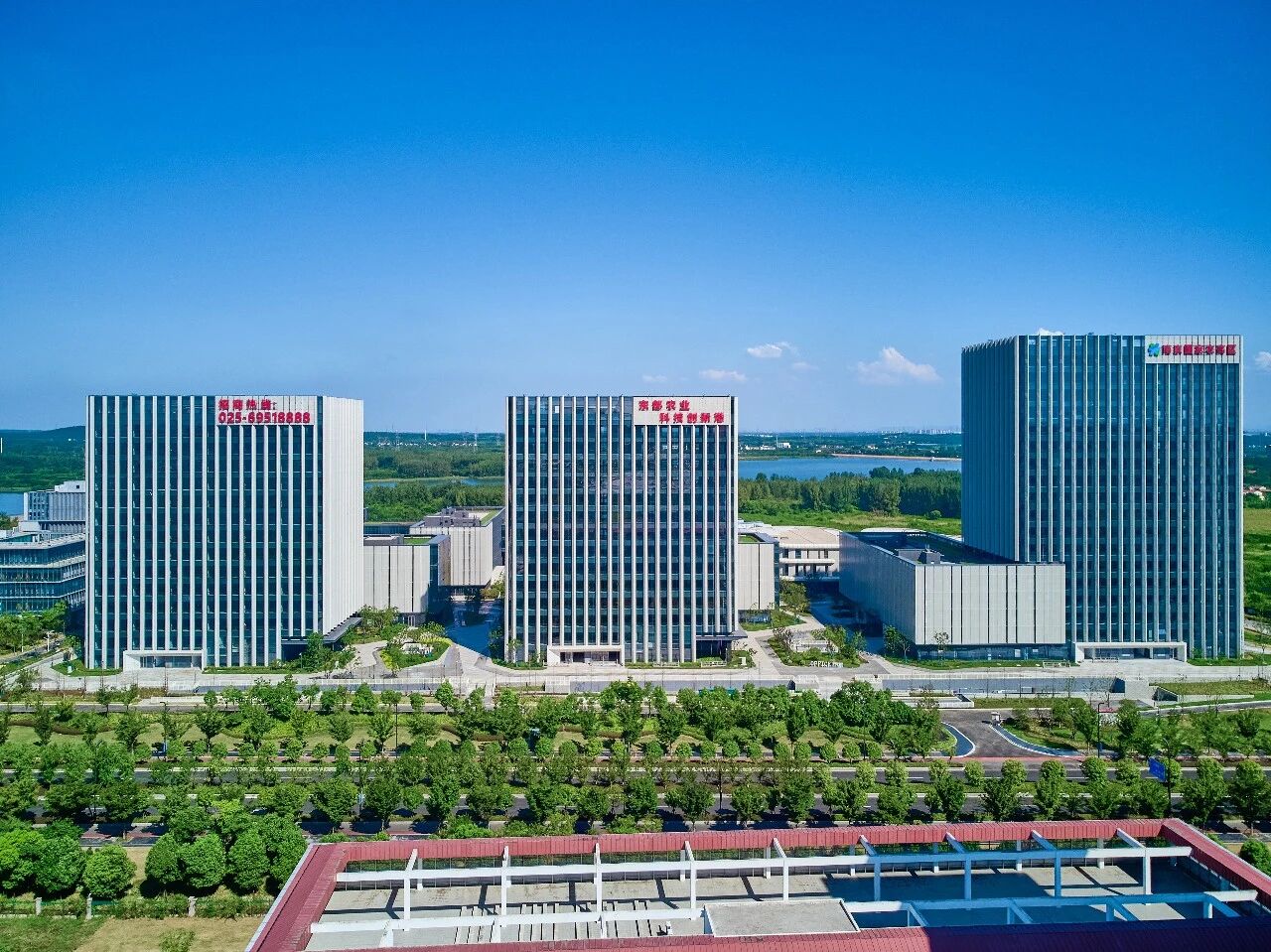
Entering the Nanjing National Agricultural High-tech Zone located in Liushi, one can smell not only the fragrance of fruits but also the scent of modern industry in the air. Here, more than 10 well-known domestic and foreign food enterprises, such as Babi Food Nanjing Factory, Daxidi, Wode Green World, Magain Coffee, Heyu, Xuyao, and Professor Huang, have gathered, forming a food industrial cluster with an annual output value of over 2 billion yuan. “Previously, we were engaged in agriculture, thinking about how to grow well; now, we are involved in food processing, thinking about how to sell far and process deeply,” said Zhou Hui, the chairman of Nanjing Shuangji Agricultural Development Co., Ltd., a company within the agricultural high-tech zone. This reflects the transformation logic of agriculture in Liushi. As the leading enterprise in the “two-berries” industry, Shuangji Company not only has a relatively complete blueberry germplasm resource reserve but also has established a close interest connection mechanism of “enterprise + cooperative + farmer”. In 2025, the company undertook more than 60% of the blueberry procurement tasks in Liushi and, through protected-price acquisition and order agriculture, brought about an average income increase of about 14,000 yuan per local farmer. This clustering effect in Liushi is not accidental. The Liushi Economic Development Zone and the Nanjing Agricultural High-tech Zone form a dual drive of “industry + agriculture”, and the agricultural high-tech zone has specially planned a food processing industrial park to provide a carrier for industrial clustering. Here, the industrial chain is extremely elongated. Blackberries and blueberries are no longer just fresh fruits but have become juices, fruit wines, raw materials, and even health supplements; soybeans are no longer just raw materials but have been transformed into table delicacies such as bells and noodles through soybean product processing. Data is the most persuasive. By the end of 2025, 49 large-scale food industrial enterprises in Liushi achieved an output value of 6.558 billion yuan, with a year-on-year growth of 13.6%. Among them, Xilirang Jelly and Meigaoqingtime Seaweed had annual sales of around 2 billion yuan; Babi Food Nanjing Factory has a single-day production capacity of 450,000 pastries; Daxidi’s future demonstration factory has introduced 3D scanning cutting machines, which can precisely cut 400 steaks per minute. The relevant person in charge of the Industry and Information Technology Bureau of Liushi District said, “At present, our district has formed a cluster with pre-prepared dishes as the mainstay, functional foods as the feature, leisure foods as the supplement, and a full-category coordinated development. It has become one of the core driving forces of regional economic growth.”
Technology empowerment, reshaping new quality productive forces
“Fields and Farms” If industrial agglomeration can be regarded as the “framework” of Liushi’s modern agricultural development, then scientific innovation is its “soul”. This year, the National Two Sessions once again emphasized the need to “accelerate the development of new productive forces”. In Liushi, this macro direction has penetrated into the fields and workshops. In the Nanjing National Agricultural High-tech Zone, you won’t see the traditional “relying on nature for survival”. Here, there are 11.5 thousand acres of characteristic industrial bases, and 41 high-tech enterprises have been gathered. A total of 850 agricultural scientific and technological achievements have been obtained. Not only do seven universities and research institutions such as Nanjing Agricultural University and Nanjing Forestry University have their locations here, but also deep international cooperation with Hebrew University of Israel and Cornell University in the United States has been carried out. The power of science and technology has increased the value of “local specialties”. The blueberry solid beverage produced by Wode Green World (Liushi) Biotechnology Co., Ltd. can sell 80,000 to 90,000 bags a year and is popular in 60 countries and regions around the world. The wholly-owned subsidiary of Daoshidi, Nanjing Dagel Food Co., Ltd., relying on the largest global and most automated beef processing factory, processes 120,000 tons of beef per year and has an annual output value of 1.2 billion yuan. More significantly, intelligent manufacturing has deeply penetrated the traditional agricultural processing links. At the construction site of the Nanjing Luzhihe Headquarters Base in Liushi Economic Development Zone, project manager Li Huaichun introduced to the reporter that the imported automated production equipment has already been installed. As the largest production base of Luzhihe in the country, this project will start production in the near future and can produce 200,000 tons of baked food after full-scale production. In addition, Liushi is also continuously strengthening its efforts in the “chip” of the seed industry. Relying on the research advantages of the Agricultural High-tech Zone, the local area has successively introduced more than ten high-quality strawberry varieties and created well-known brands such as “Golden Estate”, “Fu Jia Bian”, and “Angel Beauty Berry”. As of now, the strawberry planting area in the region is nearly 20,000 mu, with an annual output value of nearly 1 billion yuan, truly realizing “small strawberries growing into a big industry”.
Integration and symbiosis: From “selling products” to “selling life”
Lishui has not stopped at agricultural product processing; instead, it has turned its attention to broader industrial integration. This year, the Central Document No. 1 proposed to “improve the development level of rural industries”, and Lishui’s solution to this problem is “deep integration of agriculture, tourism and culture”. During the just-ended Qingming holiday, “Jiujihere · Lakeside Homestay” and “Fireworks Camping Park” on the Shouji Lake in Hefeng Town became new favorites among tourists in the Yangtze River Delta. The town, relying on the ecological corridor, transformed the vegetable planting base into a pick-and-try experience park and turned the farmhouses into high-quality guesthouses. In Honglan Subdistrict, it achieved a “transformation from production area to scenic area, from products to commodities, and from rural houses to guesthouses” through ecological sightseeing tours and leisure pick-and-try tours, attracting an average of 4.1 million visitors per year. This integration not only brought popularity but also broke through the bottlenecks in the flow of urban-rural elements. Lishui further deepened mechanism innovation. Since 2020, the district has actively organized the application for land use projects for the integration of the first, second and third industries. As of now, it has helped 53 agricultural business entities secure 361 mu of third-party industry integration land indicators. According to statistics, since 2024, the district has cumulatively secured over 600 million yuan in policy-based loans for various new agricultural business entities and paid out nearly 7 million yuan in loan interest subsidies. “We not only want to make farmers’ wallets bulge, but also make the countryside a livable and prosperous home that carries nostalgia,” said a relevant official from the Rural Industry Development Department of the Lishui District Agriculture Bureau. Through the launch of “Lishui Quality Leisure Agricultural Routes”, it has connected strawberry picking, rural sightseeing, ecological study tours and other business models, and Lishui is actively building “full-chain experience scenarios”. Looking to the future, Lishui’s goals are clearer.