Skip to content
Recently, in the intelligent production workshop of Nanjing Zhengda Tianqing Pharmaceutical Co., Ltd. (hereinafter referred to as “Nanjing Zhengda Tianqing”), a batch of newly produced medicines is being transported through the conveyor belt and orderly entering the packaging process. A few days later, they will be sent to the laboratory for quality testing, and then after about 20 days of storage in the warehouse area, they will finally be dispatched to all parts of the country.
The Birth of a Pill
Is being redefined

In this 3,000-square-meter workshop, more than 20 sets of production equipment are neatly arranged and operating efficiently. The raw materials go through processes such as weighing, granulation, tablet pressing, and coating, transforming into pills for treating heart and brain diseases. In the entire workshop, there are only 20 staff members per shift.
“Among them, technicians account for 80%.” Zhu Wenhua, the production technology director of Nanjing Zhengda Tianqing, pointed to the real-time fluctuating parameters displayed on the operation screen and said that granulation is the core process in drug production. Now, the entire process has been automated. The main task of the staff is to keep an eye on the data on the screen to ensure that every step is carried out precisely and accurately.

How many pills can this workshop produce in a day? The answer is: 15 million! “We expect to increase by another 20% this year,” Zhu Wenhua said. Last year, this single workshop produced 3.2 billion pills, covering 4 products.
Not only has the output increased, but also the production efficiency and quality assurance capabilities have improved.
“Drug production must ensure quality. Complete intelligence can provide greater guarantee for the safety and effectiveness of drugs.” Zhu Wenhua said that every step of the company’s drug production has achieved automatic control. In the workshop, an energy management system and a quality trend analysis system have also been deployed, which can monitor the drugs throughout their entire life cycle. “If any abnormalities occur, the system will immediately issue an automatic warning. There is a complete monitoring system from the production process to entering the market.”
As a national-level green factory and an intelligent factory in Jiangsu Province, Nanjing Zhengda Tianqing is no longer a traditional pharmaceutical company. Here, intelligence is not an embellishment but the fundamental color.
The company has 2 formulation production bases, 4 production workshops, 8 drug formulations and 12 production lines. It can achieve an annual production capacity of 6 billion tablets/pills of oral preparations. The production quality system team, consisting of over 500 people, has 86% of them as technical personnel. The qualified rate of all product types in market inspections has been 100% for consecutive years.
Behind this intelligent factory lies the young team of nearly 4,000 people at Nanjing Zhengda Tianqing – with an average age of only 33.7 years old, and 58% of the members holding bachelor’s degrees or higher. Among the nearly 400-person research team, over 70% have graduate degrees or above. The company adheres to the innovation research strategy of “using imitation to promote innovation, combining imitation and innovation”, with annual R&D investment accounting for 8% to 10%, which is more than twice the industry average; each year, 5 to 8 high-quality generic drugs are applied for and approved, and currently, 2 innovative drugs have entered phase III clinical trials, and more than ten innovative drugs are in different stages of research.
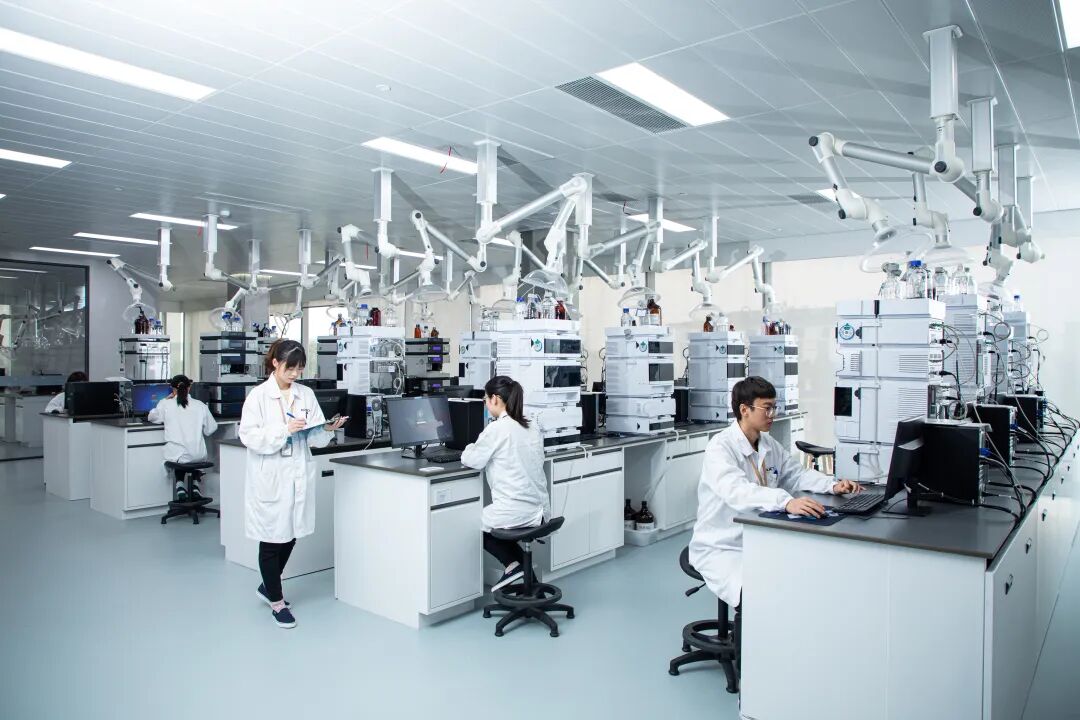
This year, Qixia District has clearly designated biomedicine as one of the key priority areas for focused efforts. It focuses on two main directions: chemical drugs and traditional Chinese medicines. It encourages enterprises such as Nanjing Zhengda Tianqing, Manowei, and Nuowenzan to increase their efforts in developing innovative drugs. It also aims to expand and strengthen modular platforms like the New Port Biomedical Headquarters Base and Longtan Medical Device Industrial Park, and strive to build a high-end pharmaceutical manufacturing cluster.
Meanwhile, Qixia District is reconfiguring the service ecosystem with a reform mindset. The physical and intelligent operation of the District Enterprise Comprehensive Service Center has made it the “central port” and “central hub” for enterprise services. Enterprise demands have achieved a full-chain closed-loop from “collection – distribution – processing – feedback – evaluation”; the “resource supermarket” established by government departments has linked with financial institutions to precisely match financing, scenarios, and technical element demands; the “instant enjoyment” of preferential policies without application, direct and fast enjoyment, has enabled enterprises to focus more on development.
The journey of a single pill
It reflects the “acceleration” of a city.
From the full-production operation of the intelligent workshop
To the accelerated formation of industrial clusters
And to the continuous improvement of the business environment
The sense of urgency that “starting the year means getting to work, and starting work means taking action”
Is currently being transformed into tangible development momentum in Nanjing.