Skip to content
In the Liushi Economic Development Zone, within the premises of Datang Nanjing Thermal Power Co., Ltd., rows of white energy storage prefabricated containers are neatly arranged – this is precisely the 50 megawatts/100 megawatt-hours centralized shared energy storage station that recently achieved two-phase grid connection operation.
From the initial exploration phase to the subsequent upgrade phase, this “super power bank” is injecting strong momentum into the stable operation of the power grid in a more intelligent, economical and efficient manner.

The second phase project with denser battery cells and better cost-effectiveness is “even better than the first one”
Entering the site of the second phase energy storage project, the energy storage area, which covers only 6.79 acres, has 10 energy storage units, 20 battery prefabrication compartments and 10 PCS booster compartments, with a total installed capacity of 50 megawatts/100 megawatt-hours. “Compared to the first phase, the second phase can be described as small but powerful,” said Xu Dong, the party secretary and chairman of the company. “The second phase uses battery cells with higher energy density and a more compact layout. With the same capacity, it saves nearly half of the land.”
Another thing that makes the project team proud is that the cost for the second phase is lower. “We just seized the window of opportunity when the competition in the energy storage system market intensified. The equipment procurement cost was approximately 30 million yuan lower than that of the first phase,” Xu Dong said with a smile. “We also optimized the design and changed the traditional concrete foundation to a pile foundation. Not only did this shorten the construction period, but it also saved about 300,000 yuan in cost.” Through this increase and decrease, the economy and advanced nature of the second phase were immediately evident. “To better adapt to the complex and changing grid operation mode and to receive grid dispatching more stably, we also conducted full station modeling for the energy storage power station. The safety factor is higher, the protection system is more complete, and the monitoring coverage is more comprehensive, with more precise responses.” The on-site operation and maintenance personnel added, “The second phase is like an upgraded version of the first phase. The operation data is clearer, and the response to dispatching instructions is also faster.”

How does an energy storage station work? Rapid charging and discharging, peak shaving and valley filling. If we compare the power grid to a vast transportation network, then new energy generation is like a fluctuating flow of vehicles – photovoltaic power reaches its peak during the midday, while wind power significantly increases at night, while electricity demand is often concentrated in the daytime and evening. This “time sequence mismatch” between power generation and electricity consumption can easily lead to phenomena similar to traffic congestion or “empty lanes” in the power grid. And the energy storage station is like the regulating reservoir beside this “energy highway”. “When electricity demand is low, we store the excess electricity in the batteries; when electricity demand is high, we quickly release it.” The on-site dispatchers provided more intuitive data: This energy storage station can store 100,000 kilowatt-hours of electricity at a time, enough to supply one household for a whole day.

The first phase of the project was put into operation in July 2024, and the second phase was connected to the grid at the beginning of this year. The two phases working together can absorb or release large amounts of electricity on a large scale, effectively alleviating the peak load regulation pressure of the Lishui area and the Nanjing power grid, and ensuring reliable power supply for enterprises and residents.
The first-quarter data was impressive, with profits exceeding the target by 14.5%.
The success of the energy storage project was just a microcosm of Datang Nanjing Thermal Power’s “good start” in the first quarter. In the first quarter, the company fully achieved its heat sales targets and its profits reached 114.5% of the target.
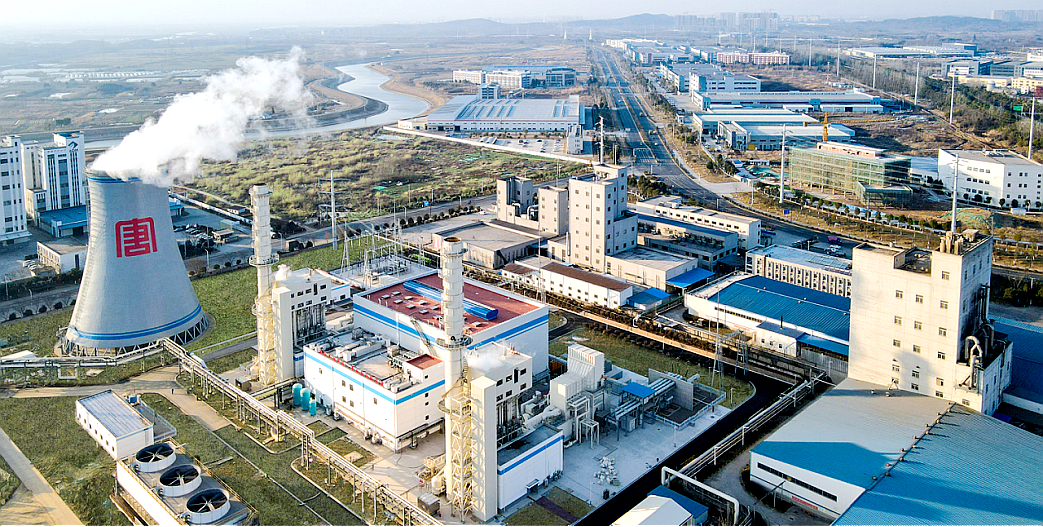
In terms of the layout of emerging industries, the company has been continuously focusing on distributed photovoltaic since 2022. Currently, it has completed and put into operation over 20 megawatts of rooftop photovoltaic projects in Lishui. At the same time, following the path of “ecology +”, it is actively promoting the construction of centralized photovoltaic projects combining fishery and photovoltaic power generation, as well as the comprehensive energy project of Jingqiao mine pit. Among them, the Jingqiao project integrates photovoltaic power generation and ecological restoration, and is expected to complete the first phase of production within this year, helping to promote the coordinated development of clean electricity and local tourism. Xu Dong stated that the company has also turned its attention to cutting-edge directions such as direct connection of green electricity, and is making preparations for future growth poles in advance.

From the “twin stars” of energy storage to the fishery-wind power integration; from mine site management to direct connection of green electricity to Datang Nanjing Thermal Power Plant – through concrete actions, we are moving towards a greener future.