Skip to content
In March this year, Nanjing City established an industrial breakthrough mechanism. Focusing on the main directions of industrial breakthroughs, it set up four industrial breakthrough offices for artificial intelligence (software), robotics, biomedicine, and new-generation information and communication on the basis of the municipal office for strengthening the city through industry. At the same time, it upgraded six industrial task forces including smart grid, forming a “1+4+6” working organization system. With an attitude of tackling tough problems and practical measures, we will accelerate breakthroughs in key industries and strive to gain the initiative in the new round of industrial competition.
Recently, the reporter successively visited the Institute of Robot Sensing and Control Technology of the School of Instrument Science and Engineering of Southeast University (hereinafter referred to as “the Institute”), Jiangsu Dinghui Body-type Intelligent Robot Innovation Center, and Jiangsu Nanda Electronic Information Technology Co., LTD. Visit on-site to explore how representative enterprises, scientific and technological innovation platforms, and universities and research institutions in the field of robotics have achieved positive results on the “breakthrough road” and made greater contributions to the construction of a strong industrial city.
“University leadership”
With 30 years of deep cultivation, hardcore technology has supported the “backbone” of the industry
The five-star wheel-legged mobile robot, which meets the inspection and detection needs of mountainous and urbanized environments, not only “runs fast”, but also has excellent obstacle-crossing capabilities. Internal force measurement sensors and equipment for solar panels of the space station, control system for manned lunar rovers… In the laboratory of the research institute, a series of “black technology” products have extended the “training ground” from the ground to space, brimming with a sense of technology.

As early as 1958 to 1960, Professor Zha Liguan, one of the founders of the research institute, successfully developed China’s first humanoid robot – over 2 meters tall, with more than 20 degrees of freedom throughout its body. With the support of a wheeled structure, it looked like a “giant”.
We have been deeply engaged in the field of robot sensing and control technology for over 30 years, with core research directions covering remote operation of space robots, force-touch human-machine interaction, medical rehabilitation robots, etc. Professor and director Song Aiguo of the research institute pointed at the Five-Star wheeled mobile robot and gave an example, saying that this robot has unique advantages when facing various complex ground environments such as narrow urban alleys and urban staircases, and can undertake multiple tasks such as dangerous area detection, fire rescue, and urban security.
It is understood that Professor Song Aiguo’s team has long served the country’s major strategies. The force measurement system they developed has contributed to the successful deployment of the solar wings of the Wentian laboratory module, providing key technical support for space missions such as the Chang ‘e-3 lunar rover. At the same time, they have overcome the core technology of intelligent prosthetics, and their products have been industrialized and exported overseas, winning the championship of international bionic competitions.

It not only has top-notch scientific research capabilities but also a solid ability to transform research results into practical applications. In recent years, Professor Song Aiguo’s team has accelerated the deep integration of scientific and technological innovation with industrial innovation in the field of robotics. They have also collaborated with enterprises on the “chain” of Nanjing’s robotics industry, such as Estun, Tianchuang Robotics, Yijiahe, and Tuodao Medical, through technology transfer, joint establishment of laboratories, and project cooperation. Carry out industry-university-research cooperation in the fields of special robots, rehabilitation robots, medical surgical robots and industrial robots.
For instance, we have jointly established an artificial intelligence and robotics laboratory with Estun Medical. Our team is specifically responsible for developing the internal control and rehabilitation software for human-machine interaction of rehabilitation robots. Song Aiguo introduced. When collaborating with Yijiahe to develop the 10kV distribution network non-stop remote operation robot, the team was mainly responsible for the research and development of force perception, force feedback and force control technologies for remote operation as well as interactive devices.

The rail-mounted inspection and operation and maintenance robot developed in collaboration with Nanjing Tianchuang Intelligent Technology Co., Ltd. has been widely applied in the inspection and operation and maintenance of large offshore gas fields and offshore wind power projects. We are conducting research on medical surgical technology with Nanjing Tuodao Medical Technology Co., LTD. We will apply multi-dimensional force sensors, force control technology and force feedback technology to endoscopic surgical robots. It is expected to enter the market next year…
“Robots must be application-oriented; otherwise, they are just high-end toys.” ” The 22-person research team led by Song Aiguo has always aimed at the application and implementation of technological research and development, and has achieved remarkable results, further accelerating the development of the robot industry in Nanjing.

The “acceleration” of industrial development cannot be achieved without the full support of government departments. In the interview, Song Aiguo frankly admitted that under the leadership of the Nanjing Robot Industry Breakthrough Office, the whole city has formed a united force. There is not only policy guidance and support, but also “real and effective” assistance.
For instance, we are currently building a brain-computer interface platform in Qixia District, which has provided us with 28,000 square meters of space. We are expected to move there by New Year’s Day next year. Song Aiguo said that he hopes to use the Robot Research Institute as a gravitational force to attract more robot and brain-computer interface enterprises to gather and form an industrial cluster area.
Platform aggregation
Multiple parties join hands to create an embodied intelligent “innovation engine”
Put on a pair of data gloves and gently swing your left arm – the humanoid robot beside you also moves in sync, and all the data is being collected in real time. Entering the Jiangsu Dinghui Body-type Intelligent Robot Innovation Center, which was just approved last month, in the data collection area, the R&D personnel are working in perfect harmony. By collecting a large amount of data and inputting it into the “robot brain”, the robot can continuously learn and optimize until it reaches the ideal state.

The Innovation Center was jointly established by Estun Automation Co., Ltd. and Jiangning Development Zone, in collaboration with key enterprises in the industry such as Jiangsu Hengtong Cable, Shenzhen Anpeilong, Suzhou Green Harmonic, Cross-Dimensional (Shenzhen) Intelligence, Quanfeng Automobile, and Nanjing Software Technology Research Institute of the Chinese Academy of Sciences. On November 18th, it was successfully approved as the Jiangsu Province Embedded Intelligent Robot Innovation Center.
It is understood that the Innovation Center aims to break through the core technologies of embodied intelligent robots. It conducts research and development work in the directions of data ecosystem of embodied intelligent robots, key technology research and development of the base of embodied intelligent operating systems, core component and robot whole machine core key technology research and development and verification, and industry application implementation. It strives to reach the international advanced level in the fields of basic research and applied research. Some have reached the leading level.

The core construction of the center includes a data acquisition center and laboratories covering over 2,000 square meters, as well as three core platforms: the data acquisition center platform, the pilot production platform, and the testing and certification platform. Li Yuanping, the general manager of Nanjing Estun Coolzhuo Technology Co., Ltd. and an expert consultant of the Innovation Center, introduced. Among them, the laboratory undertakes the core function of key technology research and development. The data collection center platform focuses on the construction of the data ecosystem and addresses the industry’s data accumulation needs. The pilot production platform helps each link in the industrial chain to be quickly implemented. The testing and certification platform is associated with the formulation of industry standards and provides testing and verification services for products.

At present, the construction of the innovation center has achieved phased progress. Among them, the data collection field has been built on the existing site and is currently under construction. The center opens its infrastructure to all types of institutions throughout the province and even the country, enabling the sharing of common technologies. The main body manufacturers can conduct product-related tests here, and downstream customers and end users can open up scenarios to avoid repetitive construction, quickly accumulate data, train models and verify commercial scenarios. Li Yuanping introduced.
From conception to implementation, the construction of the innovation center has been running at a fast pace. “From the time we put forward the idea, to the project’s implementation, and then to the advancement of construction, everything was very fast.” ” Li Yuanping has deeply felt the “Nanjing speed”. Currently, the 60 million yuan registered capital has been fully in place. The short-term goal is to complete the construction of all planned platforms as soon as possible, pass the project acceptance smoothly within three years and generate substantive output.

When looking forward to the future, Li Yuanping said that the long-term goal of the innovation center is to achieve a qualitative leap in talent aggregation and cultivation, construction of scientific research infrastructure, cultivation of innovation capabilities, and industrialization of core technologies. It aims to build itself into a national-level manufacturing innovation center in the field of body-intelligent robots, drive the development of humanoid robot technology in Jiangsu Province and even the whole country, and enhance the influence of humanoid robots in China.
Enterprise breakthrough
Empowered by scenarios, smart robots “cross boundaries and break out”
Could you please help me check what popular activities the bank has recently launched? “Ok, no problem.” The “chubby and white” robot in front of us has responded enthusiastically, revealing all the recent bank offers at once. At Jiangsu Nanda Electronic Information Technology Co., LTD., this intelligent service robot has become a “star employee” of the bank and is deeply loved by customers.

Founded in 2013, Nanjing University Electronics is an innovative high-tech enterprise under Nanjing University. It is dedicated to the innovative research and development of digital technology, artificial intelligence and the new generation of intelligent service robot systems, as well as the transformation of scientific and technological achievements. The embodied intelligent robot system, which has been developed over a decade, has been widely applied in fields such as smart finance, smart government affairs, smart healthcare, smart elderly care, smart tourism and culture, and smart aviation. It is a pioneer and leader in the field of smart service robots in China.
Nanda Electronics is the only robot manufacturer in China’s banking industry that has been integrated into the banking business system. It has created the largest commercial scenario case for Industrial and Commercial Bank of China in the country. The related system has been put into use in about 1,000 ICBC branches across the country. Di Min, the director of the Nanjing University Electronic Smart Service Robot Innovation Research Institute, introduced that the other six major state-owned banks will also cooperate in research and development and scene application following this model in the future.
This “new employee” has more skills than that. Di Min told the reporter that in the banking scenario, robots are divided into three major service areas: the welcome and reception area, the self-service machine area, and the customer waiting area. Among them, the welcome and reception area supports online number collection (by scanning a code) and card swiping for number collection (ID card, bank card), and displays high-frequency business issues. The self-service machine area can provide full guidance for over ten high-frequency business operations. The screen is synchronized with the self-service machine interface, offering real-time error correction prompts. The customer waiting area showcases financial products, popular activities, anti-fraud public welfare videos, etc. It can also screen potential customers and recommend them to financial managers.
During the interview, it was learned that this year, Nanda Electronics successfully developed the country’s first humanoid robot for all business scenarios, which has been officially put into operation in the branches of Industrial and Commercial Bank of China, further establishing the company’s leading position in the banking service robot market.
In Di Min’s view, since the establishment of the Nanjing Robot Industry Breakthrough Office, the support for the development of enterprises has been continuously increased. The greater support lies in opening up application scenarios, providing important opportunities for enterprises to showcase the value of their products and achieve business implementation.
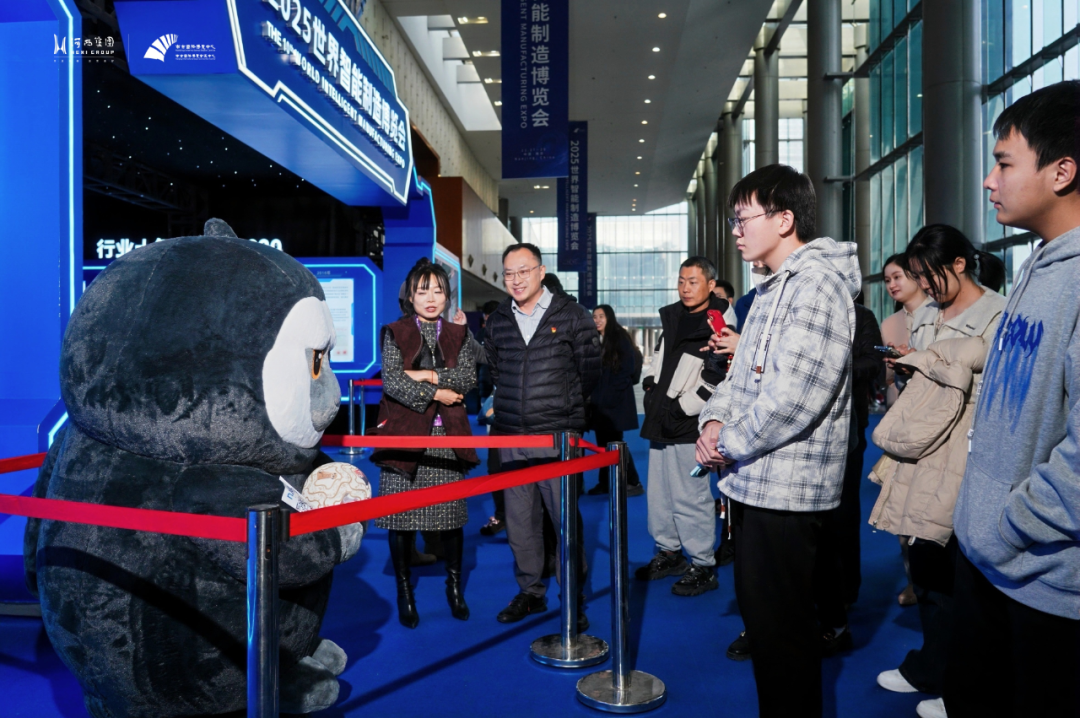
On the scorching “Suzhou Super League” field, under the planning and organization of the Nanjing Robot Industry Breakthrough Office, the “Dudu” robot, born through cross-border innovation in collaboration between Nanjing University Electronics and Hongshan Zoo, successfully integrated technology with cultural IP and sports passion, becoming the “popularity leader” of the event. The “Dudu” robot has also participated in important events such as the Grand Canal Cultural Expo and the 2025 World Intelligent Manufacturing Conference, helping enterprises form new products and new models in the field of embodied intelligence.
In addition, the “Seagull” robot, which has been passed down from generation to generation, also shone brightly in the Tianjin Marathon. We are collaborating with the public security system to explore the smart public security project, covering areas such as entry and exit, and government services in police stations. A client from Chengdu, Sichuan Province, has also been communicating with us to prepare for the development of the Panda Smart Service robot. Di Min deeply felt the huge effect brought by the product going viral.
The dual-host and dual-system architecture pioneered by Nanda Electronics in China has injected strong innovative impetus into the intelligent service robot system and has become the core barrier for it to break through in the market. At present, the company has established regional headquarters or scene implementation companies in regions such as Hebei, Sichuan, Shaanxi, Tianjin, Beijing and Tangshan. Di Min disclosed that in the future, they plan to expand their presence in Shanghai, Zhengzhou, Guangdong and other places, with a dual-host system as the core, to empower multi-industry and multi-modal interaction services.