Skip to content
Nowadays, digital empowerment is becoming the core engine for modernizing grassroots governance. It not only makes grassroots work more efficient and precise, but also “unshackles” it, promoting the modernization of the grassroots governance system and governance capacity to a new level.
Jiangbei New Area is exploring the construction of a “community micro-data center” based on “one form” in Xinhua Community, Pancheng Sub-district. By activating and utilizing grassroots data, it aims to reduce the burden of filling out forms and reports, and strives to fundamentally enhance the digital capabilities of the community, promoting the reduction of burdens and improvement of efficiency in community work.
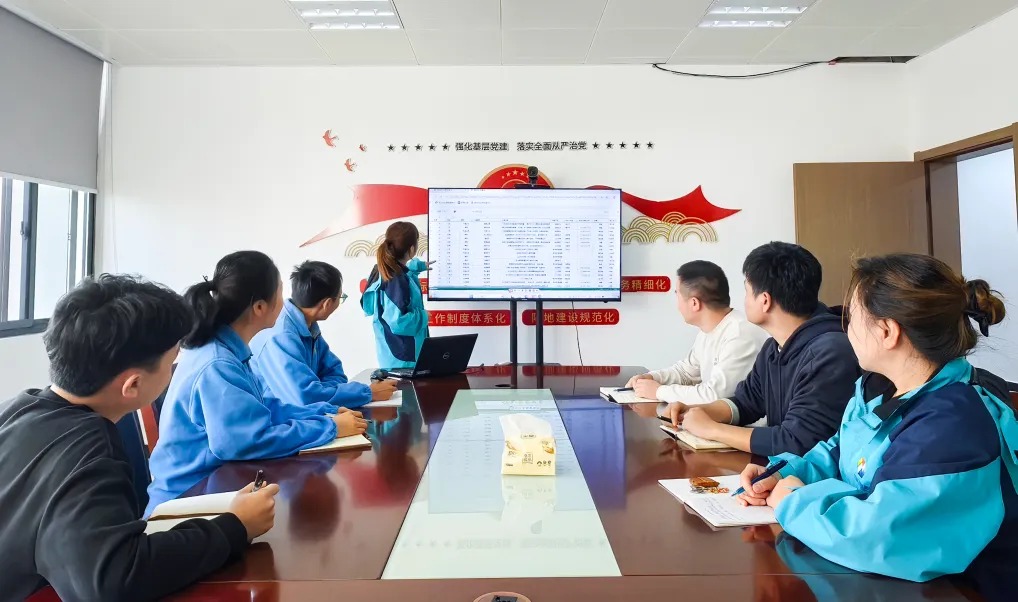
As the end of the month approaches, the superior unit will once again tally up the progress of some matters this month and summarize them into a table. Xiao Zhang from Xinhua Community, Pancheng Sub-district, wasn’t the least bit flustered. He uploaded the form to the “Micro Data Center”, clicked on the AI to fill it in automatically, and the form was completed in less than a minute.

The “Micro Data Center” of Xinhua Community is an innovative exploration of data empowering community governance. This system collects the underlying data from all aspects of the community. After analysis and integration, it broadens the horizontal dimension of the tables and realizes data sharing. Meanwhile, the system can also flexibly capture data and automatically fill in forms, liberating grassroots workers from the repetitive work of filling out forms and reports, allowing them to have more time and energy to go deep into the grassroots and serve the people
I went to the village today and heard that Aunt Wang has lost her job. What’s the situation with her family now?
Hit the pain point directly
Handle “fragmented” data with “one table”
Before the launch of the “Micro Data Center”, when encountering such problems, community workers need to contact the corresponding grid workers by phone to verify the information. If necessary, they also need to contact the social security department. Now, all you need to do is open the system on your computer, enter the community population table, input your name to search, and you can view the complete information of this resident with just one click.
As the end of the month approaches, the superior unit will once again tally up the progress of some matters this month and summarize them into a table. Xiao Zhang from Xinhua Community, Pancheng Sub-district, wasn’t the least bit flustered. He uploaded the form to the “Micro Data Center”, clicked on the AI to fill it in automatically, and the form was completed in less than a minute.
In fact, the core of this system is to conduct data governance on 185 electronic spreadsheets scattered on the personal computers of Xinhua Community staff, forming six basic data tables of “people, events, information, property, perception, and knowledge”. The “people” table alone integrates 117 fields in 11 categories including household registration, social security, assistance, and education, and is associated by “household”. And this job is to do a major “slimming down” of the report.
The “slimmed down” form has required items, optional items and backup items. Mandatory items are data that are frequently used in daily work, optional items are data that are not frequently used but are relatively important, and backup items are some redundant fields that might be useful.
Meanwhile, the system implements tag-based management for all data. Information on various groups such as Party building, civil affairs, human resources and social security, family planning, veterans, and comprehensive governance and petition handling can all be queried with one click.
Previously, staff members at each department were only responsible for the data they were in charge of, with no information sharing and no mutual understanding. Now, after everyone uploads their own data, the system automatically summarizes and integrates it, facilitating information sharing and easy access, and also simplifying the workflow.” Wei Dingguo, the secretary of Xinhua Community, introduced.
The aggregation of massive amounts of data requires the upload and update of every staff member. The “Micro Data Center” adopts an authorized management model. Staff members in different positions have different permissions to update data. Once they modify or enter data on their personal computer systems, the entire system will update it synchronously, and the data will be shared in real time, effectively avoiding repetitive form-filling operations for everyone.
As the end of the month approaches, the superior unit will once again tally up the progress of some matters this month and summarize them into a table. Xiao Zhang from Xinhua Community, Pancheng Sub-district, wasn’t the least bit flustered. He uploaded the form to the “Micro Data Center”, clicked on the AI to fill it in automatically, and the form was completed in less than a minute.

Nowadays, when community workers encounter residents’ demands or various matters, they will upload them to the system immediately. Grid workers will proactively claim them in the service list, and community leaders will track them in real time, forming a complete closed loop of “reporting – claiming – following up – completion”, significantly improving work efficiency.
The “Micro Data Center” has integrated the public demands from various channels such as visits, wechat groups, service hotlines, service Windows, 12345, and letters and visits, forming a “service list”. The list records information such as the occurrence time, person in charge, processing progress, and whether it has been completed. According to statistics, 80% of the demands raised by the residents of Xinhua Community can be handled within 1 to 2 working days, and the residents’ satisfaction has significantly improved.
Xiao Bei learned that the system has currently been connected to the Smart Civil Affairs System of Jiangbei New Area, the integrated urban governance Platform, the Party Building System of Jiangbei New Area, the Public Procurement and Distribution Platform, the Smart Supervision Platform for Rural collective Property in Jiangsu Province, and the Agricultural Economic management system of Pancheng Sub-district, achieving data sharing.
As the end of the month approaches, the superior unit will once again tally up the progress of some matters this month and summarize them into a table. Xiao Zhang from Xinhua Community, Pancheng Sub-district, wasn’t the least bit flustered. He uploaded the form to the “Micro Data Center”, clicked on the AI to fill it in automatically, and the form was completed in less than a minute.

In the face of a vast amount of important data involving residents’ privacy and community work, security must be the top priority. Every piece of data in the system has been registered in the “account” and stored in the “vault” to prevent data loss due to personnel changes. Wei Dingguo introduced that the system also implements a hierarchical authorization management system. Staff members can only modify and download data within their own permission scope. Meanwhile, key data is stored as evidence using blockchain technology to ensure that the entire data flow is traceable and unalterable.
Empowered by digital technology, “One form” has broken down data barriers. It can efficiently gather scattered information on the computers of various staff members, fundamentally reducing the burden of repetitive form filling and multiple reports. It is also possible to track the demands of the masses throughout the process, achieve closed-loop management, provide staff with a direction for handling affairs and a handle for advancement, and improve service efficiency and response speed. Moreover, through flexible data matching and integration, the work of filling in the form upwards can bid farewell to the cumbersome process and become easy, convenient, accurate and efficient.
The “Micro Data Center” of Xinhua Community is a vivid practice of activating the effectiveness of grassroots governance through digital means. It enables data to do more of the running and reduces the legwork for staff. This not only truly “reduces the burden” for grassroots work but also, through process optimization and efficiency improvement, adds enthusiasm for grassroots cadres to start businesses and do things. Ultimately, it brings convenience and benefits to the residents. Make grassroots governance more humane and effective.
As the end of the month approaches, the superior unit will once again tally up the progress of some matters this month and summarize them into a table. Xiao Zhang from Xinhua Community, Pancheng Sub-district, wasn’t the least bit flustered. He uploaded the form to the “Micro Data Center”, clicked on the AI to fill it in automatically, and the form was completed in less than a minute.