Skip to content

Recently, the National Energy Administration officially announced the list of the first batch of pilot projects for enhancing the capacity of building a new power system. A total of 43 projects and 10 cities were included. Building a new power system is a key measure to achieve the goals of carbon peak and carbon neutrality, promote the comprehensive green transformation of the economy and society, and ensure national energy security. The “14th Five-Year Plan” period is a crucial five-year period for the breakthrough and advancement of the construction of the new power system. China has clearly stated that “we will accelerate the construction of a new energy system, focus on building a new power system, and build an energy power country.” Jiangsu Province has delivered an outstanding performance in this nationwide selection – Changzhou City was selected as one of the 10 pilot cities nationwide, and four innovative projects in Suzhou, Xuzhou, Yancheng, and Changzhou (the Suzhou Guodian Power Virtual Power Plant Project, the Xuzhou Dantu Synergetic Regulation of Source-Grid-Load-Storage Intelligent Microgrid Project, the Yancheng Guoneng Chenjia Gang 2nd Unit Project, and the Guoneng Changzhou 4th Unit Secondary Reheating Project) have simultaneously entered the list of 43 pilot projects nationwide, with the number of selections ranking among the top in the country, demonstrating Jiangsu’s leading strength in the construction of the new energy system.

Changzhou is the only city in Jiangsu Province selected as a pilot for enhancing the capacity of the new power system construction. Among the pilot projects announced simultaneously, the second re-heating project of Unit 4 of Guoneng Changzhou Power Plant became one of the two projects in the province that were selected for the new coal-fired power direction. Constructing a new power system is a systematic project. Under the trend of the energy revolution, Changzhou actively responds to the trend of the green and low-carbon transformation of energy, explores the “new” path for the construction of the new power system, and creates the “Changzhou model”. Focusing on the new power load management system, a virtual power plant is being constructed. Changzhou is the first in the province to build a municipal virtual power plant management center. By using the virtual power plant, scattered power sources and loads such as charging piles and energy storage in end-users are aggregated and participate in the operation of the power grid in a market-oriented form. So far, 24 micro-grids have been connected to the new power load management system, and the aggregated capacity of various adjustable resources exceeds 1.2 million kilowatts. Promoting the application of “vehicle-grid interaction”, through V2G technology, electric vehicles transform into “mobile energy storage stations” and participate in grid regulation, peak shaving charging and reverse discharging. In 2025, more than 7,000 vehicle trips will participate in discharging, and the cumulative discharge capacity will exceed 300,000 kilowatt-hours. From power sources to the power grid, from technology to equipment, with the continuous expansion of the application scale of micro-grids, 156 micro-grid projects in various scenarios such as parks, factories, and building complexes are operating stably, forming “self-balancing” energy units, and ensuring more reliable power supply. Promoting power transactions and expanding the scale of green power transactions. In 2025, the installed capacity of new energy in this city has reached 37.8%, the green power transaction has increased by 75.3% compared with the previous year, the total installed capacity of photovoltaic power generation exceeds 5 million kilowatts, and has historically exceeded coal-fired and gas-fired power. The transformation of quality from the traditional power system to the new power system has earned Changzhou numerous honors: it has become the only city in the country that has simultaneously been selected as a national carbon peak pilot, a national first batch of large-scale application pilot for vehicle-grid interaction, a national first batch of zero-carbon park construction list, and the first batch of national pilot cities for enhancing the capacity of the new power system.

The Suzhou Guodian Power Virtual Power Plant project adopts a hybrid virtual power plant model. Through the “self-build + aggregation” approach, it integrates distributed photovoltaic power, controllable loads, energy storage, and electric vehicle charging facilities to establish an integrated virtual power plant operation management system of “source – storage – load – charging”. Currently, the first-phase platform has been completed and put into operation. A total of 364 typical sites have been aggregated, with a total installed capacity of 1,037 megawatts and a 238-megawatt adjustable capacity. It has completed data integration with the Suzhou regional dispatching center and the power dispatching automation system of Jiangsu Province, achieving provincial-level dispatching direct control. It has successfully participated in various market-oriented businesses such as frequency regulation, peak shaving, demand response, and green electricity trading, verifying the technical feasibility and commercial value potential of the virtual power plant. This pilot project intends to further expand the scale of resource aggregation and comprehensively enhance the system’s operational reliability, achieving indicators such as response time ≤ 60 seconds, regulation rate 20% per minute, system monthly availability rate > 99%, telemetry error < 1%, and overall regulation deviation rate < 5%. This will further strengthen the virtual power plant’s ability to serve regional power supply security and load flexibility regulation, and build a trustworthy and controllable regulation capability. At the same time, the project will focus on expanding business models such as “virtual power plant + energy manager” and “virtual power plant + electricity spot trading”, exploring the “electricity – carbon market linkage” mechanism, promoting the transformation of stable regulation capabilities into continuous economic benefits, and creating a standardized operation model of the virtual power plant that is “technologically reliable, commercially feasible, and sustainable in development”, providing a replicable practical model for the construction of the new power system.
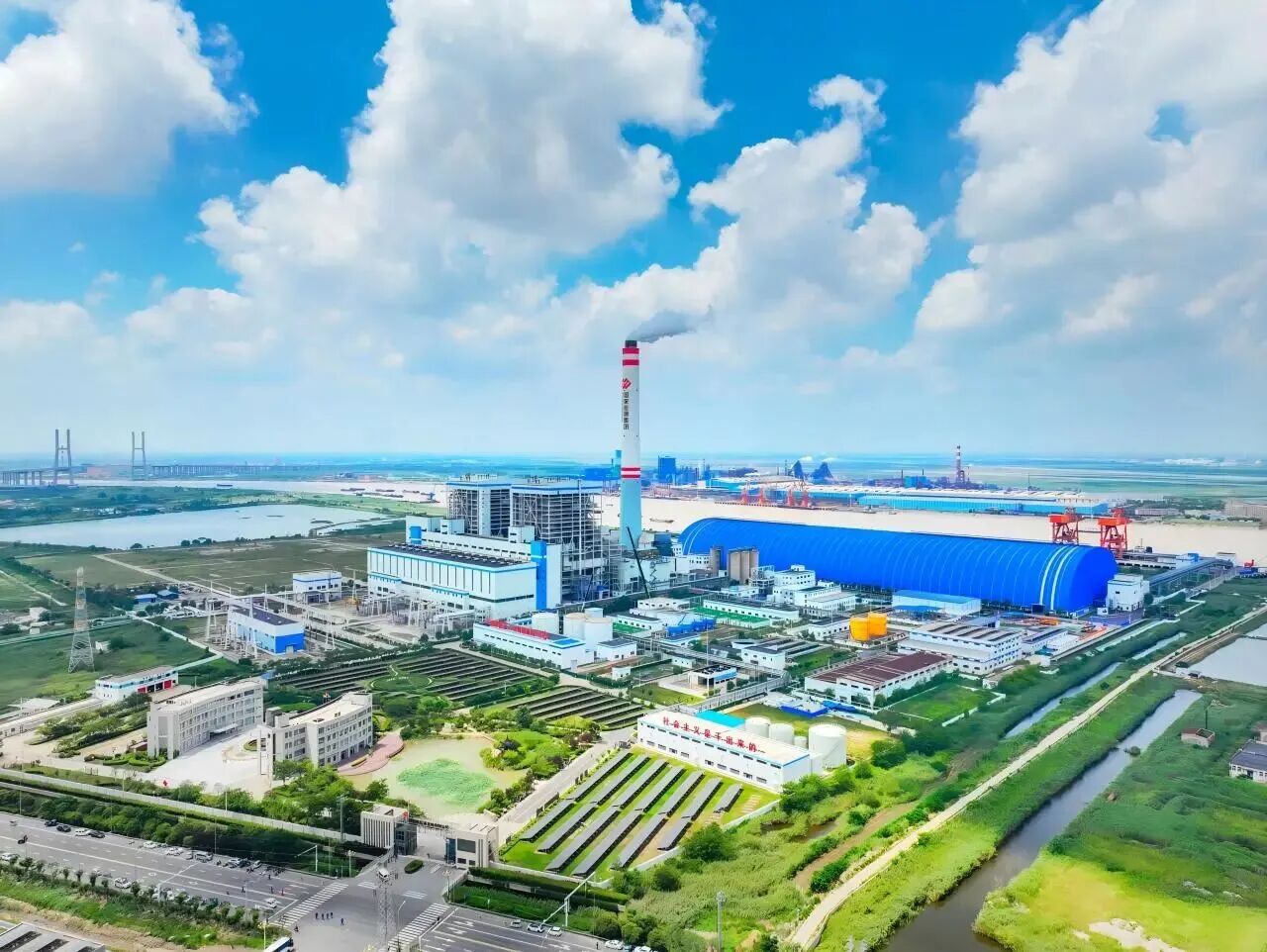
The No. 2 unit project of Yancheng Guone Energy’s Chenjia Harbour has been successfully selected as a pilot project for the new generation of coal-fired power units. It has become an important demonstration project in Jiangsu Province for promoting the transformation and upgrading of coal-fired power and serving the construction of the new power system. This successful selection as a national-level pilot project for the new generation of coal-fired power units is a full recognition by the national energy authorities of the technical level, operational capabilities and transformation potential of the Chenjia Harbour Company’s units. It marks a solid step forward for the company in the high-quality development of coal-fired power and the service of the new power system. As a pilot project for the new generation of coal-fired power units, the No. 2 unit of the company will carry out relevant work in accordance with the relevant deployment requirements of the state, focusing on directions such as safety and reliability, flexible regulation, clean and efficient operation, and intelligent operation.
It will better play the foundational, supporting and regulatory roles of coal-fired power in the new power system, providing strong guarantees for the large-scale integration of new energy and the safe and stable operation of the power system. In recent years, Chenjia Harbour Company has actively promoted the transformation and upgrading of coal-fired power units. It has continuously exerted efforts in equipment governance, operation optimization, energy conservation and consumption reduction, and intelligent improvement, continuously consolidating the foundation for high-quality development. In the future, the company will take this pilot selection as an opportunity, coordinate relevant work, strictly implement the relevant deployment requirements of the new generation of coal-fired power units, continuously enhance the comprehensive capabilities and demonstration potential of the units, and strive to create a replicable and promotable model of coal-fired power transformation, contributing more to the safe and stable operation of the Jiangsu power system and the construction of the new energy system of the country.